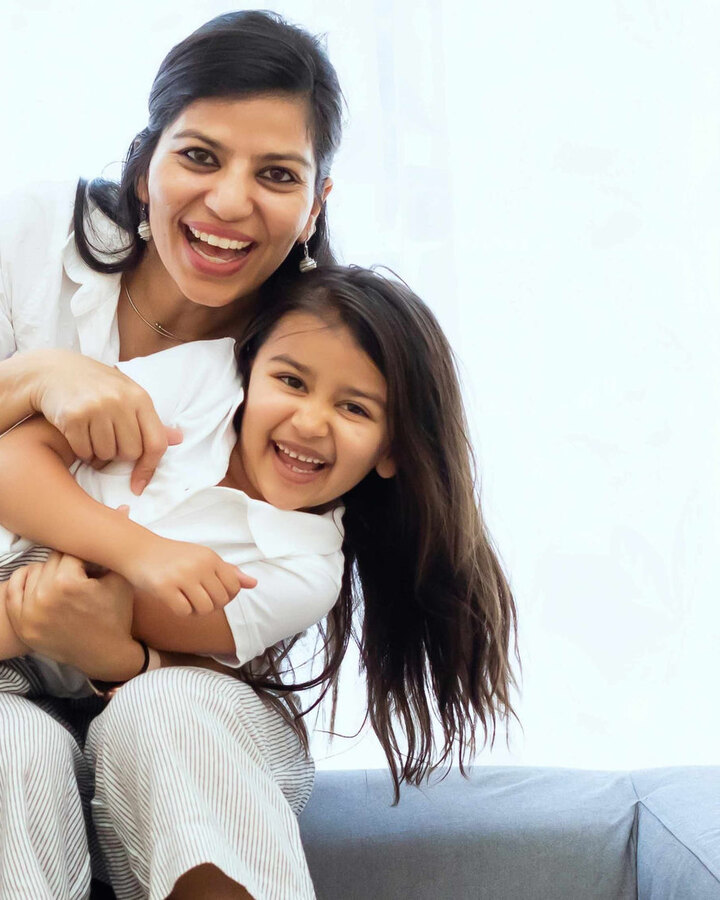

The typical American mother in 2025 and 2026 might have 847 followers on Instagram and yet go eleven days without a single real conversation.
For many, communication has devolved into a series of logistics: "can you grab more diapers," "what time does your mom get here," or "did you call the pediatrician back." The lack of real conversation — the kind where someone asks how you are and waits for the full answer, responding to the human content rather than the practical problem — has become a hallmark of the modern maternal experience.
When the baby is three months old, mothers often find themselves on group chats with friends from their previous lives — chats that were once active daily but are now streams of memes they are too tired to respond to. They scroll their phones at 2 a.m. during the feed and feel, with surprising specificity, surrounded by people who no longer have access to them.
This is not an unusual story. It is, according to the data that has been accumulating across multiple research streams, the defining experience of new motherhood in 2025 and 2026. Seven in ten mothers report that motherhood is lonelier than they imagined, with one in five experiencing that loneliness every single day. Isolation is no longer a side note in the maternal experience. It is, the data shows, a defining feature of it.
Mothers report that motherhood is lonelier than they imagined. One in five feels that loneliness every single day. Isolation is no longer a side note in the maternal experience — it is a defining feature of it.
The Context: A Loneliness Crisis That Was Already Here
Before we can understand why new mothers are the most isolated generation in history, we have to understand the baseline they entered parenthood from. The US Surgeon General's 2023 advisory on the healing effects of social connection found that approximately half of American adults were already reporting measurable loneliness before the COVID-19 pandemic began. The advisory described social isolation as carrying a mortality risk equivalent to smoking 15 cigarettes a day — a comparison that reframes loneliness from a personal feeling to a public health emergency with physical, documented, lethal consequences.
The World Health Organization's Commission on Social Connection called social isolation one of the most urgent and most under-recognised public health challenges of the era. Its 2025 report made a compelling case that governments must treat social health with the same urgency as physical and mental health.
New mothers are entering this already-lonely society at the precise life stage that compounds every existing risk factor for isolation and adds several more that are entirely specific to the maternal experience. They are not merely lonely people who also have babies. They are people in the middle of the most structurally isolating life event available, in a social context that was already failing to provide adequate connection before the baby arrived.
Why This Generation Is the Most Isolated in History
The Collapse of the Village
The phrase "it takes a village" is so familiar it has become almost meaningless, which is unfortunate because the village is gone and its absence is the primary structural driver of maternal isolation. The intergenerational, geographically stable community that historically surrounded new mothers — the extended family living nearby, the neighbours who knew each other across decades, the religious or civic communities that provided consistent adult contact outside of paid employment — has been systematically dismantled by the mobility, the urban design, and the social fragmentation that define contemporary American life.
Research on what causes the loneliness epidemic identifies the erosion of social infrastructure — the physical spaces, civic institutions, and communal structures that historically facilitated repeated, low-stakes contact — as a primary driver. Churches, community centres, neighbourhood associations, and walkable communities provided the ambient social connection that mothers of previous generations could count on. The suburban, car-dependent, digitally mediated social landscape of contemporary life provides almost none of it.
The Friendship Cliff
The Ohio State University Wexner Medical Center's national survey on parental loneliness found that the majority of parents experience isolation, loneliness, and burnout from the demands of parenthood, with the transition to parenthood identified as a specific and significant inflection point in social connection.
The mechanism is worth naming clearly. Before children, most women have a social life organised around shared time, shared interests, and the relative scheduling flexibility of childless adulthood. After children, that social life does not merely become harder to maintain. It becomes, in many cases, structurally incompatible with the new reality. The friends who do not have children cannot be there at 7 p.m. because that is bedtime. The friends who have children at different stages are navigating incompatible schedules. The spontaneous dinner, the weekend away, the after-work drink — all of the social forms that sustained adult female friendship before motherhood — become, with the arrival of a baby, logistically impossible in ways that require active renegotiation that does not always happen before the friendships quietly lapse.
Research on loneliness and friendship loss after having a baby found that it takes approximately 50 hours of shared time to move from acquaintance to casual friend, and approximately 200 hours to reach close friendship. The implication is significant: the relationships that new mothers most need are exactly the ones that take the most sustained investment to build, at the precise life stage when sustained investment in anything outside of infant care is hardest to come by.
The Return-to-Office Wave and the Loss of Work Community
For a generation of mothers who built significant portions of their adult social lives within the structure of the workplace — through colleagues, office friendships, and the ambient daily contact that employment provides — the return-to-office mandates that KPMG's Great Exit report documented as pushing mothers out of the workforce created a specific and underappreciated social disruption. Many mothers who left their jobs because childcare arithmetic stopped working lost not only income and professional standing but an entire social ecosystem with no structural replacement.
The workplace was not merely a source of income. For many women, it was their primary source of adult social contact. When it went, the contact went with it. The research on maternal burnout and social disconnection confirms what mothers have been saying privately for years: for moms who once found community in their coworkers, isolation is the new norm.
The Digital Paradox
The mothers of this generation are the most digitally networked in history. They are also, by the research, among the most lonely. This contradiction is not accidental. It reflects something important about the difference between digital contact and the kind of social connection that actually protects health.
The Surgeon General's advisory on social connection distinguishes between the quantity and the quality of social interactions, finding that it is depth and quality that determines whether connection is protective — not volume. Following 400 people on Instagram and being followed back does not provide the sense of being known and valued that the research identifies as the core function of protective social connection.
Research on social media and loneliness in America found that social media use is associated with increased loneliness when it substitutes for rather than supplements in-person connection — which is precisely what it tends to do for mothers in the early parenting years when in-person connection is most scarce. The feed is not a village. The group chat is not a friend group. The algorithm is not a community.
What Maternal Loneliness Actually Does to the Body and Brain
The health consequences of chronic loneliness are not metaphorical. The US Surgeon General's advisory on the loneliness epidemic found that loneliness is associated with a 29% increased risk of heart disease, a 32% increased risk of stroke, and a 50% increased risk of developing dementia, independent of other risk factors.
For maternal mental health specifically, research on perinatal loneliness and postpartum depression found that loneliness in the postpartum period is a significant and independent risk factor for postpartum depression and anxiety, separate from other stressors. The relationship is bidirectional: postpartum depression increases social withdrawal, which increases isolation, which worsens depression. The cycle is self-reinforcing in ways that make early intervention in the loneliness dimension of the maternal experience as clinically important as early intervention in the mood dimension.
The JAMA Internal Medicine study on maternal mental health decline published in 2025 found that the percentage of mothers reporting excellent mental health declined from 38% to 26% between 2016 and 2023. Loneliness is one of the structural contributors to that decline. The maternal mental health treatment gap — which the Maternal Mental Health Leadership Alliance estimates at 75% of women who need care not receiving it — means that most of the mothers experiencing loneliness-related mental health decline are experiencing it without support.
The Paradox of Constant Company
One of the most disorienting features of maternal loneliness is that it coexists with the apparent absence of solitude. The mother who is never alone — who has a baby attached to her body for most of the waking day, who has a partner arriving home with needs of their own, who is in continuous demand — can simultaneously be among the most profoundly lonely people in any room.
This is because the loneliness of new motherhood is not the loneliness of physical solitude. It is the loneliness of being unseen. Of having the totality of your inner life — your professional identity, your intellectual interests, your humour, your fears, your pre-baby self in all its dimensions — temporarily inaccessible to anyone in your immediate environment, because the immediate environment has reorganised entirely around the needs of a person who cannot yet know you.
The baby needs you completely and cannot know you at all. The partner is present but also depleted, also navigating. The friends are there, nominally, in the phone. But the phone is not the same as a table, and the text is not the same as the conversation, and 847 followers are not the same as one person who shows up and stays.
What Actually Helps: The Evidence Base
The interventions with the strongest evidence base for reducing maternal loneliness share a common structural feature: they create repeated, low-stakes, in-person contact with other mothers navigating the same experience. Not one-off events. Not digital communities. Not content consumption. Repeated, in-person, peer contact with people who are in the same stage and who do not require the mother to perform a wellness she does not currently have.
Structured Postpartum Mother Groups
Research on community-based perinatal peer support found that participation in structured mother groups significantly reduced loneliness and postpartum depression symptoms compared to mothers who did not participate. The effect was most pronounced for first-time mothers and those with low baseline social support — precisely the population most at risk.
To find a postpartum support group near you, the Postpartum Support International group finder lists both in-person and virtual formats across the United States. The Program for Early Parent Support organises small groups of parents with babies of similar ages that meet weekly in each other's homes — one of the most consistently effective community models for addressing new parent isolation in the research literature.
Breastfeeding and Parenting Community Groups
La Leche League's group finder connects nursing mothers with weekly local groups that function as much as social infrastructure as breastfeeding support. The National Association of Mothers' Centers operates mother-led support groups specifically designed to address the identity and social dimensions of the maternal transition. Mothers of Preschoolers provides community-based groups for mothers of young children with a network of local chapters across the country.
Proximity and Repetition Over Intensity
The research on what actually builds friendship is consistent and somewhat counterintuitive: what matters most is not the depth or intensity of individual interactions but their frequency and their low-stakes nature. Small and consistent beats grand and occasional, every time. The same coffee shop, the same walking path, the same weekly group — these structures are more reliably connection-building than periodic high-effort social events that require planning and energy that the early parenting years rarely provide.
The Structural Changes That Would Actually Help
Individual mothers finding their support group is meaningful and important and not sufficient. The loneliness epidemic among mothers is a structural problem that individual coping strategies can address only at the margins.
Paid parental leave — which the United States does not provide at the federal level — is one of the strongest structural protections against maternal isolation available. The countries where maternal loneliness is least severe are the countries with the most generous paid parental leave: cohorts of mothers are on leave together, attending state-sponsored new parent groups together, building the social networks that sustain them through the early years and beyond. Research on paid parental leave and maternal wellbeing documents that paid leave is associated not only with better physical and mental health outcomes but with stronger social networks and reduced isolation in the postpartum period.
Community-based postpartum home-visiting programmes — through which new mothers are visited by nurses, community health workers, or peer supporters in the early weeks after birth — are among the most effective structural interventions for reducing maternal isolation. The evidence base for home visiting in reducing postpartum loneliness and depression is extensive and consistently positive. The Title V maternal health block grant that funds these programmes in every state is currently under significant threat from federal staffing cuts — a policy failure with direct consequences for the maternal isolation crisis the data documents.
The Conversation She Finally Had
Eleven days after the last real conversation, she texted the woman she had met once at a prenatal yoga class and whose number she had saved and never used. "My baby is three months old and I haven't talked to a real person in almost two weeks. Do you want to get coffee?"
The other woman replied in four minutes. "I was going to text you the same thing yesterday and then I didn't."
They met at a coffee shop with their babies in strollers. They talked for two hours. They talked about the things that do not fit on Instagram: the specific texture of the loneliness, the grief for the previous life that coexisted with the love for this one, the way the phone felt like connection and was not actually a connection, the relief of being in a room with someone who knew what this was.
They meet every Thursday now. They have added two other mothers from the neighbourhood. The group does not have a name. It does not have an agenda. It has a standing time and a coffee shop and the specific quality of connection that comes from showing up repeatedly, honestly, without performance, in the company of people who are living the same thing.
The Surgeon General was right about social connection being a public health necessity. For new mothers, it is also something more specific and more urgent than that. It is the difference between the isolation that compounds into something clinical and the witnessing that makes the early years survivable.
It does not require a programme or a platform or a policy change, though all of those things help. It requires a text sent, and a reply received, and two women at a table on a Thursday morning telling each other the truth. That is where it starts.
While research clearly shows that new mothers are experiencing unprecedented levels of isolation, I believe the issue goes far deeper than statistics can capture. In many ways, motherhood today can feel lonelier than ever before. Previous generations often raised children surrounded by extended family, neighbours, and close-knit communities. Modern mothers, however, are increasingly expected to do it all on their own while maintaining careers, managing households, and presenting a picture-perfect life online.
In my opinion, social media has created the illusion of connection while often deepening feelings of isolation. Mothers may spend hours scrolling through curated images of seemingly effortless parenting, yet still feel profoundly alone in their own struggles. Many are hesitant to speak openly about loneliness for fear of judgment or appearing ungrateful for motherhood.
I also believe society has normalised maternal isolation to an alarming degree. We celebrate independence and self-sufficiency, but rarely acknowledge that raising children was never meant to be done alone. If we want to address this epidemic, we must rebuild communities that genuinely support mothers — not just online, but in real life — through family support, friendships, neighbourhood networks, and policies that allow parents to connect rather than simply survive.