
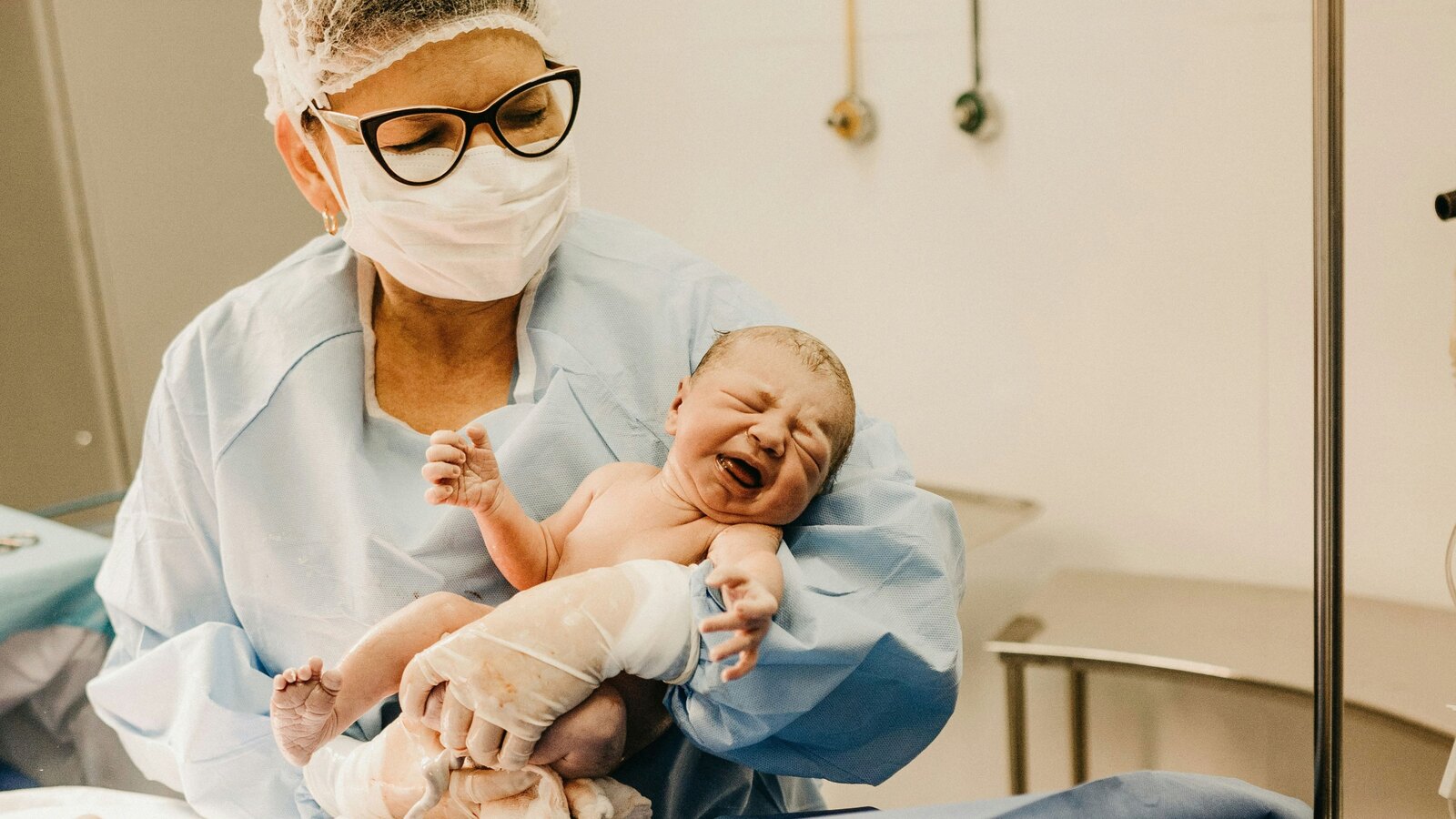
In some states, Medicaid is the only reason hospitals still have Labor and Delivery wings.
This is not a rhetorical statement. It is a structural reality that the research on rural hospital financing has documented extensively and that the policy conversation around Medicaid cuts has consistently failed to communicate with the clarity it deserves. In states like Mississippi, Louisiana, West Virginia, and New Mexico, where Medicaid covers more than 60% of all births, the obstetric care infrastructure — the hospitals, the midwife clinics, the prenatal services, the postpartum follow-up — exists because Medicaid reimburses it. Remove the reimbursement and the infrastructure does not adapt. It closes.
The rural hospital closures that have been accelerating across the United States over the past decade are not random events. They are the predictable consequence of the financial architecture of American healthcare, in which the viability of a hospital depends on the mix of patients it serves and the reimbursement rates those patients carry. Medicaid patients reimburse at lower rates than commercially insured patients, but in communities where Medicaid is the dominant form of coverage, the choice is not between Medicaid reimbursement and better reimbursement. It is between Medicaid reimbursement and no reimbursement at all.
The CBO's analysis of the Medicaid provisions in H.R. 1 found that enacting the Medicaid cuts would increase the number of people without health insurance by 7.8 million from the Medicaid provisions alone — with the Center on Budget and Policy Priorities estimating total coverage losses at 15 million when accounting for all health provisions of the law. The mechanism is primarily through new work reporting requirements that, while technically exempting pregnant women and mothers of young children, create procedural burdens that produce coverage lapses in practice. And the geography of those losses is not uniform. The states where Medicaid covers the highest proportion of births are also, in almost every case, the states with the highest maternal mortality rates, the thinnest healthcare infrastructure, and the fewest alternative sources of support for the families who would lose coverage.
The Number That Defines the Stakes
Of all US births are covered by Medicaid, rising above 60% in multiple Southern and rural states. The maternal health infrastructure of a significant portion of the country depends directly on the continued funding of this programme.
What Medicaid Actually Covers for Pregnant Women and New Mothers
The scope of what Medicaid provides for pregnant women and new mothers is considerably broader than most people who have not used it understand, and considerably more consequential when it is threatened.
Prenatal care. Medicaid covers the full range of recommended prenatal care: the visits, the blood work, the ultrasounds, the genetic screening, the gestational diabetes testing, and the specialised consultations that become necessary when a pregnancy develops complications. For the 41% of pregnant women who give birth under Medicaid, this coverage is not supplemental. It is the entirety of the prenatal care infrastructure available to them.
The consequences of inadequate prenatal care are well-documented and significant. Research from the KFF on racial disparities in maternal and infant health has found that women who receive inadequate prenatal care are more likely to experience preterm birth, low birth weight, and maternal complications that could have been identified and managed with earlier intervention. The conditions most commonly identified and managed through prenatal care — gestational hypertension, gestational diabetes, preeclampsia, anaemia — are also the conditions most commonly associated with the preventable maternal deaths that the United States tracks at rates significantly higher than any comparable developed nation.
Hospital delivery and postpartum care. Medicaid covers hospital delivery, including all associated services, for eligible pregnant women. In recent years, following federal policy changes, Medicaid coverage for postpartum care has been extended to 12 months after delivery in most states — a significant expansion from the previous 60-day postpartum coverage period that left many women without healthcare coverage during the period most associated with the delayed maternal complications that account for a significant proportion of US maternal deaths.
The 12-month postpartum Medicaid extension, implemented under the American Rescue Plan Act, represents one of the most significant improvements to maternal health coverage in recent history. The H.R. 1 cuts threaten this extension in states that have not yet made it permanent through state budget legislation, and create coverage disruption risks for families in states where the extension exists but where new work reporting requirements could interrupt coverage during the postpartum period.
Mental health services. Medicaid is the single largest payer for mental health services in the United States, covering approximately one in four adults who receive mental health care. For postpartum women, who face significantly elevated rates of depression, anxiety, and the full range of perinatal mood and anxiety disorders that the Maternal Mental Health Leadership Alliance estimates affect one in five new mothers, Medicaid coverage of mental health services is frequently the difference between treatment and no treatment.
What H.R. 1 Actually Does: The Mechanics of the Cuts
The legislative mechanism through which H.R. 1 reduces Medicaid coverage is worth understanding in specific terms, because the description of the cuts as "work requirements" or "eligibility reforms" tends to obscure the practical effect on the people who will lose coverage.
The work reporting requirements. H.R. 1 requires most adult Medicaid recipients to demonstrate that they are working, looking for work, or engaged in approved activities for a minimum number of hours per month in order to maintain eligibility. While the legislation includes exemptions for pregnant women and mothers with children under a certain age, the implementation of those exemptions requires active verification and periodic re-verification.
Families USA's analysis of how work reporting requirements function in practice documents how significant proportions of eligible recipients lose coverage not because they fail to meet the work requirement but because they fail to navigate the paperwork requirement. The bureaucratic burden of verifying eligibility, submitting documentation, and maintaining continuous proof of compliance falls most heavily on people in low-income households with limited digital access, limited English proficiency, unstable housing, and limited time — characteristics that describe a significant proportion of the Medicaid population, including many of the mothers whose births Medicaid covers.
The financing changes. Beyond the work requirements, H.R. 1 includes structural changes to the federal financing of Medicaid that reduce the federal contribution to state programmes over time. The KFF's analysis of how Medicaid financing works and what the proposed changes mean for state budgets provides a comprehensive explanation of the Federal Medical Assistance Percentage mechanism and how the H.R. 1 changes shift more of the cost of Medicaid onto state budgets that are already strained. States facing increased Medicaid costs without increased federal support have limited options: reduce eligibility, reduce benefits, reduce provider reimbursement rates, or draw down other state budget areas. Each of these options has direct consequences for the mothers whose care Medicaid funds.
The States Most Exposed: Where the Risk Is Highest
The geography of Medicaid birth coverage maps almost exactly onto the geography of maternal health risk in the United States. The states where Medicaid covers the highest proportion of births are, with very few exceptions, the same states where maternal mortality rates are highest, where rural hospital closures have been most frequent, and where the alternative sources of maternal health support — private insurance coverage, community health centres, public health department capacity — are least robust.
Mississippi has the highest maternal mortality rate in the United States and among the highest proportions of Medicaid-covered births. Louisiana, Alabama, Arkansas, and West Virginia follow closely in both dimensions. These are not coincidences. They are the compound consequence of decades of policy decisions that have produced states with high proportions of low-income residents, limited private employer healthcare provision, fragile rural hospital infrastructures, and maternal health outcomes that are among the worst in the developed world.
The Commonwealth Fund's 2024 State Scorecard on Women's Health and Reproductive Care provides a comprehensive state-by-state assessment of maternal health indicators and their relationship to healthcare coverage and access. The scorecard shows clearly that the states with the weakest maternal health outcomes — Mississippi, Texas, Nevada, Oklahoma — are also the states most dependent on Medicaid, and therefore the states where the H.R. 1 cuts have the most severe consequences.
In rural areas within these states, the closure of the nearest hospital with obstetric services is not a theoretical outcome. It is an ongoing reality. The Rural Health Information Hub's overview of rural maternal health documents that 52.4% of rural hospitals did not offer obstetric services in 2022, with 25% losing obstetric care services between 2010 and 2022 — and the GAO's report on hospital-based obstetric care in rural areas confirms that higher Medicaid reliance is directly linked to obstetric unit closures, finding that increasing Medicaid reimbursement is the intervention stakeholders most consistently identify as necessary to keep rural obstetric services open.
The Racial Dimension That Cannot Be Ignored
The Medicaid cuts cannot be discussed honestly without addressing their specific racial dimensions, because the distribution of Medicaid coverage across racial groups in the United States means that the cuts would fall with disproportionate force on Black and Native American mothers — the same mothers who already face the highest maternal mortality rates in the country and who have the least access to alternative sources of healthcare coverage.
Black women are more than twice as likely as white women to be covered by Medicaid, reflecting both higher rates of poverty and the specific history of employment discrimination and wealth inequality that has produced those rates. Native American women are covered by Medicaid at similarly elevated rates, alongside the Indian Health Service, which has its own history of chronic underfunding that has left many Native American communities with inadequate access to quality maternal care.
The CDC's data on Black maternal mortality shows that Black women die from pregnancy-related causes at rates more than three times higher than white women — a disparity that persists across income and education levels and that reflects the compounding effects of structural racism in healthcare access, quality, and treatment. The KFF analysis of racial disparities in maternal and infant health documents pregnancy-related mortality rates among Black women at 49.4 per 100,000 compared to 14.9 for white women. Reducing Medicaid coverage in the context of this existing disparity is not a neutral policy action. It is a policy action with a predictable and disproportionate impact on the mothers who are already at the highest risk.
What Mothers and Families Can Do
For mothers and families who currently depend on Medicaid for maternal care, the most important immediate actions are those that protect existing coverage and ensure access to information about changes as they occur.
Stay enrolled and attend your scheduled appointments. Continue using the coverage you have. Do not disenroll preemptively based on news about potential changes. Advocacy is ongoing and implementation timelines mean many changes will not take immediate effect.
Understand your state's postpartum coverage extension. Not all states have made the 12-month postpartum Medicaid extension permanent. The Medicaid women's health benefits page provides state-by-state information on postpartum coverage provisions. If your state has not made the extension permanent, contact your state legislators to advocate for permanence.
Contact your elected representatives. Personal constituent contact is among the most effective forms of legislative advocacy. The Congressional member finder allows you to identify your representatives and their contact information. Specific, personal messages about the impact of Medicaid cuts on your family and your community are significantly more effective than form letters.
Follow advocacy organisations for real-time updates. Families USA and the National Women's Law Center provide ongoing analysis and advocacy resources on Medicaid and maternal health policy. The KFF Medicaid tracker and issue briefs provide real-time data on Medicaid policy changes at the state and federal level.
The Infrastructure Beneath the Birth
Medicaid is the cornerstone of maternal health care in the United States. Not a supplement to a primary system. Not a safety net below a functioning infrastructure. The primary source of financing for a significant proportion of the maternal health system, particularly in the states and communities where the need is greatest and the alternatives are fewest.
When the financing changes, the infrastructure responds. Hospitals close their obstetric units. Midwife clinics lose the reimbursement that makes them financially viable. Prenatal care becomes harder to access in the communities where it was already hardest to access. And the mothers who need the infrastructure most, who are already navigating the highest rates of maternal mortality and the thinnest healthcare resources, bear the consequences of its erosion.
The H.R. 1 cuts are not abstract. They are specific, their geographic and demographic distribution is predictable, and their consequences for maternal health in the United States are not a matter of speculation. They are the logical extension of a pattern that the research has been documenting for decades: that in the American maternal health system, the quality and availability of care correlates inversely with the need for it, and that policies that reduce coverage and financing in the communities with the greatest need accelerate a trajectory of harm that was already pointing in the wrong direction.
The infrastructure beneath the birth deserves to exist. The mothers depending on it deserve better than a policy that trades their safety for a budget line.