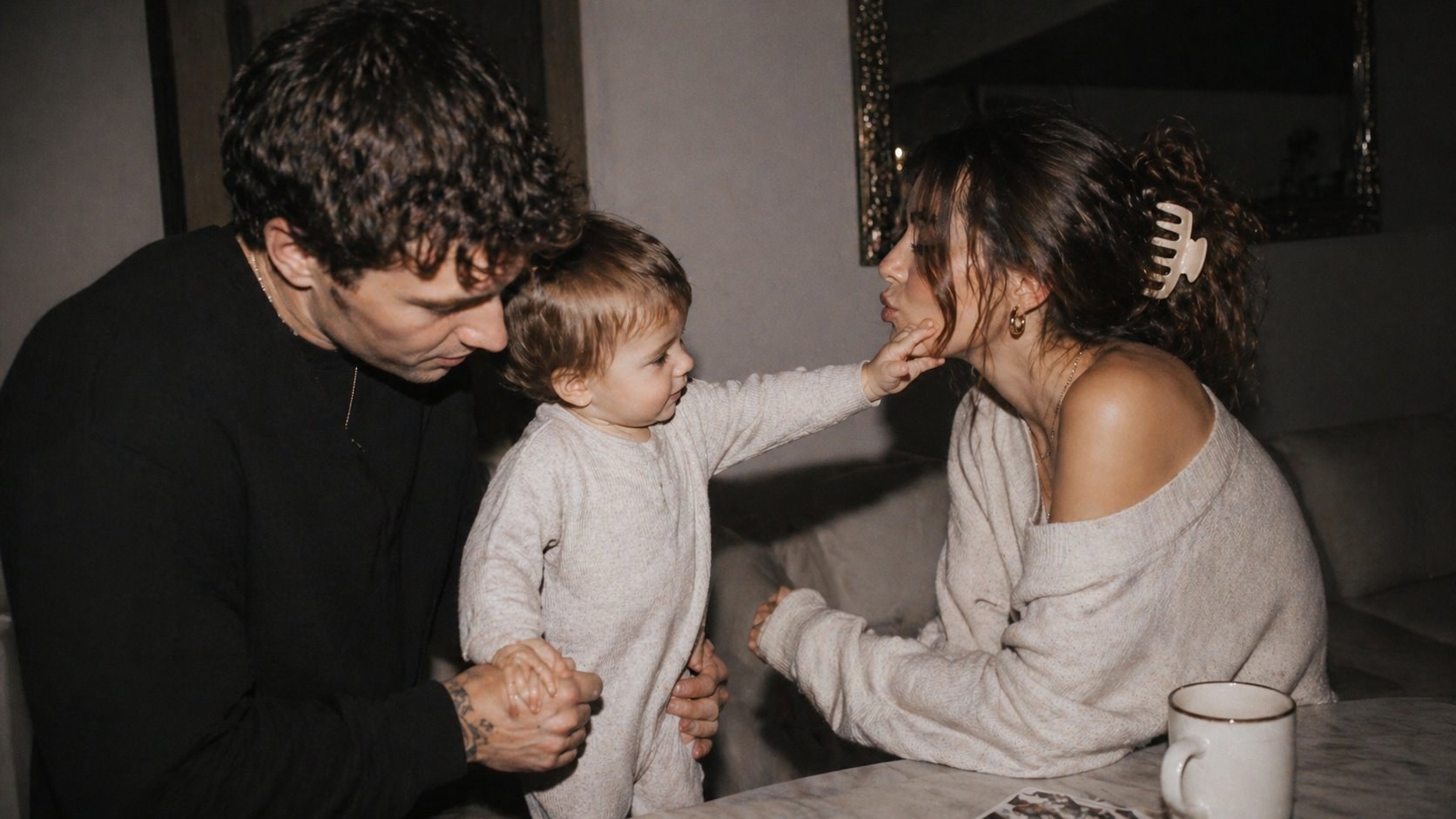


You don't need perfect words. You need true ones, said gently.
Every parent knows the moment. You need to tell your child something hard — something that will change their world, or challenge their understanding of it. And you are standing there, knowing the conversation needs to happen, without any idea what words to use.
The words matter. Not because there is a perfect script that makes hard things easy. There isn't. But because the language we use with children shapes how they make sense of difficult experiences, and some approaches are genuinely more helpful than others.
What follows are gentle, honest scripts for the conversations that stop most parents in their tracks.
Before any hard conversation: how to set up the moment
The conversation itself goes better when the moment is set up well. A few things that help, every time:
- Sit down at their level. Don't have this conversation standing up, rushed, or on the way somewhere. Create a moment of stillness before you begin.
- Use their name. Start with something that signals this is a different kind of conversation: "I have something important to tell you."
- Say the true thing directly. Don't circle it. Don't build up to it over many sentences. Children's anxiety escalates in the waiting.
- Then stop, and make space.
Most of what makes a hard conversation work is what you do after you say the words. Listening matters more than scripting.
What to say when telling your child about a death
When a grandparent dies
"I have something sad to tell you. Grandma died last night. That means her body stopped working completely. Her heart stopped and she stopped breathing, and she won't be able to be with us anymore. I'm really sad. I miss her already. How are you feeling?"
When a pet dies
"I have something sad to tell you. [Name] died this morning. Their body stopped working and they couldn't keep living. I know how much you loved them. It's really okay to feel sad about this. I feel sad too."
When a death is sudden or unexpected
"Something very sad happened and I need to tell you about it. [Name] died. It happened very suddenly. I'm still feeling shocked. It's okay for both of us to feel sad and confused right now."
After the initial conversation, expect the same questions to come up repeatedly over days and weeks. This is normal, and part of processing. Answer them the same way each time, calmly and directly. The repetition is how children integrate hard truths.
What to say when telling your child about separation or divorce
This conversation should happen together, with both parents present if at all possible, and only when the decision is definitive. Not under consideration.
The initial conversation
"We have something important to tell you. Mum and Dad have decided not to live together anymore. This is a decision the grown-ups made, and it is not because of anything you did. It is not your fault at all. We are both still your parents and we both love you completely. You will spend time with both of us. Our family is changing, but you are still completely loved."
When your child asks why
"Sometimes grown-ups decide that it works better for everyone if they don't live together. It's a grown-up decision, and it's not something you need to worry about understanding."
The American Academy of Pediatrics confirms the core principles in this script: tell the truth simply, reinforce that the decision was an adult one, and reassure the child repeatedly that nothing they did caused it.
Do not provide adult information about the reasons for separation. What children need to know is that they are loved and that the practical realities of their life are stable.
After the initial conversation, expect three things:
- Guilt and self-blame. Affirm repeatedly that it is not their fault. This is the message they need to hear most often.
- Fear about practical changes. Answer specifically about what will and won't change. Bedrooms, school, weekends, the dog.
- Loyalty conflicts. Affirm that they are allowed to love both parents fully.
What to say when your child has big feelings
When your child has just had a meltdown
Wait until calm. Then gently revisit:
"That was really hard for you before. Can you tell me what was happening? I could see you were feeling [angry, overwhelmed, disappointed]. That makes sense. Those feelings are really big sometimes."
The naming itself helps. Most young children don't have language for what they're feeling, and giving them words for it builds the foundation of emotional regulation.
When your child says they hate you
"I hear that you're really angry right now. That's okay. I love you even when you're angry at me."
Don't escalate. Don't punish the expression. Return to connection when they're calm. "I hate you" in a five-year-old's mouth almost always means I'm overwhelmed and I don't know how to say it.
When your child is anxious about something
"I notice you seem worried about [thing]. Can you tell me more about what your brain is saying? That sounds really uncomfortable. Thank you for telling me. Let's think about what might help."
The phrase "what your brain is saying" externalises the worry, which makes it easier for children to talk about than "what are you feeling."
When your child seems sad and you don't know why
"You seem a bit sad today. You don't have to tell me, but I'm here if you want to. I love you and I'm paying attention."
Sometimes the best script is the shortest one. Children often open up when the door is propped open and they aren't pushed through it.
What to say about your own hard things
Children notice when adults are sad, anxious, or struggling. Not naming it creates more anxiety than naming it does.
When you are sad
"I'm feeling sad today. It's not because of anything you did. Sometimes grown-ups feel sad too. I'm okay and I'm taking care of myself."
This single message accomplishes two things: it normalises that adults feel hard feelings, and it explicitly removes the child's responsibility to fix it.
When you have made a mistake
"I handled that badly before. I was [frustrated, tired, overwhelmed] and I [did, said] something I shouldn't have. I'm sorry. That wasn't fair to you."
Modelling repair is one of the most powerful parenting moves available. Children who see parents make mistakes and repair them learn that relationships survive rupture, and that accountability is not catastrophic. They internalise both lessons by watching you do it.
The principle behind every script
Truth told simply. Feelings named rather than suppressed. Reassurance grounded in what is actually true rather than what you wish were true. Space for the child's response.
You do not need perfect words. You need present, honest attention.
The bottom line
You will not have perfect words. You don't need them.
What children need is the truth, told gently. Their feelings, named without shame. Reassurance that is grounded in what is actually true. Space to respond, in whatever way they need to.
The conversation does not have to be perfect. It has to be honest. That is the whole thing.
Frequently asked questions
What if my child doesn't respond to hard news?
Children often appear unaffected initially and process later. Don't interpret no visible response as not needing to talk. Check in again later: "I told you something hard earlier. How are you feeling about it now?"
Should I cry in front of my child during hard conversations?
Brief, genuine emotion is healthy and models that feelings are expressible. Breaking down completely makes children feel they need to manage your emotions. A tear or visible sadness is fine. Sustained breakdown is better processed outside their presence, with another adult.
What if I don't know the answer to my child's question?
Say so. "I don't know. That's a really good question. Let me think about it and we can talk about it more." Children handle "I don't know" much better than they handle a parent who clearly knows but won't say. Not having an answer is not a failure.
What if my child reacts with anger instead of sadness?
Anger is grief in motion. It's particularly common in school-age children and teenagers who don't yet have language for the underlying loss. Don't punish the anger. Let it move through. Stay available for when the sadness arrives later, often quietly and without warning.
What if I make a mistake during the conversation itself?
Repair it. Even mid-conversation: "I don't think I said that right. Can I try again?" Modelling that you can recover from your own missteps is part of the lesson. Perfect delivery is not the goal. Honest, loving presence is.
How long after a hard conversation should I check back in?
Within hours, then again the next day, then periodically over the weeks that follow. Children process hard news in waves, often returning to questions days or weeks later as their understanding develops. Keep the door open.
Should I give my child a heads up that a hard conversation is coming?
For older children and teenagers, yes. "I need to talk to you about something important after dinner." This gives them a brief window to prepare. For younger children, this often creates more anxiety than it relieves. Just sit them down when the moment is right.