Jessica Salzberg knew something wasn’t right long before she had an explanation. Her daughter Leah was around two and a half when Jessica began worrying about her speech development. For six months, she searched for answers, speaking with speech therapists and asking whether she should seek a referral to pediatric neurology. She was prepared to face whatever was happening. What she couldn’t bear was not knowing.
“I had this little voice at the back of my head saying - ‘you need concrete answers because this is bigger than you,’” she recalls.
When Leah’s preschool teacher raised concerns about her hearing, Jessica felt guilty. She had noticed the speech delays but hadn’t considered hearing loss. Neither she nor her husband, Matthew, knew anyone in their families with hearing loss. Leah was eventually diagnosed at three years old, beginning a journey that would change how Jessica understood motherhood, resilience and the importance of finding support.
When Both Parents Are Hurting
Jessica remembers the day of Leah’s diagnosis as one of the most difficult moments in her marriage. In the past, when one of them was struggling, the other could offer stability. This time, both parents were overwhelmed.
“I remember thinking that first the first time in our marriage, my husband Matt and I were equally devastated,” she says.
They cried, leaned on family and friends, and allowed themselves time to process what they were feeling. Matthew, an oncologist and hematologist, began researching the diagnosis and making connections in the medical field. But neither parent tried to rush past the grief.
“We knew such a devastating diagnosis for our child could make or break us, and we decided we would not let this break us - and that we would come out stronger.”
The uncertainty grew when Jessica learned that Leah’s hearing loss was genetic. At the time, she was 37 weeks pregnant with Mila, and Sophie was only a year and a half old. Sophie was also found to carry the same rare gene.
“I was a mess, really,” Jessica says. “I remember feeling completely numb to my core when we discovered that Leah’s hearing loss was genetic.”
She tried to focus on what remained reassuring: her daughters were happy and healthy, medical professionals were helping them, and technology offered ways to access sound. Some days, she says, simply showing up for her family was all she could manage.
The Decision She Once Couldn’t Face
When cochlear implants were first mentioned, Leah was experiencing significant hearing loss but was not yet a candidate for the devices. Their audiologist explained that implants might become an option in the future. Jessica wasn’t ready even to look at one.
“I was too heartbroken still at the time to picture my little girls wearing them, or to even begin to process what surgery might look like,” she explains.
Her perspective changed as both girls continued to lose their hearing and reached the severe-to-profound range. They became candidates for cochlear implants, and Jessica began researching the technology and speaking with others. What had once felt impossible became, in her view, the best available option for her daughters.
The girls had their implants activated together, but their reactions couldn’t have been more different. Leah immediately began giggling and laughing, excited by the sound even as she struggled to locate its source. Sophie was more cautious and confused, seeking comfort before gradually adjusting.
For Jessica, the moment carried enormous relief. She had worried about the surgeries, the healing process and whether the devices would work.
“The second I knew their cochlear implants were in fact processing sound, I could breathe.”
A Morning Routine Built Around Sound
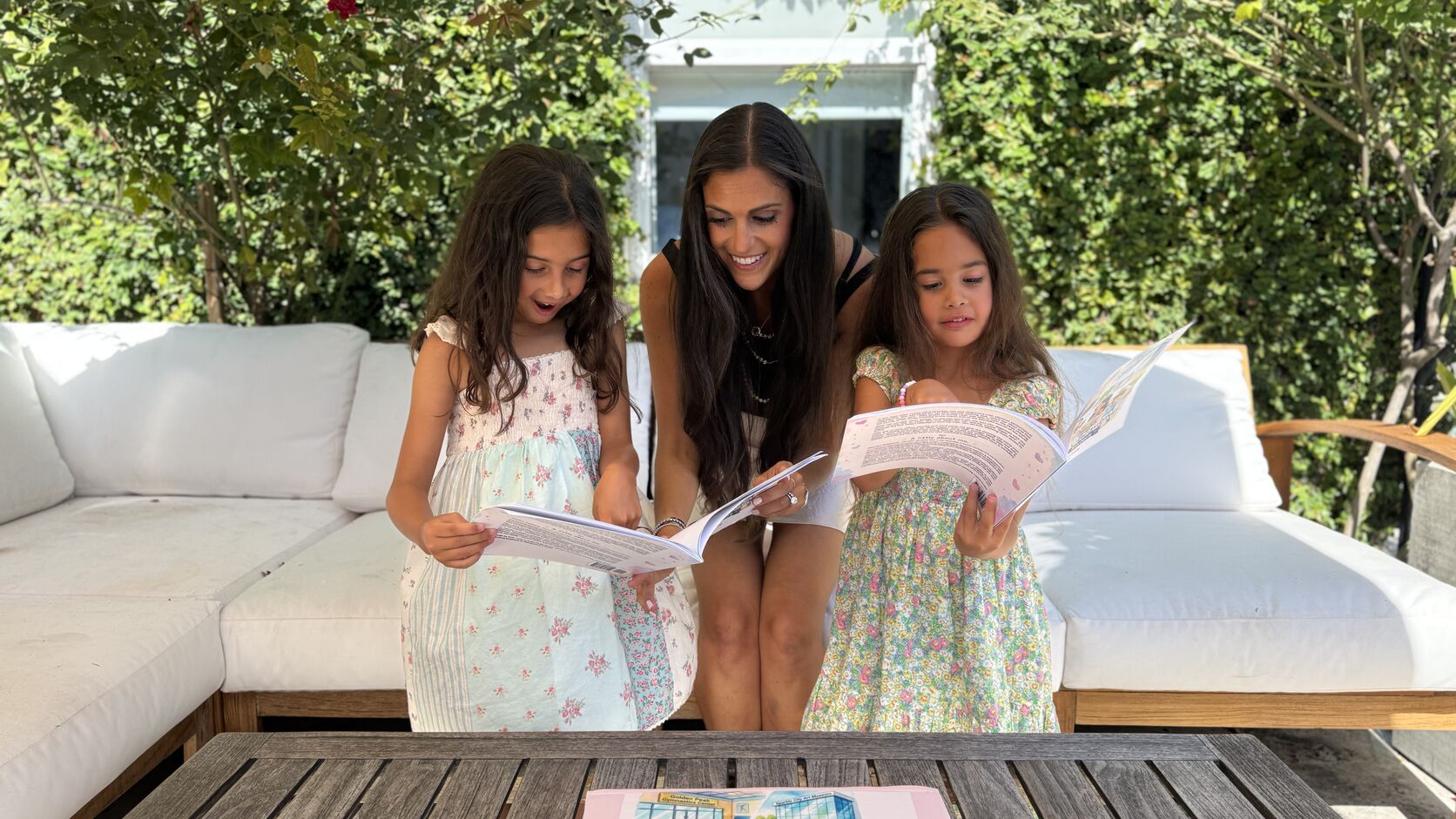
Today, sound is part of the family’s everyday rhythm. Leah and Sophie share a bedroom, and their mornings begin by checking a clock programmed to turn green when they can get out of bed. They usually find Jessica in the kitchen preparing breakfast and packing lunches. After good-morning hugs and kisses, they retrieve their cochlear implant batteries and devices.
The family uses the phrase “Eyes open, ears on,” an expression Jessica says they heard within the hearing-loss and cochlear implant community. It has become part of their routine, although she doesn’t remember where they first encountered it.
“I would say most of the time, within three minutes of waking up, the girls are ready to hear,” she says.
The routine is one small part of a much larger transformation. Jessica’s experience as a mother eventually led her to work professionally with deaf and hard-of-hearing individuals and their families. She founded Heart of Hearing, bringing her personal experience and desire to support other parents together.
“My daughters have shown me that with the proper support system and team in place, every child can thrive and succeed,” she says. “I have learned that a diagnosis does not determine destiny.”
Letting Go of Guilt and Comparison
One of the hardest emotions Jessica has confronted is guilt, particularly knowing that both she and Matthew carry the gene associated with their daughters’ hearing loss. It’s a feeling she recognizes in other parents, too.
“This weighs on my heart so heavily. Simply said, it is not your fault.”
She believes that she and Matthew were meant to be Leah and Sophie’s parents, and she says she cannot imagine their family any other way. Their experiences have also changed how she parents all four of her children. She tries to lead with compassion, patience and love, to worry less about small things and, importantly, not to compare one child with another.

That individuality is already evident in Leah and Sophie. At the time of the interview, Leah was in second grade and loved gymnastics, fashion and designing. Sophie was in kindergarten and gravitated toward arts and crafts and science. Both enjoyed learning and spending time with friends.
“They could not be more different, and I love that,” Jessica says.
When parents ask whether a child with hearing loss can play sports or take the lead in a school production, Jessica encourages them to believe in their child’s possibilities. She recognizes that the path toward a goal may look different, but she doesn’t want a diagnosis to define a child’s ambitions.
The Message She Wants Every Mother to Hear
Jessica now speaks with parents navigating hearing loss almost every day. She knows how isolating those early moments can feel, particularly when a diagnosis arrives before a family has had time to understand what it means.
Her message is rooted in what she needed to hear when Leah was first diagnosed: the fear is real, the emotions are valid, and families deserve support as they work through both.
“To be patient and kind with yourself, and that your child is still the same child you love,” she says.
For Jessica, the experience has not erased the difficulty of those early years. It has changed what she sees when she looks at her daughters’ futures. Instead of the uncertainty that once consumed her, she now sees two girls developing their own interests, personalities and dreams.
And for a mother just beginning the same journey, she offers the reassurance she has built her work around:
“They need you, and you need them - and together, we will get through it. I promise.”