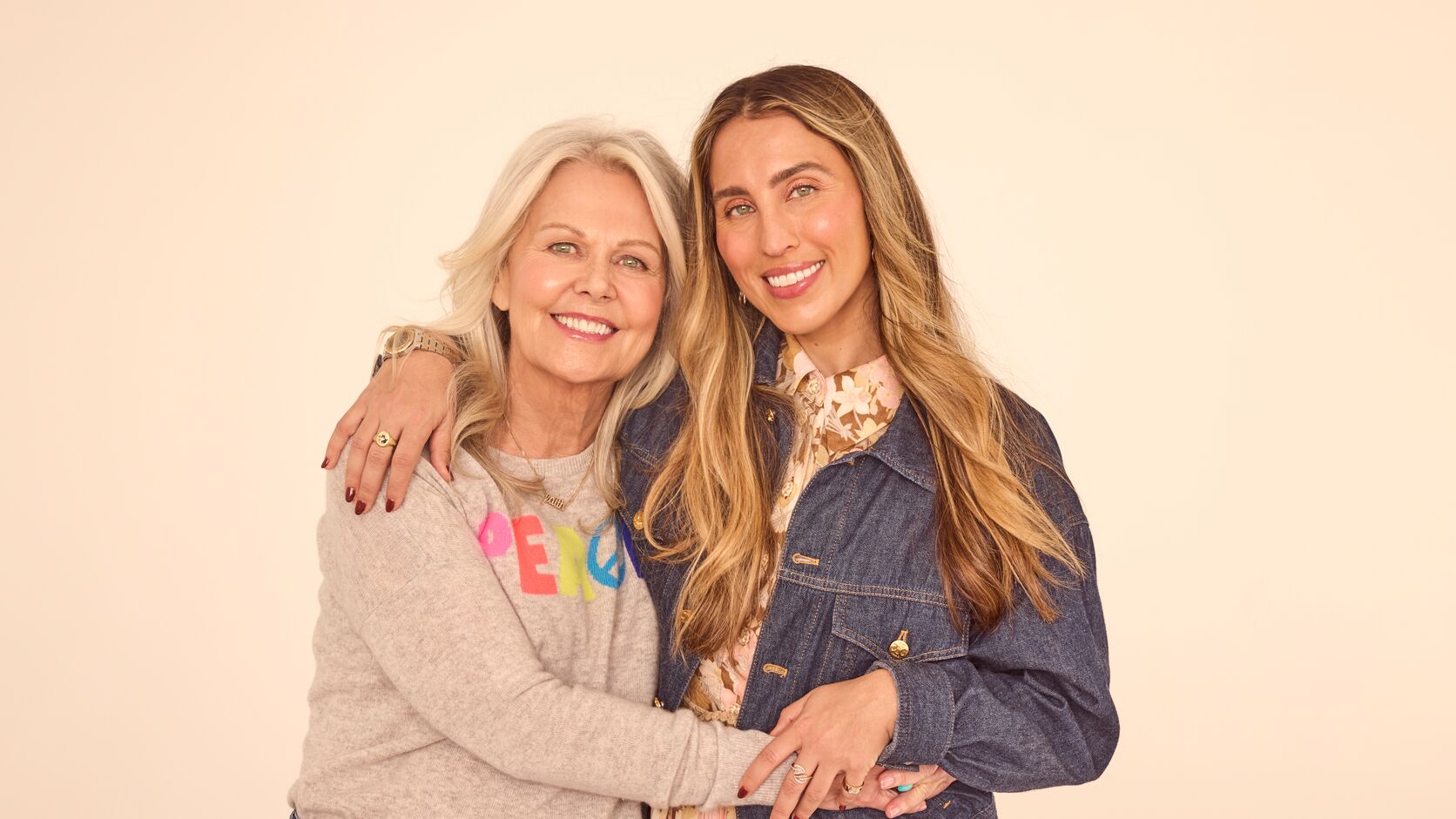
Michelle Maros was in college when her father died. It was sudden and unexpected, the kind of loss that splits a life into before and after, and it reshaped her and her mother, Barb Schmidt, at the same time.
“We both pinpoint the sudden, unexpected death of my dad when I was 21-years-old as the catalyst to both of our paths with grief,” Michelle says.
They did not grieve the same way. Few people do. “We, of course, both had our different ways of coping with that specific loss and challenges within it,” she says, “but it also brought us together and stronger as a mother-daughter.”
By then, Barb had already spent years teaching classes and workshops on mindfulness and meditation. Not long after the loss, Michelle joined her. What began as a mother and daughter doing the work side by side has grown into Peaceful Mind Peaceful Life, one of the largest wellness communities online, with more than 12 million followers across platforms. Barb, known to her audience as “Peaceful Barb,” counts 1.5 million followers on Instagram alone. Together they also run The Dandelion Foundation and host the Life Happens podcast.
The pain they sit with now is pain they know. “When it comes to grief and pain, we both have been there,” they say. “One of our favorite aspects of our work is being in community and sharing experiences with others.”
On November 10, they are taking that work off the feed and into everyday life with the launch of their Emotional Well-Being Toolkit. So we asked them about grief in all its forms: the kind that arrives without warning, the kind that comes quietly with a newborn, and the kind a mother carries while she is still packing the lunches.
Grieving Where the Children Can See
For a mother, grief is rarely private. There are small people watching, and they are learning from her what loss looks like. The instinct is often to hide it, to cry in the shower and smile at breakfast. Barb and Michelle see it differently.
“Feel Your Feelings is an integral part of what we teach and a core part of our new Emotional Well-Being Toolkit,” they say. “It starts with allowing ourselves to recognize what we are feeling, name it, and make space for it rather than trying to push it away. When we can identify and acknowledge an emotion, we can begin to understand it and move through it in a healthier way.”
They don’t pretend it’s simple. “Grieving a loss in front of a child can be complicated, but remember that our children learn from our practices and behaviors,” they say. “Modeling a healthy relationship with complicated emotions shows them that it’s okay to face grief and sadness head on, rather than stuffing it down.”
Steadiness, in their view, comes from honesty rather than from hiding. “Teaching our children that sadness is normal, while also having honest conversations about the grieving process can help so much.”
One Percent at a Time
Grief does not pause the school run. The permission slips still need signing, dinner still needs making, and most mothers do not get a week off to fall apart. So the first tool Barb and Michelle reach for is one small enough to fit inside a day that is already full.
“We heavily rely on what we call The 1% Practice, which essentially builds-in mindfulness and presence into an already busy day,” they explain. “By weaving a few moments of dedicated presence or focus throughout the day, you can start to connect with yourself on a deeper level and learn more about what your true needs are, especially during a season of loss.”
The ask is almost disarmingly small. “Take a few moments before you pick up your phone after waking up or take a couple deep breaths in your car while waiting to pick up the kids,” they say. “There are transitional moments in our days that we can use to connect and find peace.”
The Woman You Were Before
Not every grief comes with a funeral. Some of it arrives with a baby, in the quiet realization that the woman you used to be is not coming back in quite the same shape. Many mothers feel guilty even naming it.
Barb and Michelle want them to stop apologizing. “There is so much asked of mothers, while often leaving very little time for their own self-care and reflection,” they say. “It’s incredibly normal and natural to feel grief, sadness, and maybe even regret when coming to terms with a new season of life. As human beings, we aren’t always comfortable with big life changes.”
The trap, they say, is the endless comparison between then and now. Instead of spiraling into what is wrong today and what was better before, they recommend “facing these feelings head-on and talking back to them. What is making you feel sad right now? Why?”
A notebook helps. “Journaling is also a great tool during this time, where you can freely write how you feel without judgment,” they say. “It’s also a great place to call to mind what you are grateful for in this moment, especially as a new parent.”
Becoming a Mother Without Your Own
There is a particular ache in becoming a mother when your own mother is not there to see it. Barb and Michelle are aware of how lucky they are to have each other, and how many women don’t.
“We are incredibly grateful to have each other, however, our family has also experienced tremendous loss of other family members,” they say. “Grief is something that touches everyone at one point or another.”
Their advice begins with permission. “Grieving a mother figure while entering parenthood can bring up so many complicated feelings, so let yourself feel them,” they say. “It’s natural to be sad to not have your mom to help guide you through being a parent.”
Then, gently, a nudge outward. “Don’t let yourself get too stuck in that thought-loop though, seek out other relationships or support from friends, mentors, or other family members who can be there for you when you need it most.”
The Heaviest Loss
We asked them about the loss many people cannot bring themselves to say out loud: the death of a child. They answered with love before anything else.
“There’s likely no greater loss than losing a child,” they say. “To anyone who is experiencing that kind of grief, we extend all our love as it most certainly is one of the hardest chapters of life.”
Their first concern is the mother herself. “We would want a grieving mother to focus on her own care and healing. There are likely so many what-ifs and maybe even placing blame on what could have been done differently. Try to keep your mind present, and seek out professional support to help guide you through.”
And then the line they most want her to hold onto: “Regardless of your journey through grief, you are loved and always worthy of love and care.”
If you are grieving the loss of a child or are struggling, please reach out to a licensed mental health professional or a grief support organization in your area. You don’t have to carry this alone.
Care Before Crisis
The Emotional Well-Being Toolkit grew out of something Barb and Michelle kept hearing. “Through our work with Peaceful Mind Peaceful Life and The Dandelion Foundation, our focus has always been on mental health, emotional well-being, and helping improve the lives of people and communities,” they say. “We are living in a time when stress, burnout, anxiety, loneliness, and emotional overwhelm have become part of everyday life, and people are carrying so much while trying to show up for their families, their work, and their communities.”
“What we continue to hear from the millions of people we have reached through our work is that they want practical support to help them navigate the challenges of everyday life and go deeper with the practices and teachings we share,” they continue. “The Emotional Well-Being Toolkit grew directly from that need and from the work we have been doing for decades.”
The interactive platform brings together guided daily practices, emotional check-ins and self-assessments, journaling, learning experiences, and practical tools in one place. It is built around real life: grief and loss, overwhelm and burnout, difficult relationships, change and transitions, forgiveness, and body image. “These topics come from our own lives and experiences,” they say. “Throughout the Toolkit, we share personal stories, what we have learned along the way, the practices that have supported us, and the tools we continue to return to daily ourselves. We want people to know they are not alone and to have somewhere to turn when life feels hard.”
The toolkit is already in beta testing with NYSTA, reaching more than 100 teachers and 3,000 students through in-person experiences and the digital platform. General access opens November 10.
At its heart is the belief that runs through everything they do. “We should not have to wait until we are in crisis to begin taking care of our emotional well-being,” they say. “These are tools we can practice throughout our lives so that, when difficult moments come, we have something to lean on and a way to find our way back to ourselves.”
With the holidays coming, and with them the full tables, the empty chairs, and the extra weight so many mothers quietly carry, that feels like exactly the right time to start.
In Their Words: A Q&A With Barb and Michelle
Working with family is its own kind of practice. We asked the mother-daughter duo about doing this work side by side.
Mothers and daughters know exactly how to push each other’s buttons. When you disagree about how to help someone, how do you move through it while working this closely?
Whenever we butt heads, which is normal in any mother-daughter relationship, we either agree to take space to let our feelings simmer down, or even agree to disagree. We always try to stay respectful and kind, and if boundaries are crossed, we remind each other that we love and care for each other and apologize.
Barb, what’s it like to watch your daughter do this work?
It’s incredible. I never could have imagined that our lives would have brought us to this place of working together and doing this important work side by side. I’m so proud of and in awe of Michelle, and it’s a privilege to have her as my daughter but also to know and watch her shine.
Michelle, what does it mean to do it alongside your mom?
I love working with my mom, even when it’s hard or difficult, because I believe it’s a great blessing to be able to be partners with my mom as adults and be able to spend so much time together. I’m always learning from her.
There’s something powerful about a mother and daughter choosing to sit with other people’s pain side by side. What does each of you bring into that room that the other doesn’t?
One of our favorite aspects of our work is being in community and sharing experiences with others. When it comes to grief and pain, we both have been there. Barb always shares such comfort, wisdom, and love with others that is palpable, like a warm hug. Michelle has a beautiful way of putting words to the complicated feelings we feel and what to do with them when life feels rough.
The floor is yours. Anything we missed?
We just want readers to know that they matter and that they are worthy. We know how difficult life is at this moment in time, and there are so many external forces telling us we aren’t enough. If nothing else, we just want to be a positive, supportive voice to counteract the noise, remind mothers of what’s true, and remind everyone of their importance in this world.
No matter what challenge or stress you are facing, we want you to know that you do not have to navigate it alone. We all go through difficult seasons, and having the right tools and support can make such a difference. The practices we share have helped us through some of the hardest and most unimaginable moments in our own lives, and that is why we feel so strongly about making them available to others. We hope you will be part of our community and know that we are here to guide you, support you, and remind you that there are tools and resources you can return to whenever you need them.
The Emotional Well-Being Toolkit launches November 10 at emotionalwellbeingtoolkit.com. Follow Barb on Instagram and Facebook, Michelle on Instagram, and Peaceful Mind Peaceful Life on Instagram and Facebook.
Responses have been lightly edited for length and clarity.
Related reading
- Oriah Mirza on Finding You Again and Making Sacred Space at Home
- How to Talk to Your Child About Death
- Rage, Grief, and Unexpected Joy: The Full Emotional Range of Becoming a Mother
- Losing Yourself in Motherhood? The Identity Shift Nobody Prepares You For
- My Brother Died Before My Kids Could Know Him. I’m Making Sure They Still Do.
- Dr. Cassidy Freitas on the Warning Signs Moms Miss Before They Snap