
It arrives without warning. A pet dies. A grandparent passes away. A child at school loses a parent. Your child watches something on television and asks: does everyone die?
These are some of the most important conversations you'll have as a parent. They're also some of the hardest — because you're navigating your own relationship with death while trying to support your child, and because our culture gives us almost no training for this.
What follows is what the research and the grief specialists say about talking to children about death: honestly, gently, and in ways that build resilience rather than fear.
Why honesty matters more than comfort
The instinct to protect children from the reality of death is completely understandable — and usually counterproductive.
Children who are given vague, euphemistic explanations (they went to sleep, they went away, we lost them) tend to develop more anxiety, not less. Sleep becomes frightening. Travel becomes frightening. The adults in their life seem untrustworthy, because they clearly know something and are not saying it.
Children who are given honest, age-appropriate explanations (death is when a body stops working completely and cannot start again) have a concrete framework that, over time, they can build understanding and acceptance around.
The American Academy of Pediatrics confirms that when caring adults offer children a simple, honest framework for understanding death, they cope better even when the underlying loss is profound. Honesty does not mean overwhelming detail. It means accurate language, and space for questions.
Words that help and words that harm
The specific language you use matters far more than most parents realise. Some phrases that feel gentler in the moment quietly create more confusion and fear than the truth would have.
Phrases to avoid:
- "They went to sleep" — This can lead to a fear of bedtime or sleep anxiety.
- "We lost them" — This causes confusion and may give the impression that the person is missing and can be found.
- "They went away" — This implies the individual made a choice to depart or leave the child.
- "They passed" — Without more detail, this remains too abstract and puzzling for young kids.
- "They are in a better place" — Refrain from using this until the core facts of death have been explained. Children must first understand the physical reality of what happened before processing spiritual or symbolic meanings.
Phrases to use:
- "When someone dies, their body stops working completely."
- "Their heart stops beating and their lungs stop breathing."
- "They cannot come back."
- "We will miss them very much."
- "It's okay to feel sad. I feel sad too."
The phrase "their body stops working" is the foundational language. It's accurate, it's concrete, and it gives children something they can hold onto.
Age by age: how to talk to children about death
Very young children (2 to 4)
Because very young children lack the cognitive foundation necessary to comprehend that death is permanent, they may frequently inquire about when the deceased will return. This repetition is not a sign of denial but stems from a natural developmental stage where they cannot fully process that "unable to return" is a final state.
At this age: be concrete and simple. "Grandpa died. When someone dies, their body stops working and they can't be with us anymore." Repeat calmly when asked again. Don't expand beyond what's asked. Normalise the feeling: "It makes me sad too. It's okay to feel sad."
School-age children (5 to 10)
Children this age can understand permanence, but they're often grappling with the universality question. Does everyone die? Will you die? Will I die?
Be honest: "Yes, everyone dies. Most people die when they're very old. I'm planning to be here with you for a long, long time." False reassurance creates distrust. Honest reassurance — "I don't know exactly when, but I'm healthy and I plan to be here" — is more useful, because children can sense the difference.
Kids in this age bracket frequently seek to understand the reason or the specific triggers for a death. Provide details that are suitable for their developmental stage, ensuring you avoid any overly graphic descriptions.
Tweens and teens (11 and up)
Older children need space to process, not an information download. Ask more than you tell. "How are you feeling about it? What questions do you have? Is there anything you want to know?"
Be honest about your own grief: "I'm sad about it too. I miss them." This models that grief is normal and expressible, not something to suppress. Teenagers in particular pick up on which emotions parents allow themselves to have, and they take their cues from that.
How to have the actual conversation
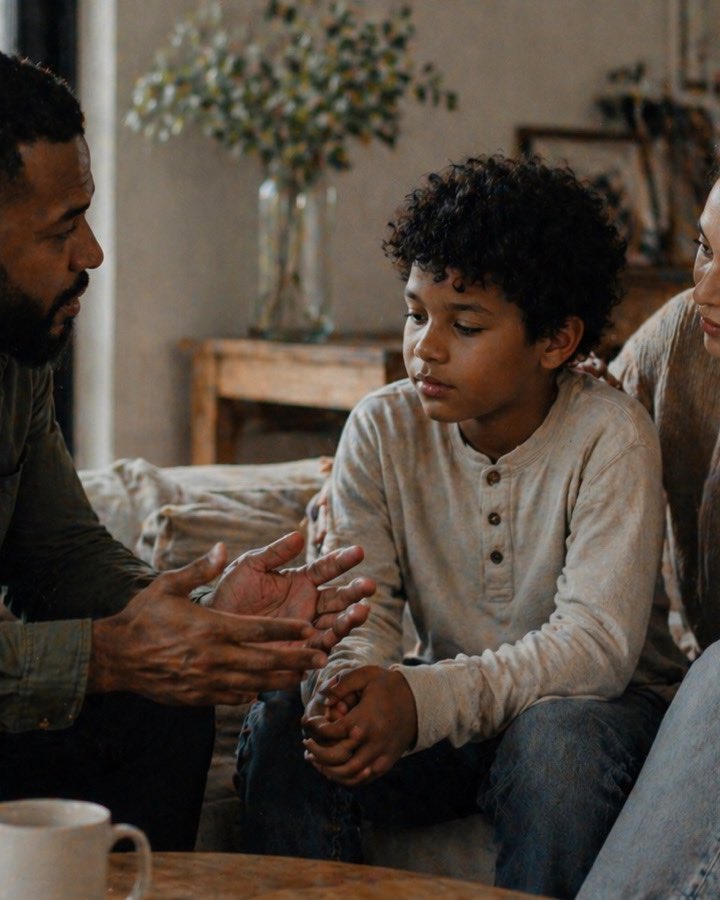
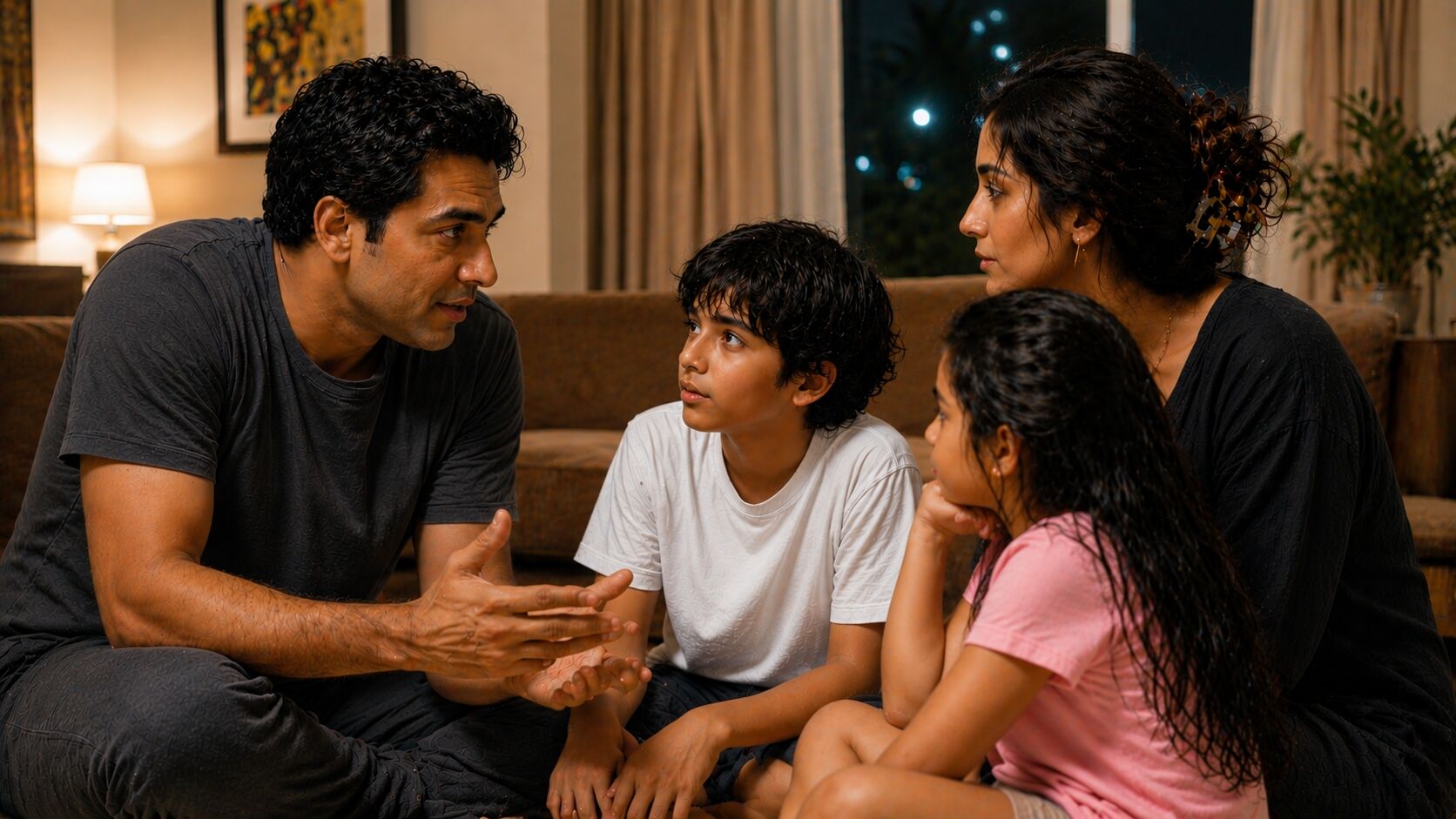
Sit down. Use the person's name. Speak directly.
"I have something sad to tell you. Grandma died this morning. That means her body stopped working completely — her heart stopped beating and she stopped breathing — and she won't be able to be with us anymore. I'm really sad about it. How are you feeling?"
Then stop. And listen.
Children often respond to death news in unexpected ways. They may seem unmoved, and then cry hours later. They may ask an unrelated question. They may need time to process before any response emerges. They may laugh from discomfort, or want to play.
All of this is normal. None of it means they don't care. None of it means you said the wrong thing.
Funerals, rituals, and involvement
Children benefit from involvement in death rituals — funerals, memorials, visiting a grave — at their own comfort level. Excluding children from these rituals in an effort to protect them often creates a sense that something shameful or frightening happened, which increases rather than reduces anxiety.
A few things that help when bringing a child:
- Prepare them for what they will see. Explain what a funeral is, who will be there, what the room will look like, what people might do (cry, hug, stand quietly).
- Give them a role if possible. Holding a flower. Drawing a picture for the casket. Lighting a candle. Roles give grief somewhere to go.
- Let them know it's okay to feel sad, to cry, or not to feel anything at all. Tell them they can leave the room if it becomes too much. Make sure another trusted adult is available to take them out if needed.
When a pet dies
The death of a pet is often a child's first direct encounter with death, and it's a genuine opportunity for building resilience — not a small thing to rush past.
- Don't replace the pet immediately. The new pet doesn't replace the lost one. Rushing can teach children that grief is something to be papered over.
- Don't minimize the loss. Even small losses are real losses.
- Let them grieve. A small memorial — drawing a picture, burying the pet if possible, planting a flower — gives grief a ritual expression children can hold onto.
The pet dying is not a lesser loss for a child. It may be the most significant loss they have experienced. Treat it accordingly.
When to seek professional support
Most children's grief is painful but processable with the support of caring adults, time, and patience. Speak with your paediatrician or a child therapist if your child shows:
- Prolonged sleep disturbance or significant change in eating that doesn't ease over weeks
- Persistent withdrawal from family, friends, or activities they previously enjoyed
- Significant decline in school performance
- Regression in skills they had previously mastered, lasting beyond the early weeks
- Intense, ongoing guilt about the death
- Any expression of wanting to harm themselves or join the person who died
Complicated grief in children responds well to specialised support. Asking for help is not a sign that you've failed your child — it's a sign that you're paying attention.
Frequently asked questions
Should I take my child to a funeral?
Participation in funeral rituals is typically beneficial if children are properly prepared. Explaining the environment beforehand (noting that others will be crying and expressing sadness) enables them to engage in healthy ways to process grief. Respect your child's feelings if they express a desire not to attend, and use it as an opportunity to understand their specific concerns.
My child keeps asking if I am going to die. What should I say?
Be honest and reassuring: "Everyone dies at some point. I'm healthy and I plan to be here with you for a very long time." False promises create distrust. Grounded honesty is more comforting than it seems — children can feel the difference between a real answer and a deflection.
What if I cry while telling my child?
Cry. It's not a failure to model emotion in front of your child. Showing them that adults are sad too — and that they survive feeling sad — is one of the most important things you can teach them about loss. The only thing to avoid is making them feel they need to manage your grief.
What if my child seems fine and isn't sad at all?
This is normal, especially in young children. They may not have absorbed the permanence yet, or they may be grieving in waves (fine in the morning, devastated by bedtime). Don't push them to feel something they're not feeling. Stay available — the grief usually arrives, often in unexpected moments.
Should I tell my child about a death right away?
Yes, as soon as you reasonably can, in a calm and private setting. Children often sense that something has changed before they're told, and the gap between sensing and knowing is its own anxiety. Hearing it from you, directly and gently, is far better than hearing it accidentally from someone else.
How long does grief last in children?
There's no fixed timeline. Children often re-process loss at each new developmental stage — a child who was 4 when a grandparent died may grieve again at 8 with a new understanding, and again at 14. This is normal and not a regression. Grief in children is non-linear.
How do I tell my child a pet died?
The same way you would tell them about any death — directly, in plain language. "I have something sad to tell you. Max died today. His body stopped working. He's not coming back, and we'll miss him very much." Let them ask questions. Let them feel sad. A small ritual — a drawing, a memory, a goodbye — helps.
The bottom line on talking to children about death
Children can handle honest conversations about death. What they cannot handle is the anxious silence around it, or the confusing euphemisms that leave them more frightened than the truth would have.
Tell the truth simply. Stay present. Answer questions as they come. Let them feel what they feel.
If your child expresses thoughts of harming themselves or wanting to join the person who died, seek help right away. In the US & Canada, call or text 988 (Suicide & Crisis Lifeline). For grief support for children and families, the National Alliance for Children's Grief offers a directory at childgrief.org. If your child is in immediate danger, call your local emergency number.