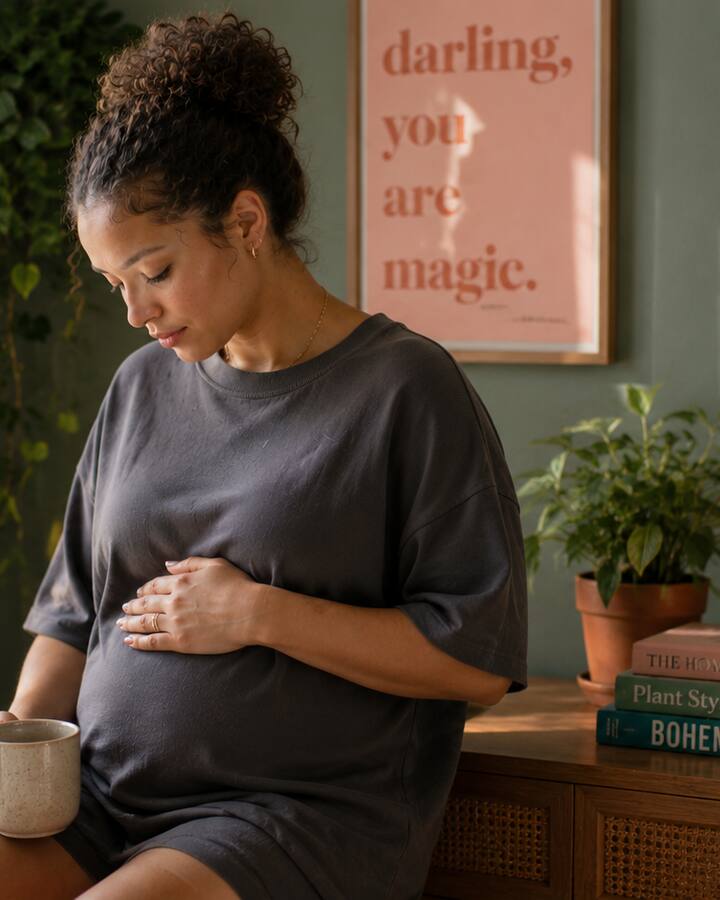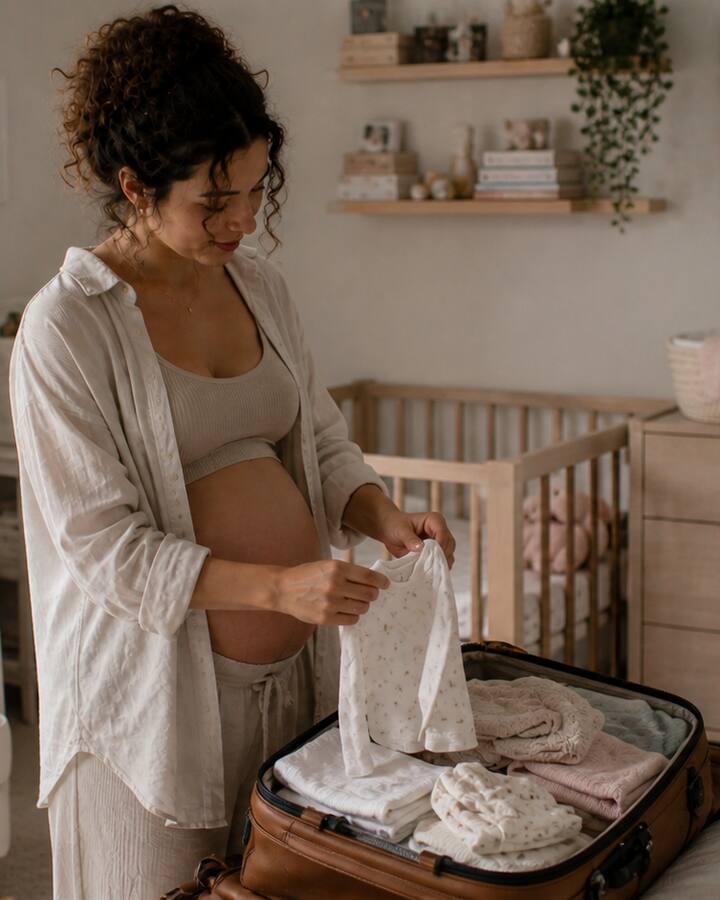

There is a version of motherhood we are sold, and there is the one we are sometimes given. Rachel Abugov's story is the second kind. It began at twenty-five weeks. What followed would test her, change her, and give her the daughter she has now.
The fear of beginning too soon. Of loving something so small you can hardly hold it. Of waiting in a room where every beep and every breath is a kind of prayer. Brooklyn is here now. She is thriving. But the way home was long, and Rachel agreed to walk us through it.
Rachel was not supposed to give birth in February. Her daughter Brooklyn was due May 12, 2024. She was not high risk. Her appointments were textbook. The night before everything changed, she was at a girls' sleepover, brushing off cramps as bad gas pains.
Four days later, at 25 weeks and 4 days, she delivered a baby who weighed just over a pound and a half.
What followed was 99 days inside the NICU — a stretch of time Rachel describes as the most terrifying and the most clarifying of her life. Now, with Brooklyn home and thriving, Rachel sat down with Momé to share what that experience looked like from the inside, and what she wants other mothers to know.
Before the storm
Rachel found out she was pregnant on vacation in Europe with two of her closest friends. They had only been trying for a month. "My sleep was off, my body felt different, and something in my gut told me," she says. When she got home and tested right away, she was shocked and extremely excited.
The first 20 weeks were brutal. She was incredibly sick all the time. Constant migraines. She could barely look at light. Vomiting nonstop. Multiple trips to the hospital for IV fluids because she was so dehydrated.
"It felt more intense than what most people describe as normal pregnancy sickness," Rachel says.
Then, from around week 20 until week 24, the sickness lifted. She felt energized. She loved her body. She finally felt like she could enjoy the experience. She finally got the version of pregnancy she had been promised. It lasted exactly four weeks.
What was your perspective on motherhood before Brooklyn arrived?
"I honestly did not have a clear picture of what motherhood would look like. I was excited to start a family, but I never considered myself naturally a baby person. I was always the friend who felt awkward holding babies and worried motherhood would not come naturally to me. But once I became a mom, all of those fears slowly disappeared."
She is clear about how she holds her birth story now. "Obviously, nothing about our birth story or NICU experience went according to plan, but all of those hardships shaped who Brooklyn is and who I am as a mother today."
The night nobody saw coming
There were no warning signs. No high-risk flags. All of her appointments and ultrasounds had been normal. She had actually been feeling great for the month leading up to everything happening.
On the night that would become the start of everything, Rachel was at a girls' sleepover and honestly thought she just had bad gas pains. The pain continued through the night and into the next day, but labor never even crossed her mind. Later, she would realize those pains were contractions.
The turning point was when she noticed her mucus plug had come out. She and her husband Jordan went to the hospital thinking maybe she had a UTI. Something minor. Something fixable. Even then, she still did not think labor was a possibility.
A resident examined her and told her she was already dilated. She would not be leaving the hospital until her daughter was born.
"The way the news was delivered was terrifying," Rachel says. "I remember feeling completely blindsided and overwhelmed."
The medical team focused on buying time. Every additional day inside meant more development for Brooklyn. Rachel received steroid shots for her daughter's lungs and brain, and medication to slow contractions. They held labor off for four more days.
On the morning of February 1, 2024, Rachel turned to Jordan and said, "I think today is the day." Brooklyn was not due until May 12.
A pound and a half of fight
The delivery was chaotic and frightening. So many doctors in the room. So much equipment. When Brooklyn was born, she cried — which Rachel calls the biggest relief of her life. Then her daughter was lifted away to the NICU team, Jordan followed, and Rachel was left alone, shaking, terrified, and completely unsure what was happening.
When she finally got to see her later, it was both beautiful and terrifying. "She was so tiny, only about a pound and a half," Rachel says. "But even then, she already felt like such a fighter."
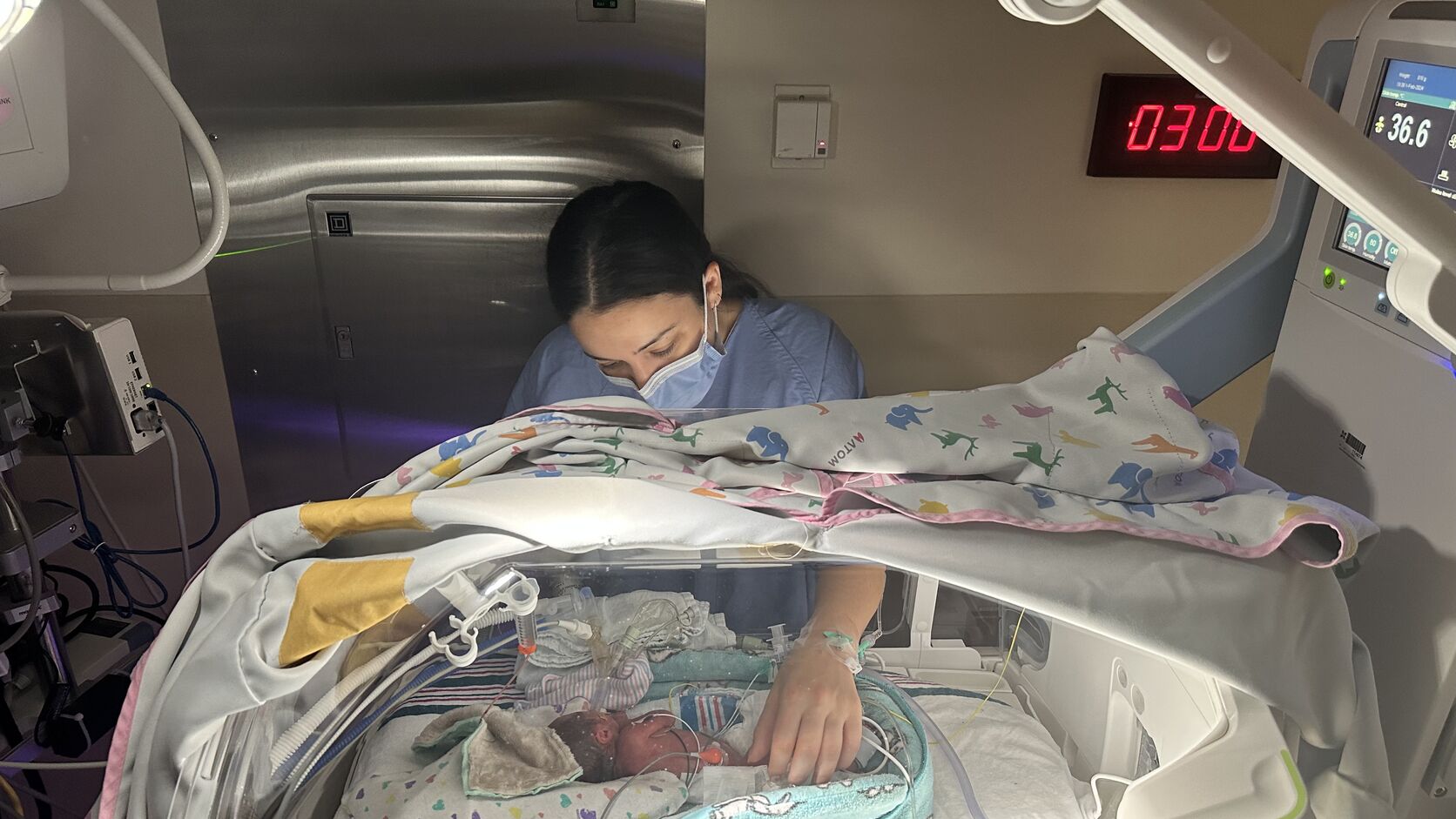
Rachel had been admitted at 24 weeks and 6 days, and delivered at 25 weeks and 4 days. The NICU specialists prepared her and Jordan for every possible complication and explained how much uncertainty there would be, both immediately after birth and long term. Everything felt unknown. They had no idea what the next few hours, days, or months would look like.
"The first week in the NICU was especially hard because Brooklyn was so small and fragile, and the beginning is when the most complications can happen," Rachel says. "As time went on and she grew stronger, we slowly learned how to live day by day."
She is honest about what those first moments held, and what they didn't. "I felt more fear than instant connection at first. I only saw her for a few seconds after delivery before she was taken away. I was numb, terrified, and overwhelmed by the unknown."
The bond came later. It came in skin-to-skin contact inside a NICU room where the nurses encouraged her to hold her daughter as much as her tiny body could handle, because it helps both development and bonding. Resources like La Leche League support skin-to-skin contact for premature infants as evidence-based care for both NICU babies and maternal bonding.
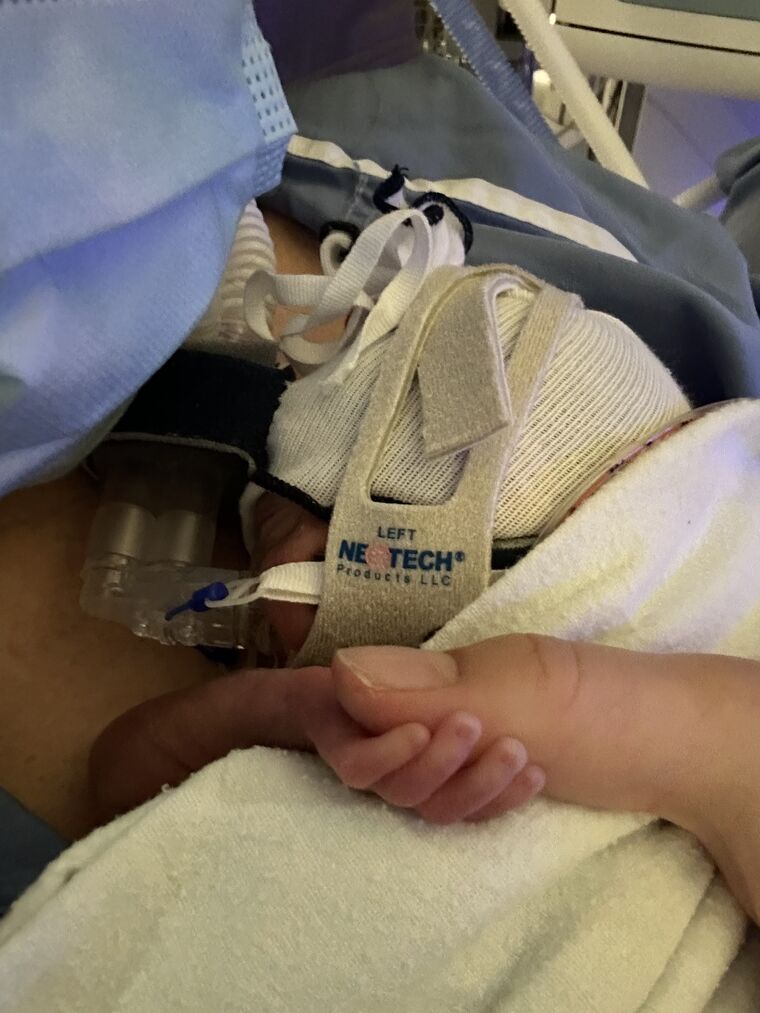
Rachel was able to touch Brooklyn fairly early while she was still in the incubator, but it was scary because she was so tiny and delicate. The first time Rachel held her skin-to-skin on her chest was one of the most incredible moments of her life.
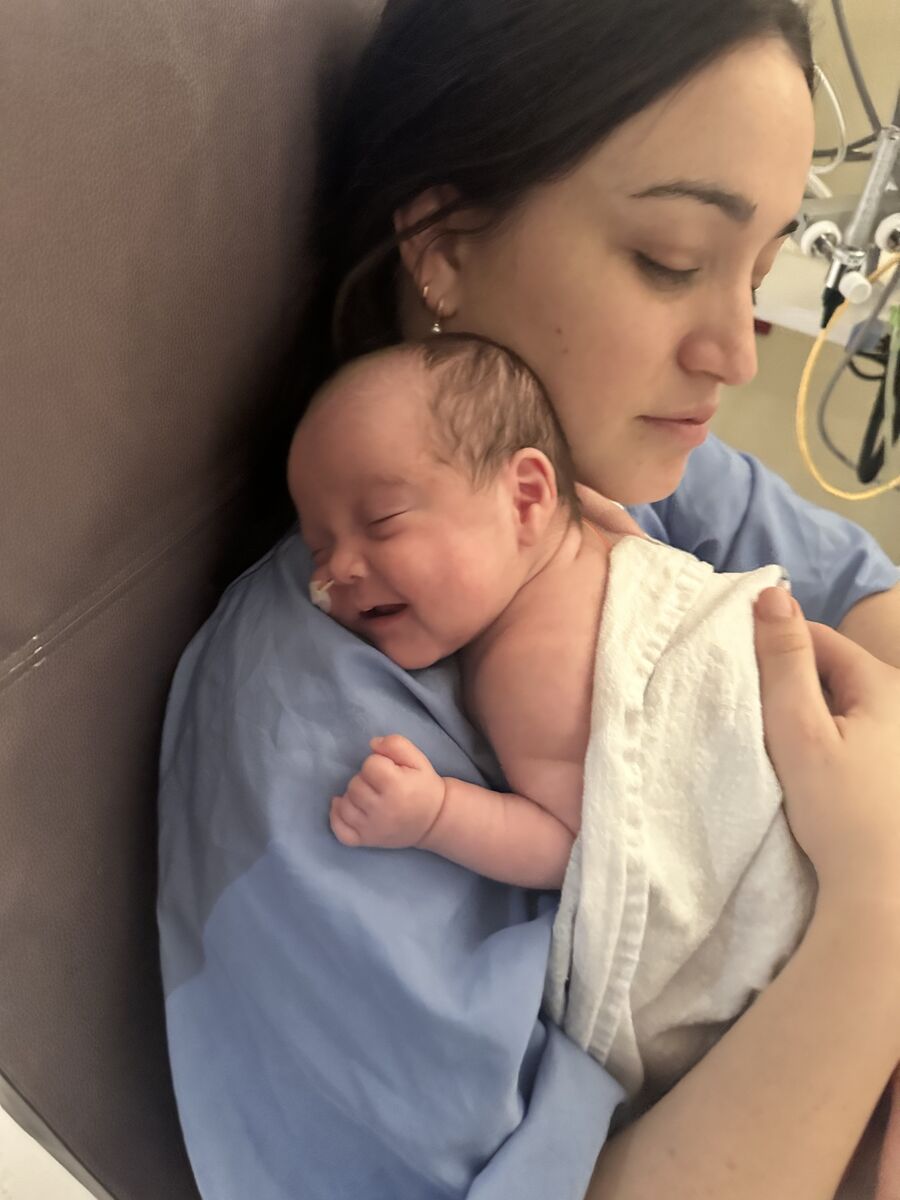
"We would spend hours like that every day, just breathing together. Those moments helped carry us through our NICU experience."
99 days
Brooklyn was in the NICU for 99 days, from February 1 until just before her due date in May.
The Abugovs built a life around the rhythm of those rooms. Every morning, Rachel and Jordan would arrive before doctor rounds so they could hear updates and ask questions. Jordan worked remotely from the NICU family room while Rachel stayed with Brooklyn most of the day.
Rachel pumped every two to three hours because her body was not prepared to produce milk so early. She spent hours doing skin-to-skin. She read to her daughter. She sat beside the incubator and waited. By evening, she would go home exhausted while Jordan stayed a few extra hours with Brooklyn.
What did your daily routine look like inside the NICU?
"We repeated that routine almost every single day for 99 days."
The nurses and social worker became such an important part of their lives. Three primary nurses, in particular, became part of the Abugov story. Alysha gave them the tough love and reassurance they needed. Madi was gentle and calming. Marlena brought warmth and positivity into the room. "Together, they helped us survive one of the hardest periods of our lives."
Brooklyn was born with a brain bleed and a hole in her heart, both of which thankfully resolved on their own. The biggest challenge was her breathing support. "There were multiple times we thought she was ready to come off oxygen support, only to walk in the next day and see her back on the machines. Those setbacks were heartbreaking."
The moment Rachel and Jordan could finally breathe themselves was when Brooklyn was fully breathing on her own without oxygen support. That, she says, felt like the biggest milestone of all. The American Academy of Pediatrics provides evidence-based guidance on developmental milestones for preemies, helping parents like Rachel understand what progress looks like at each stage.
The mental health piece nobody talks about
What happened to your mental health during this experience?
Rachel is candid about what that first month did to her. This is the part of the story most women carry silently, and it is the part Rachel is most determined to say out loud.
"I felt like a shell of myself. My hormones were overwhelming, I was exhausted, anxious, grieving my pregnancy, and trying to process everything all at once."
A social worker in the NICU helped tremendously. So did Sunnybrook's Women and Babies program, where Rachel began working with a psychiatrist. She eventually started anxiety medication, which she says has helped her immensely. "I wish I had accepted that support earlier."
Research from the American Psychological Association shows mothers of NICU babies experience higher rates of postpartum depression and PTSD. Rachel's experience reflects the clinical reality that postpartum mental health support is medical care, not weakness. If you or someone you know is struggling with postpartum depression or anxiety, Postpartum Support International offers screening tools, support groups, and resources for NICU parents specifically.
What she wants other mothers in the thick of it to know is simple. "It is okay not to be okay. It does get easier, even if it never fully leaves you."
The hardest goodbye
Coming home from the hospital without Brooklyn was heartbreaking. "I remember taking a shower after being discharged and just sitting there crying, holding my stomach and feeling confused that she was no longer there."
The empty nursery felt unbearable at first. But over time, as the Abugovs settled into their NICU routine and saw how incredible Brooklyn's care team was, Rachel found comfort knowing her daughter was exactly where she needed to be.
The people who showed up
Rachel is emphatic about this. "We could not have survived this experience without our family and friends. People showed up for us in ways I will never forget."
They cooked meals. They sent gift cards. They checked in without expecting responses. They drove Rachel home from the hospital when she needed rest. They helped the Abugovs prepare for a baby they were not expecting so soon. One of Rachel's closest friends had gone through a similar experience before her, and her support meant everything because she truly understood what they were going through.
Bringing Brooklyn home
The day the Abugovs left the NICU is one Rachel says she will never forget. The nurses and doctors gathered to say goodbye, took photos with them, and helped walk the family to the car.
"Driving home with Brooklyn felt both exciting and terrifying. The first thing we did when we got home was put her in her bassinet and take a walk around the neighborhood as a family of three."
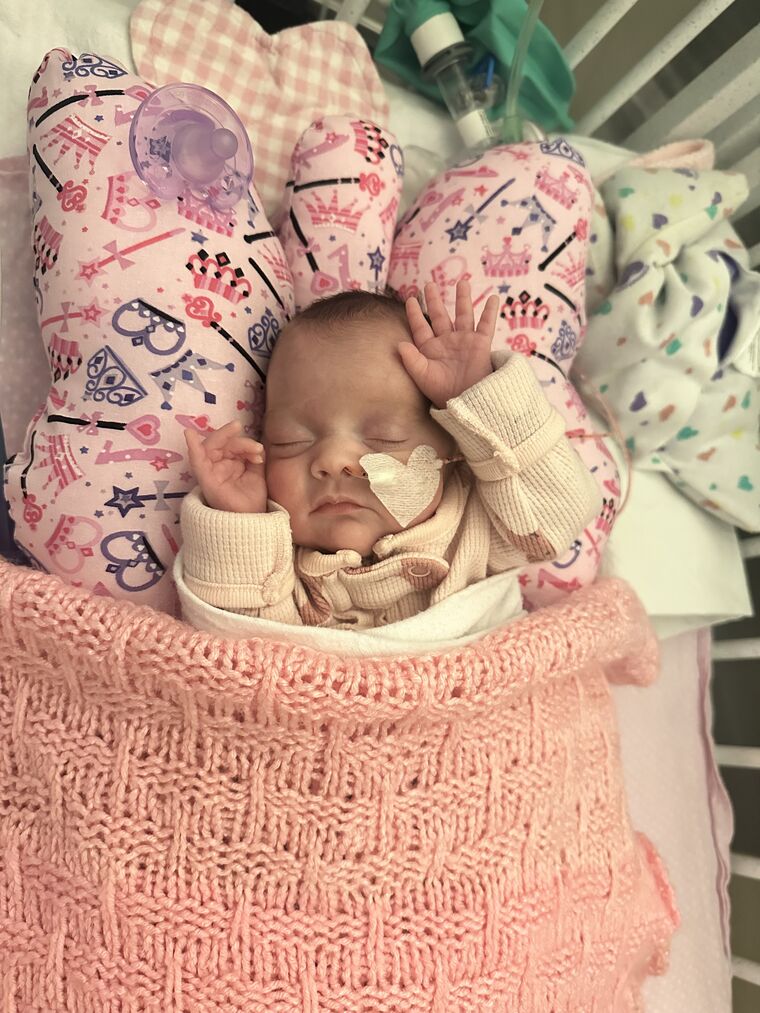
The first few months were cautious. Visitors wore masks. Very few people held her until she was stronger. But eventually, the Abugovs got to experience more of a normal newborn stage. "It was beautiful," Rachel says.
Who Brooklyn is today
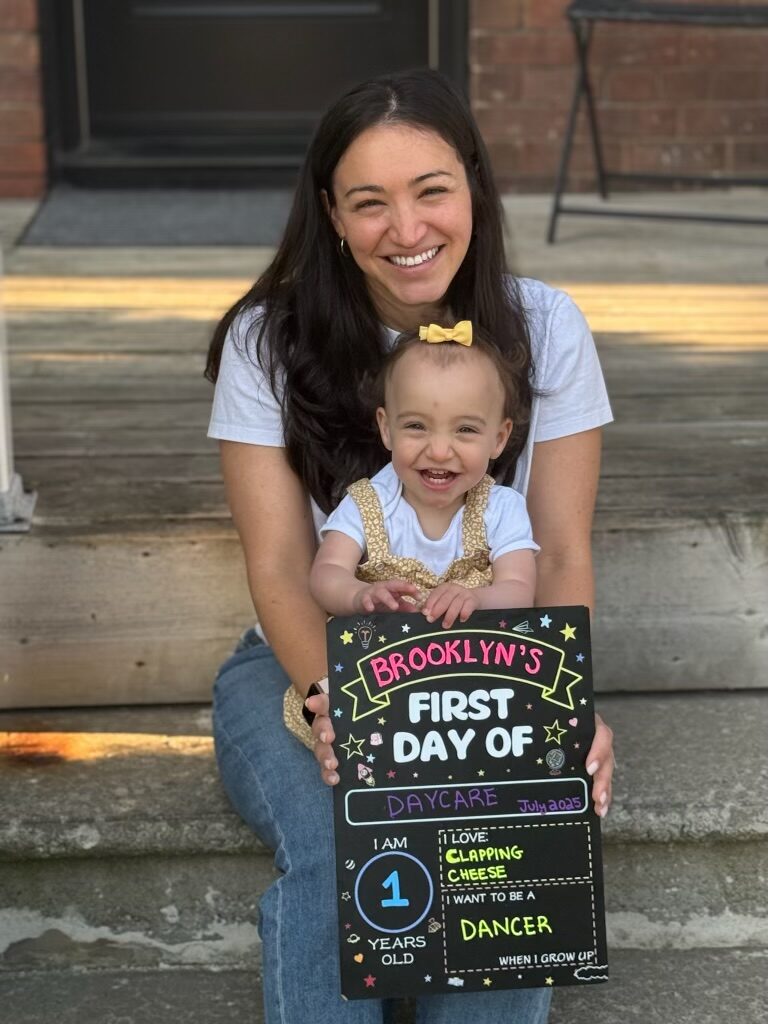
Brooklyn is, by her mother's account, "the most spunky, fun-loving, smart, happy little girl." She has so much personality and such a huge smile. She loves talking, walking, playing, and connecting with people.
"She may still be tiny, but she is incredibly mighty. Watching her grow into herself has been the most beautiful thing."
When Rachel talks about the best and hardest parts of being a mom, she does not hesitate. The best part is seeing Brooklyn happy — her smile, laugh, and joy completely light up Rachel's world. The hardest part is adjusting to having almost no personal time. "That was a major shift for me."
What motherhood gave her
"Motherhood completely changed my perspective on what is important," Rachel says. "Things that once felt stressful or urgent suddenly became much smaller. There is a different kind of love that comes with having a child. I did not even know that type of love existed until Brooklyn."
She surprised herself as a mother. The fears she had carried — the ones about not being a baby person, the ones about whether this would come naturally — slowly disappeared once Brooklyn arrived. "You grow into motherhood as much as motherhood grows into you. Everything I do now feels tied to giving her the best life possible."
What the NICU taught her
Being a preemie parent taught Rachel how strong she and Jordan are, both as parents and as a couple. It taught her what truly matters in life and how important it is to celebrate every small win.
The NICU also taught them how to become parents. The nurses guided them through everything from baths to feedings to diaper changes. They learned to be parents inside a hospital, surrounded by people who had done it a thousand times before. "It showed us the importance of community, resilience, and continuing to move forward even in difficult moments."
What Rachel wants you to know
If another mother is reading this from inside her own NICU stay, what would you tell her?
"It does get easier. You will get through it, even when it feels impossible. You have to let yourself feel whatever you are feeling, and you also have to let people help you. Asking for support does not make you weak. This experience will always stay with you, but over time you will learn how to carry it differently."
How has this changed the kind of mother and woman you want to be?
"This is the only version of motherhood I have known, so it is difficult to separate who I would have been from who I became through this experience. While I would never wish this journey on anyone, everything we went through shaped our family into who we are today, and I am grateful for where we are now."
As a woman, she wants to keep learning how to care deeply for the people she loves while also taking care of herself. "I have learned that taking care of yourself is not selfish. It allows you to be a better mother and partner."
The last word
Toward the end of our conversation, Rachel reflected on what the whole experience had given her, beyond Brooklyn herself.
"What happened to us came completely out of nowhere and changed our lives forever. This experience taught me that you never fully understand what someone else is going through until you experience something similar yourself. It taught me the importance of grace, compassion, and showing up for people."
It also inspired her to support other women going through similar experiences the same way others supported her. Having someone who understood, she says, made everything feel less lonely and less frightening.
"Most of all, I am just incredibly grateful for how far Brooklyn has come. Watching her grow and thrive feels nothing short of spectacular."
Brooklyn is now a thriving toddler. Rachel is now the mother she did not know she could be. And the 99 days inside the NICU are still part of the story — carried differently, but carried always.
If you're navigating a NICU stay or struggling with postpartum depression or anxiety, you are not alone. In the US & Canada, call or text 988. Postpartum Support International offers screening tools, support groups, and NICU-specific resources, and runs a helpline at 1-800-944-4773. If you are in immediate danger, call your local emergency number.