Nobody really talks about how your body feels after.
You did something incredible. And now you're swollen, sore, healing, leaking, regulating, running on three hours of broken sleep, and somewhere underneath all of it, hungry in a way you don't quite know how to feed.
There's inflammation. There's exhaustion. There's that strange dual feeling of needing care while also being the one everyone is asking how can I help.
This is where food quietly steps in. Not as a project. Not as a cleanse. Not as the next thing on a list of postpartum optimizations. Just as the small, ordinary act of feeding yourself well — which in this season, turns out to be one of the most useful things anyone can do for a healing body.
Why anti-inflammatory foods matter right now
A 2018 study in Brain, Behavior, and Immunity found that postpartum women have measurably elevated inflammatory markers for at least the first three months after birth, sometimes longer for women who breastfeed, had a C-section, or are running a serious sleep deficit. Inflammation in this window is normal. It's part of healing. But the foods you eat directly affect how that inflammation behaves.
Anti-inflammatory eating isn't a diet. It's a category of foods — warm, whole, easy to digest, rich in healthy fats and protein — that quietly support your body in doing what it's already trying to do: repair tissue, regulate hormones, rebuild iron stores, produce milk if you're nursing, and slowly stabilize a nervous system that has been through one of the largest physiological events a human can go through.
Researchers studying postpartum nutrition consistently come back to the same shortlist of nutrients new mothers need more of: omega-3 fatty acids, especially DHA, which has been linked to lower postpartum depression rates in multiple peer-reviewed studies; protein; iron; choline; and vitamin D. The foods below cover all of them, without anyone needing to track macros or read a single label.
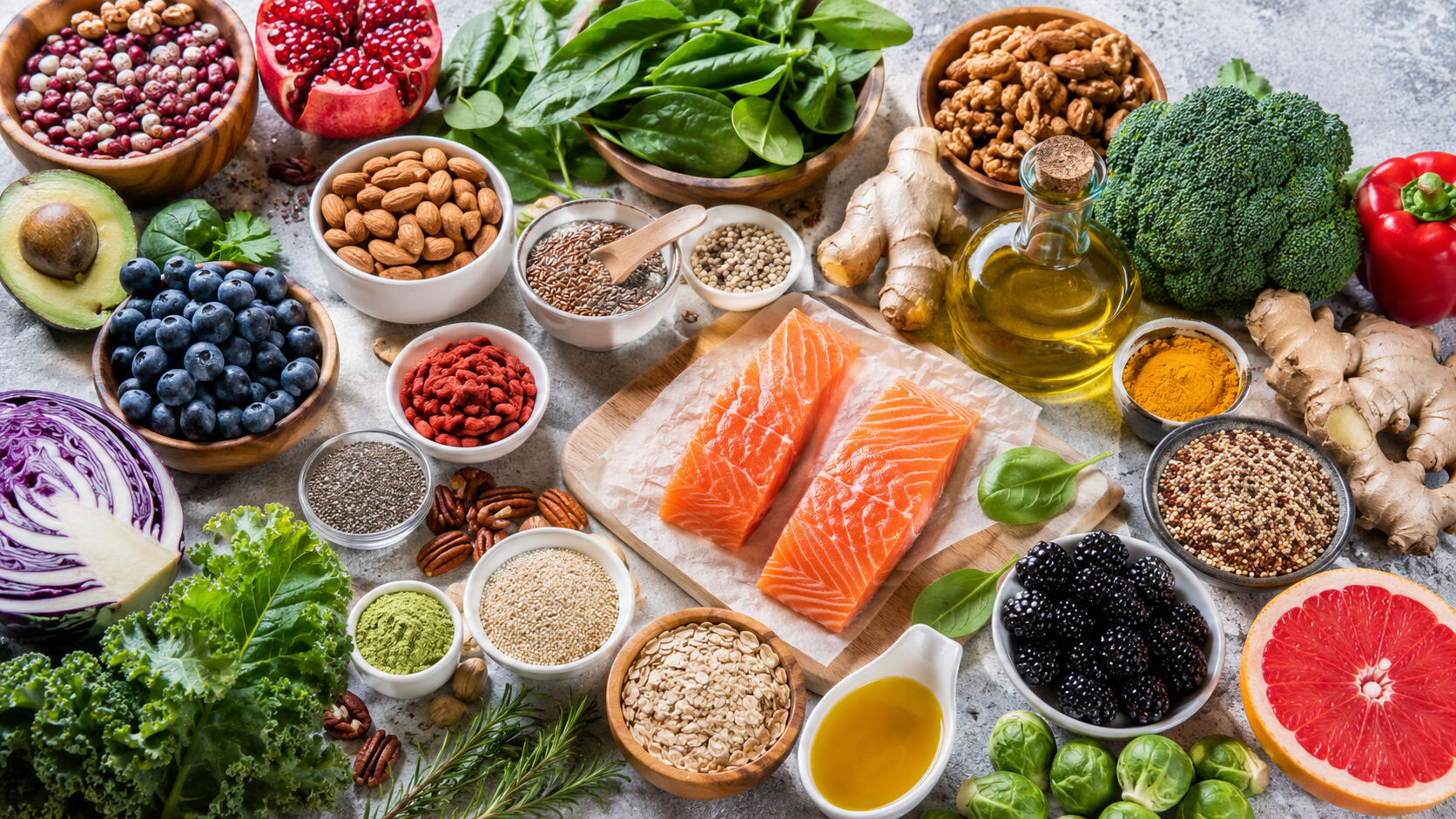
The seven postpartum foods that do the most work
01. Warm, slow-cooked proteins
Your body is rebuilding tissue, and it cannot do that without a meaningful amount of protein. Current postpartum nutrition guidance suggests 1.5g per kg of body weight per day for healing mothers, more if breastfeeding. The trick is warm and easy. Cold sliced chicken from the fridge is fine but not what your digestion is asking for in the first weeks. Slow-cooked, shredded, bone-in, or stewed proteins are gentler and more deeply nourishing.
What to reach for: shredded slow-cooker chicken, wild salmon, soft-scrambled eggs, slow-cooked beef, lentil and chickpea stews.
02. Healthy fats — and a real amount of them
Fats are not optional postpartum. They support hormone regulation, brain function, mood stabilization, and milk production if you're nursing. Most new mothers undereat fat without realizing it.
What to reach for: avocado (half a day, easy), extra-virgin olive oil drizzled on everything, nut butters, chia seeds, walnuts, full-fat Greek yogurt, fatty fish like salmon and sardines.
03. Cooked vegetables, not raw
Postpartum digestion is more sensitive than it was before. The abdominal wall, gut motility, and pelvic floor are all recalibrating. Raw salads can feel heavy and bloating in the first six weeks. Cooked vegetables deliver the same nutrients in a form your gut can actually absorb.
What to reach for: roasted sweet potato, steamed carrots, sautéed zucchini, wilted spinach, slow-roasted squash, simmered greens.
04. Anti-inflammatory spices
These do more work than people realize. Turmeric (paired with black pepper for absorption) is one of the most-researched anti-inflammatory compounds in the world. Ginger settles digestion and supports circulation. Cinnamon helps regulate blood sugar and stabilize energy.
What to reach for: stir turmeric into eggs or rice, drink fresh ginger tea, sprinkle cinnamon on oats and morning fruit, simmer them all into broths and soups.
05. Bone broth and soups
There's a reason every postpartum culture in the world has one — Korean miyeokguk, Chinese chicken-and-ginger broth, Mexican caldo de pollo, Jewish chicken soup. They all center on warm, mineral-rich broths in the first weeks after birth. They're hydrating, deeply absorbable, rich in collagen and amino acids, and require almost no work from your digestive system.
What to reach for: bone broth (sipped warm in a mug or used as a base for everything), brothy chicken soup, miso soup, simple lentil soups, slow-cooker stews.
06. Berries and gentle fruits
Antioxidants matter postpartum. They help neutralize the inflammatory by-products of healing. But the citrus-heavy, raw-fruit-bowl approach is harsh on a sensitive gut.
What to reach for: blueberries, strawberries, stewed apples with cinnamon, soft pears, baked banana, mango. Cooked or soft fruits are kinder than crisp ones.
07. Iron-rich foods (a lot of new moms are quietly anemic)
You lost more blood than you think. Postpartum anemia is one of the most under-diagnosed conditions in early motherhood. Research suggests up to 50% of new mothers are iron-deficient at six weeks postpartum. Low iron feels like postpartum depression: brain fog, fatigue, low mood, breathlessness. Some of it isn't your hormones. It's your iron — and the way to confirm it is to ask for a ferritin test specifically, not just the hemoglobin most panels stop at.
What to reach for: red meat, slow-cooked beef, lentils, dark leafy greens, pumpkin seeds, blackstrap molasses, dried apricots. Pair with vitamin-C-rich foods (citrus, peppers, strawberries) for absorption.
How to actually eat like this without thinking about it
You will not have time for elaborate meals. You will not have the bandwidth for a meal plan. The point of this article isn't to give you another thing to manage — it's to give you a few default patterns your body responds to.
Build a healing bowl
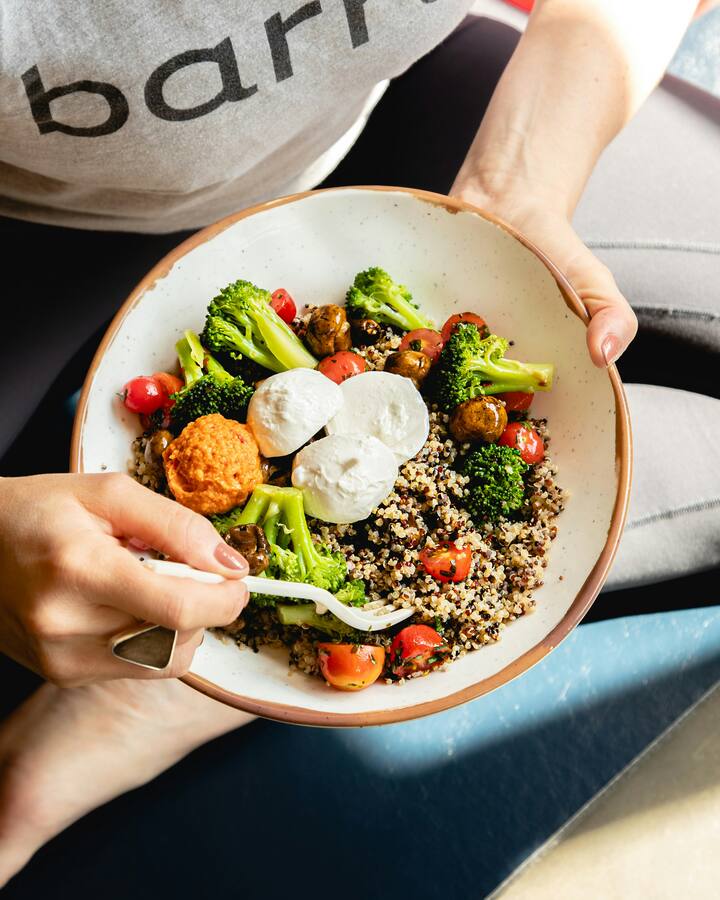
This is the only formula you need. It works for breakfast, lunch, dinner, and the 11pm "I forgot I haven't eaten" panic.
- One protein (slow-cooked chicken, eggs, salmon, lentils)
- One warm carb (rice, sweet potato, quinoa, oats)
- One soft vegetable (roasted, steamed, or sautéed)
- One fat (olive oil, avocado, tahini, butter)
- One spice or herb (turmeric, ginger, garlic, fresh dill)
Done. Mix any of those columns and you have a meal that does the work.
Prep one good day, eat for five
If you get one decent window of energy — yours, your partner's, or a friend who's offering to help — use it like this:
- Roast a tray of vegetables (carrots, sweet potato, squash, broccoli)
- Slow-cook a protein (a whole chicken, a pork shoulder, a pot of lentils)
- Cook a pot of rice, quinoa, or farro
- Make or buy a quart of bone broth
That's lunch and dinner for most of a week, in different combinations, with no thinking required.
Snacks that actually steady you
Postpartum hunger is sneaky. It shows up at 4pm, at 10pm, at 3am during a feed. Stash snacks within reach of where you nurse, where you sleep, and where you wash bottles.
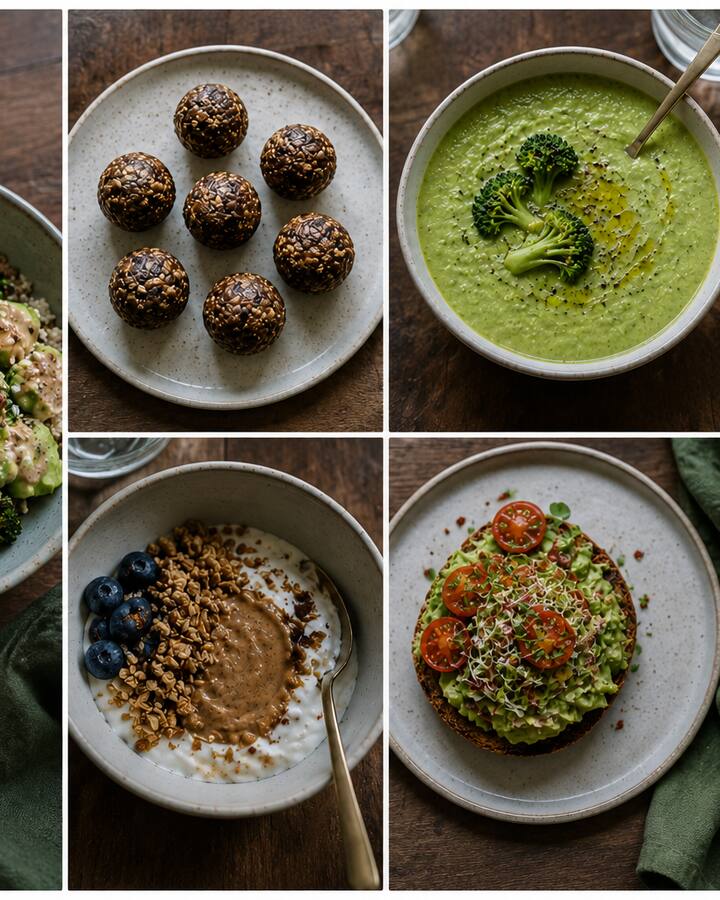
- Apple slices with almond butter
- Greek yogurt with berries and a drizzle of honey
- Sourdough toast with avocado and salt
- A handful of nuts and dark chocolate
- Cheese, crackers, and any soft fruit
- Hard-boiled eggs
Hydration is doing more than you think
Especially if you're breastfeeding, milk production requires roughly an extra liter of water per day. Plain water is fine. But warm fluids tend to feel better postpartum: warm lemon water in the morning, herbal tea throughout the day, broth between meals, coconut water or electrolytes if you're sweating through nightclothes. Your energy will tell you when you've gotten this right.
Where to ease up — gently
This is not a "foods to avoid" section. Postpartum is not a window for restriction, and the wellness internet has done enough damage telling new mothers to cut things out at the exact moment their bodies need more support, not less.
But there are a few categories that genuinely don't help a healing body, and easing up — not eliminating, just easing — tends to make a difference. Highly processed foods with long ingredient lists tend to drive inflammation rather than soothe it. Excess refined sugar can spike and crash your already-volatile postpartum blood sugar, which makes the energy roller-coaster worse. Heavy fried foods are harder to digest in a sensitive postpartum gut. Caffeine past about 2pm can quietly worsen the sleep you're already barely getting.
None of these are forever. None of these are about discipline. They are simply foods your body might appreciate less of, while it's doing the deep work.
The bottom line
You don't need a perfect diet right now. You need warm meals, simple ingredients, and someone — even if that someone is you — feeding you in a way that feels like care.
Healing is hungry work. Feeding yourself well, in this season, is not vanity or optimization. It is the small, ordinary, daily way you tell yourself: I am also worth taking care of.
That's the whole thing.
Frequently asked questions
What are the best foods for postpartum recovery?
Anti-inflammatory whole foods — slow-cooked proteins (chicken, salmon, eggs, beef), healthy fats (avocado, olive oil, nuts), cooked vegetables (sweet potato, squash, leafy greens), bone broth, berries, and iron-rich foods (red meat, lentils, dark greens) consistently support faster healing, stable energy, and milk production.
Why should I eat warm cooked foods postpartum instead of cold or raw?
Postpartum digestion is more sensitive. The gut, abdominal wall, and pelvic floor are all recalibrating. Warm, cooked foods are easier to break down and absorb than raw salads or cold meals, especially in the first six weeks.
Do anti-inflammatory foods actually help with postpartum recovery?
Yes. Postpartum bodies have measurably elevated inflammatory markers for at least three months after birth. Anti-inflammatory foods rich in omega-3s, polyphenols, and antioxidants directly support tissue repair, mood regulation, and energy stabilization in this window.
What should I eat for postpartum energy?
Balanced meals with protein, healthy fats, and complex carbs at every meal — never just carbs alone. Iron-rich foods are particularly important, since up to half of new mothers are quietly iron-deficient at six weeks postpartum, which can mimic the symptoms of postpartum depression.
What foods support breastfeeding and milk supply?
Adequate calories (an extra 450–500 per day), enough protein (1.5g per kg body weight), healthy fats (especially omega-3s), and roughly one extra liter of water per day. Oats, salmon, eggs, dark leafy greens, and bone broth are commonly recommended for nursing mothers.
Are there foods to avoid while breastfeeding?
For most mothers, no. Caffeine in moderation is fine. Alcohol is fine in small, timed amounts. Most babies tolerate everything their mothers eat. If a baby seems sensitive to a specific food (rare), an IBCLC (International Board Certified Lactation Consultant) or pediatrician can help identify it. Don't preemptively eliminate foods — postpartum is the wrong time for restriction.