Everyone has an opinion about what breastfeeding moms should eat. The lists of foods to avoid. The galactagogues. The supplements. The meal plans that assume you have time to soak chickpeas overnight.
Truly candid insights into postpartum nourishment are hard to find. Most advice feels like a polished wellness ad or a rigorous display of perfect eating, rather than a reflection of your actual life. This is about the real-world version of breastfeeding — one that recognizes you are nursing every few hours and managing the intense, heavy exhaustion that comes with it.
This is that version.
7am: the feed-yourself-first window
The single best piece of nutrition advice for breastfeeding moms is to treat your first feed of the day as your own.
Before the day gets complicated. Before the baby needs more. Before the messages pile up. Eat something that actually nourishes you.
The two-minute breakfast: overnight oats with a protein boost
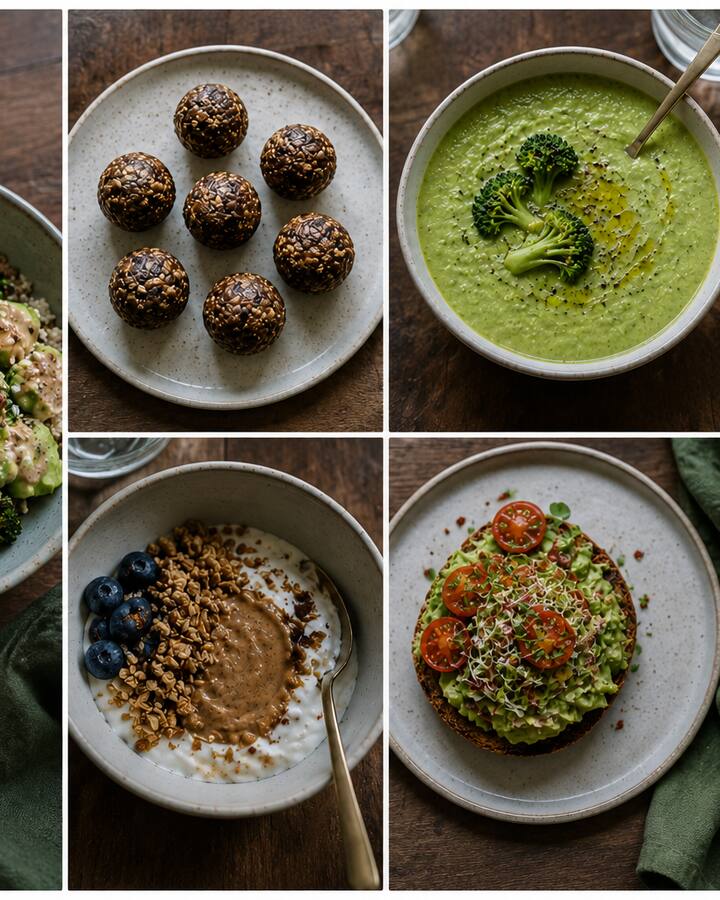
Prepared the night before in two minutes. Half a cup of rolled oats, one cup of whole milk or oat milk, one scoop of vanilla protein powder, a tablespoon of chia seeds, and a teaspoon of honey. In the morning, top with whatever fruit you have — berries, banana, sliced apple.
Around 25 to 30 grams of protein. Enough to sustain you through the morning feed cycle without a 9am crash.
The eight-minute alternative: eggs and avocado toast
Two scrambled eggs with wilted spinach, half an avocado on good bread. Complete protein, iron from the spinach, healthy fats, complex carbohydrates. Eight minutes from cold pan to plate.
The breakfast that gets eaten beats the breakfast that gets photographed.
10am: the snack that saves you
By mid-morning, you've fed the baby twice and possibly haven't sat down. This is the grab-something-quick moment — and what you grab determines whether 11am is bearable or brutal.
The principle: protein and fat together. Not crackers alone. Not fruit alone. Something that holds.
Stock these so they're already in the fridge:
- Full-fat Greek yogurt with a drizzle of honey and a handful of granola
- Hard-boiled eggs (made Sunday, kept in a covered bowl)
- String cheese with a small handful of almonds
- Apple slices and almond butter
1pm: the lunch that actually happens
Lunch for a new mom often happens standing up, one-handed, during a brief window of baby contentment. The recipes that work require minimal assembly and ideally zero hot pans.
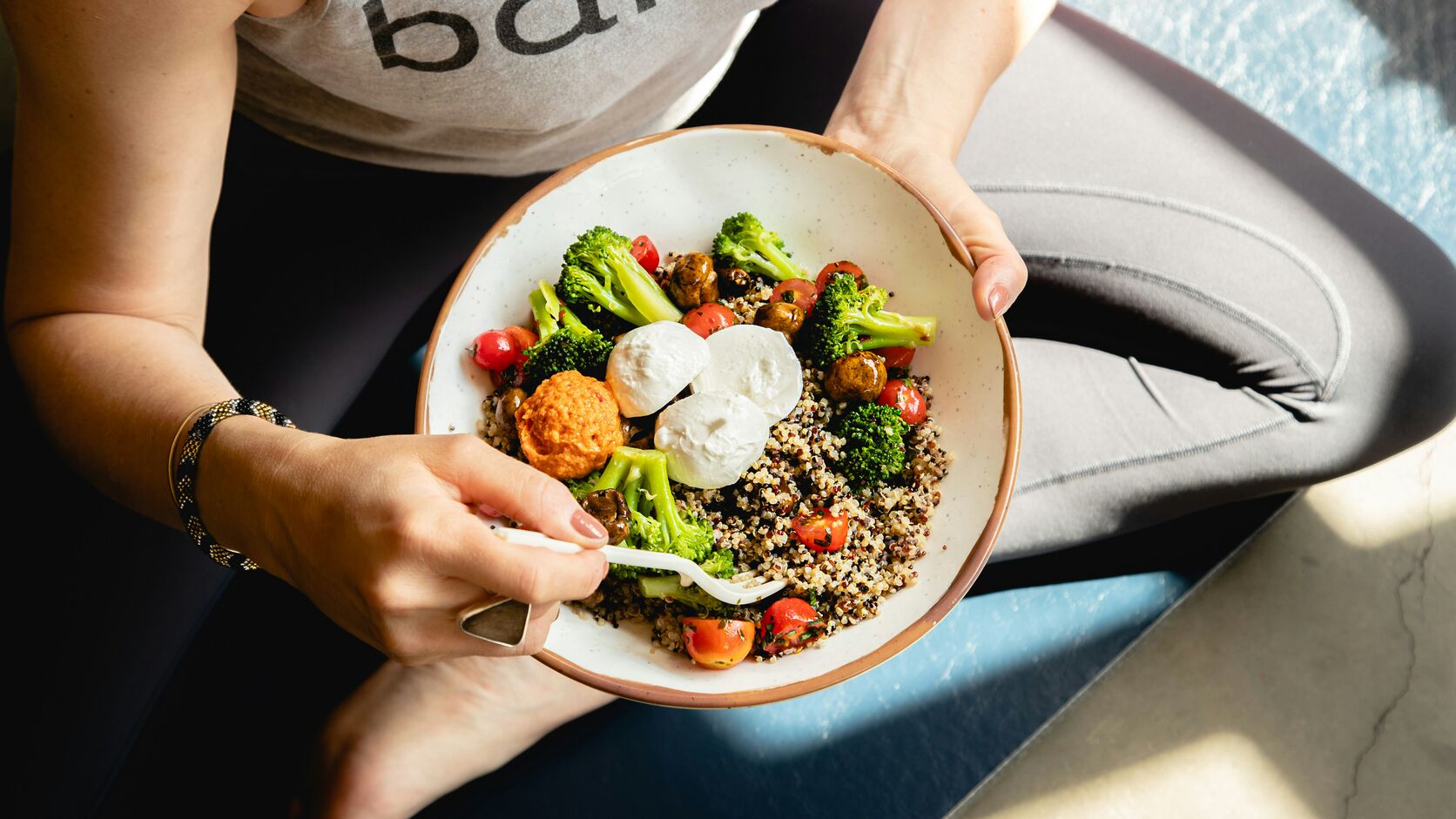
The grain bowl formula
Cook a large batch of grains at the start of the week. Farro, quinoa, brown rice, freekeh — whatever you have. Refrigerate.
Every day, assemble in five minutes:
- A scoop of cold grains
- Whatever protein is available — leftover chicken, tinned salmon, hard-boiled egg, lentils
- Whatever vegetables are in the fridge — last night's roasted, fresh cucumber and tomato, leftover sweet potato
- A simple dressing — olive oil, lemon, salt, dijon
This is genuinely one of the most nourishing things a breastfeeding mom can eat — iron, protein, fibre, complex carbohydrates, in five minutes of assembly.
The five-minute power lunch: tinned salmon on toast
Tinned salmon has the same omega-3 profile as fresh salmon. Mash it with a fork, add a squeeze of lemon and some dijon, and serve on good bread with sliced avocado. High in DHA, protein, and vitamin D.
The smartest lunch strategy: cook double at dinner
The best lunch is leftovers. Soup, bolognese, stew, stir-fry — anything that reheats in two minutes. Always make more than you need. This is the one habit that changes everything, and it's the same logic behind cook-once family meals.
A nourishing lunch you can eat one-handed is a feminist achievement.
3pm: the hunger dip
The 3pm window is when exhaustion and hunger combine and poor decisions happen — the second biscuit, the handful of chips that becomes more than a handful, the third coffee that won't actually help.
Stock the afternoon snack deliberately:
- Hummus with pre-cut vegetables and pita
- Cottage cheese with cucumber and everything bagel seasoning
- A small bowl of edamame from the freezer (4 minutes in the microwave)
- A two-minute protein smoothie: frozen banana, spinach, milk, nut butter, protein powder
The 3pm snack isn't optional. It's the difference between an evening that feels manageable and an evening you white-knuckle through.
6pm: dinner — simple, nourishing, everyone eats
Dinner with a baby in the house should require minimal active cooking time. The best dinners are the ones that mostly cook themselves.
Sheet pan salmon with roasted vegetables
Salmon fillets and vegetables on a single tray, olive oil, into the oven at 200°C for 20 minutes. Done. High in DHA, protein, and beta-carotene. One pan to wash.
Lentil soup
Made in large batches, reheated all week, eaten with crusty bread. Iron, protein, fibre. Warm and deeply nourishing — the kind of dinner that does some emotional work, too.
Stir-fry with chicken and vegetables over rice
Twenty minutes, one pan, complete meal. Sesame oil, ginger, and a small amount of soy sauce. Endlessly variable depending on what's in the fridge.
Slow cooker chicken stew
Set it up at 9am. Eat at 6pm. Zero active cooking time in the evening — which, frankly, is the only kind of dinner that should exist in the first six months postpartum.
All day: the hydration you're forgetting
Breastfeeding significantly increases fluid needs. Many moms run mildly dehydrated throughout the day without realising it — and the resulting fatigue compounds the existing exhaustion.
Keep a large water bottle beside wherever you feed. Drink a glass of water with every nursing session. If your urine is dark yellow, drink more, immediately.
Bone broth is an excellent hydrating option that also provides minerals and collagen. Keep cartons in the pantry for low-effort warm nourishment in the late afternoon when plain water feels uninspiring.
What this looks like on a hard day
Some days the overnight oats don't get made. Some days lunch is crackers and cheese standing at the counter. Some days dinner is whatever comes out of the freezer.
That's fine.
The goal is nourishment most of the time, not perfection all of the time. A breastfeeding body is resilient. Your milk quality will not drop because you had a day of imperfect eating. What matters is the overall pattern.
Keep the fridge stocked. Have easy protein accessible. Drink water. Eat enough.
You cannot nourish someone else from the empty.
Frequently asked questions
What are the best foods for breastfeeding moms?
High-protein meals with iron-rich ingredients, healthy fats, and complex carbohydrates. Sheet pan salmon, lentil soup, grain bowls, eggs, and Greek yogurt are the most reliable everyday options. Frequency and consistency matter more than any single "superfood."
How much should I eat while breastfeeding?
The CDC recommends an additional 330 to 400 calories per day above your pre-pregnancy baseline. You can find detailed guidance in the CDC's official breastfeeding nutrition recommendations. But focus on nutrient density — protein, iron, calcium, omega-3s — rather than counting calories. Hunger is a more reliable guide than maths in the postpartum window.
What foods increase milk supply?
The evidence for specific galactagogues — oats, fenugreek, brewer's yeast, lactation cookies — is mixed and largely anecdotal. The most reliable factors for milk supply are adequate overall caloric intake, good hydration, and frequent nursing or pumping. For evidence-based information on what actually affects supply, La Leche League's comprehensive guides distinguish between myth and science. Save your money on the specialty supplements.
What foods should I avoid while breastfeeding?
Far fewer than the internet suggests. Limit alcohol, keep caffeine moderate, and avoid high-mercury fish (shark, swordfish, king mackerel). Otherwise, eat normally — including spicy food, garlic, and dairy. Most "avoid" lists circulating online are noise.
Do I need to eat extra protein while breastfeeding?
Yes, modestly. Aim for a protein source at every meal and most snacks — eggs, chicken, fish, legumes, Greek yogurt, cheese, nuts. Protein supports milk production and helps stabilise your blood sugar through the long day.
What's the easiest meal to eat one-handed while breastfeeding?
Anything in a bowl. Grain bowls, oatmeal, soup, smoothies, yogurt with toppings. Two-handed food (sandwiches, salads with cut-up vegetables) requires putting the baby down — bowl food doesn't.