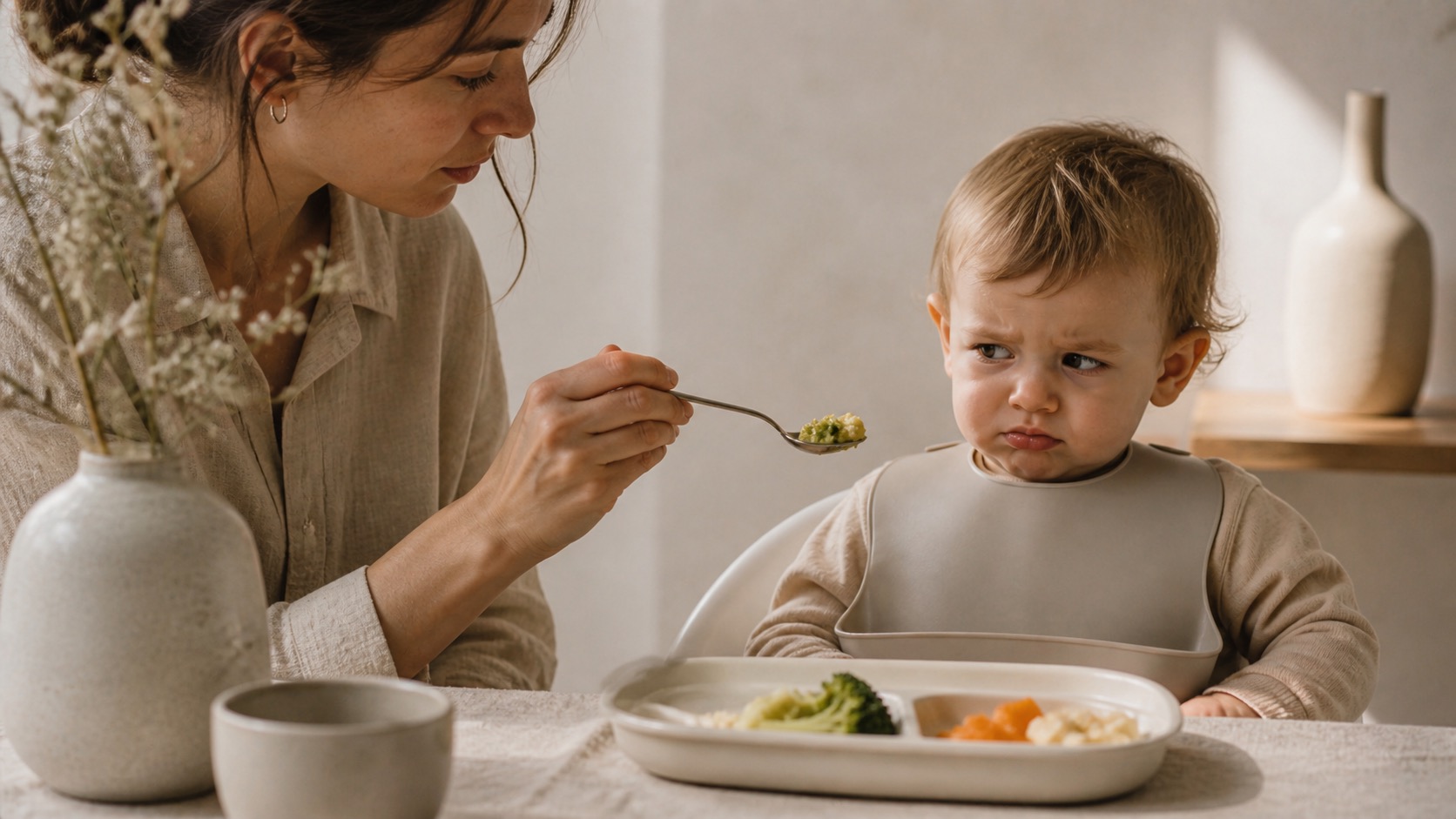
The first time you sit your baby in the high chair and offer them something that is not milk, something shifts. It's small and massive at the same time.
They open their mouths tentatively. They look confused. Some of it immediately comes back out. You take a photo. You text someone. You do it again tomorrow.
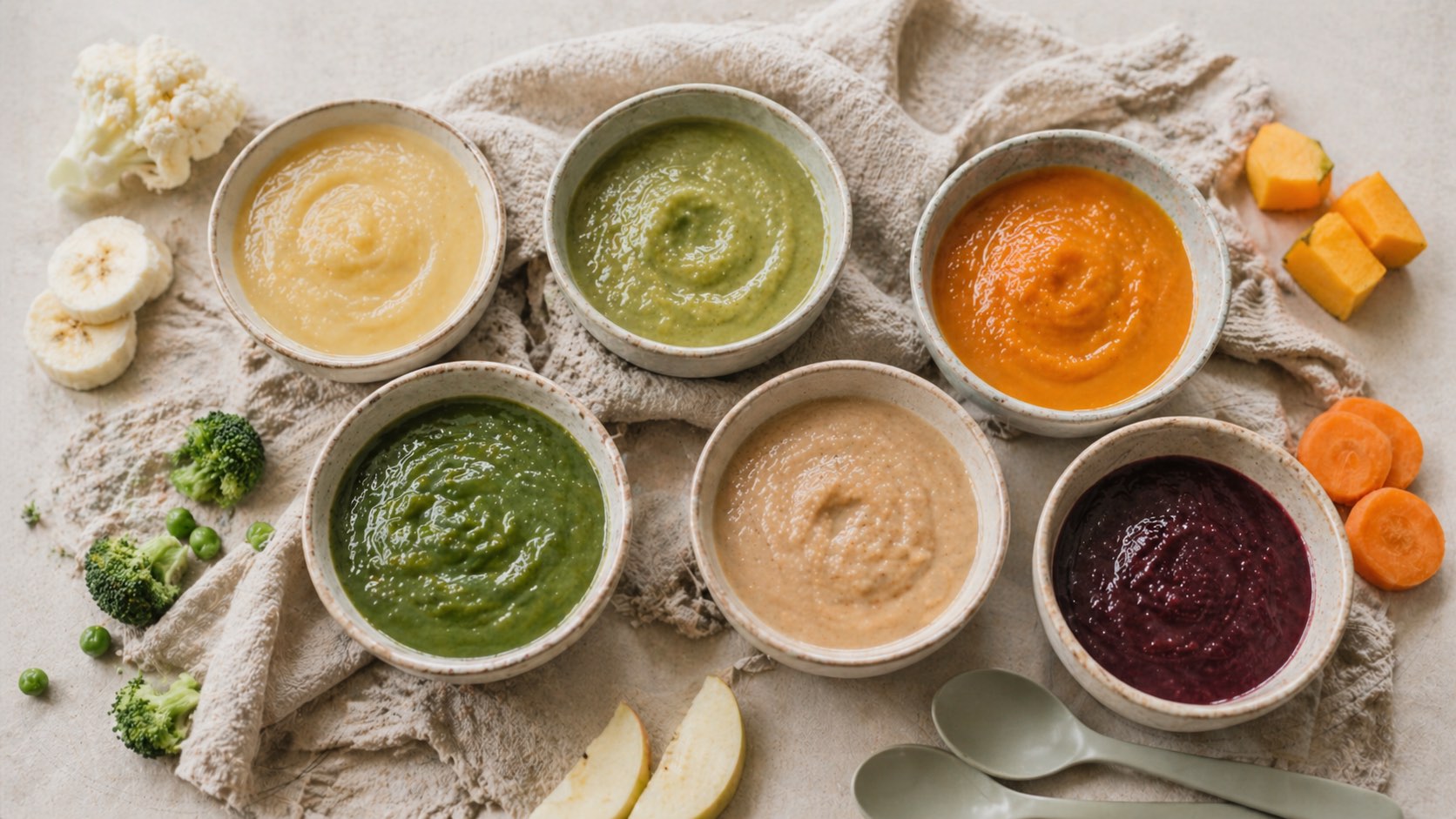
Beginning the journey of complementary feeding with straightforward, one-ingredient purees is a wonderful entry into this stage. We've selected 10 exceptional first foods that prioritise ease of preparation, high acceptance, and a palate built on authentic, whole-food tastes.
Before you start: the basics of introducing first foods
When to start solids
Standard paediatric advice — from organisations such as the American Academy of Pediatrics and the World Health Organization — generally suggests starting solid foods at around 6 months. By then, most infants show the key developmental signs: they can sit up with little help, have moved past the tongue-thrust reflex, and watch what you're eating with obvious curiosity.
If a medical professional advises an earlier start, between 4 and 6 months, these recipes still work. Simply make the texture extra thin and perfectly smooth by blending in a little more liquid.
What equipment you actually need
You don't need specialised baby-food equipment. A regular blender, a food processor, or even a fork — for soft foods like banana and avocado — works perfectly. A simple stove-top steamer basket is all you need for vegetables.
How to introduce first foods safely
Introduce new single-ingredient foods one at a time, waiting two to three days between each to watch for any sensitivity. Begin with small portions — one to two teaspoons per meal — and increase as your baby adjusts. Remember that breast milk or formula should still provide the bulk of their calories at this stage; solids are a way to explore new textures and tastes, not a primary source of nourishment.
The 10 best first puree recipes for babies starting solids
Sweet potato puree
The classic first food, and for good reason. Sweet potato is naturally sweet, smooth, and easy to digest — rich in beta-carotene, vitamin C, and fibre.
Steam or roast a medium sweet potato until very soft. Blend with enough water, breast milk, or formula to reach a smooth, runny consistency. Taste it. It should be genuinely pleasant.
Butternut squash puree
A similar profile to sweet potato — naturally sweet, smooth, rich in beta-carotene. Roasting rather than steaming adds a gentle depth of flavour that's worth the extra time.
Cut the squash in half, remove the seeds, and roast cut-side down at 400°F until very tender, about 45 minutes. Scoop the flesh and blend until completely smooth.
Carrot puree
Slightly earthier than sweet potato, with a beautiful colour. Rich in beta-carotene and vitamin A.
Peel and chop the carrots, steam until very soft, then blend with liquid until completely smooth. Pass it through a fine-mesh sieve if you want an ultra-smooth texture.
Pea puree
One of the first green vegetables — slightly more savoury than the root vegetables, which is valuable for building flavour range early.
Steam frozen peas (frozen are typically more nutritious than most "fresh") until tender, blend, and strain through a fine-mesh sieve to remove the skins. The sieving step matters for a smooth, easily swallowed texture.
Apple puree
Peel, core, and chop the apple. Steam or cook in a small amount of water until very soft, then blend until smooth. The natural sweetness is appealing, and the mild flavour pairs well with almost every vegetable puree once your baby has tried each ingredient on its own.
Pear puree
Even milder than apple, and naturally very smooth when ripe. For a ripe pear, you may not need to cook it at all — simply peel, remove the seeds, and blend. For firmer pears, steam briefly first. High in fibre and gentle on tiny digestive systems.
Avocado puree
No cooking required. Scoop the flesh of a ripe avocado, mash with a fork or blend, and thin with breast milk or formula if needed. Rich in healthy fats that support brain development.
Best made fresh, as it browns quickly — a squeeze of lemon slows the browning if you want to make a small batch.
Banana puree
The most convenient first food: peel and mash with a fork. No cooking, no equipment, no prep. Naturally sweet and smooth — and genuinely the one that works on the go, when you're out.
Parsnip puree
An underrated first food. Sweeter than carrot, with a slightly more complex flavour — a good way to introduce something more interesting without straying far from the sweet profile babies naturally gravitate toward.
Peel, chop, steam until very soft, and blend until smooth.
Zucchini puree
Mild, smooth, and easy to digest. Steam sliced zucchini until tender, then blend until smooth. On its own it's quite neutral — which makes it an excellent base for mixing with stronger-flavoured vegetables to help babies accept them.
Puree combinations to try, once single ingredients are established
Once you've introduced ingredients individually and confirmed there's no reaction, combinations become possible — and they're genuinely more nutritious and more interesting than any single puree alone.
- Sweet potato + apple — naturally sweet, deeply nourishing.
- Carrot + parsnip — earthy and gently sweet.
- Pea + a tiny amount of fresh mint — a real flavour introduction.
- Zucchini + pear — mild, smooth, easy.
- Butternut squash + apple — autumnal and rich.
- Sweet potato + a pinch of cinnamon — the gateway to spice.
How to batch-cook and store homemade baby food
Make large batches and freeze them in ice cube trays. Once frozen, transfer the cubes to labelled freezer bags. Each cube is roughly one ounce — a perfect starting portion. Defrost overnight in the fridge, or quickly in warm water.
- Refrigerated purees — up to 3 days.
- Frozen purees — up to 3 months.
- Avocado and banana — best served fresh.
For more on safe storage timelines, the USDA's FoodKeeper guidelines are the gold standard. And always label your bags with the date and ingredient — the difference between sweet potato and butternut squash is impossible to identify once frozen.
The bottom line on first foods for baby
First purees don't need to be complicated. Start with single ingredients, use good produce, cook until soft, blend until smooth. The quality of the ingredient matters more than any technique.
These flavours become the foundation of your child's relationship with food.
Start with single ingredients.
Make them taste like something real.
First foods for baby: frequently asked questions
What is the best first food to give a baby?
Any single-ingredient vegetable or fruit puree works. Sweet potato, carrot, pea, apple, pear, and avocado are all excellent starting points. The "best" one is whatever your baby will accept — the goal is repeated exposure to real flavours, not perfection on day one.
Can I make baby food at home instead of buying it?
Absolutely. Home-prepared purees are nutritious and economical, and they let you control exactly what goes into your baby's food. A steamer basket and a blender are all you need.
How do I store homemade baby food?
Refrigerate for up to 3 days, or freeze in ice cube trays for up to 3 months. Label each bag with the date and ingredient — frozen purees look almost identical to one another.
How much puree should I give my baby at first?
Start with 1 to 2 teaspoons per meal and increase gradually. Milk remains the primary source of nutrition; solids at this stage are for learning and exploration, not for filling them up.
Should first foods be sweet vegetables or savoury?
Mix it up. Babies naturally prefer sweet flavours, but research suggests early exposure to a range of tastes — including savoury greens like pea and zucchini — supports more adventurous eating later. Don't only offer the sweetest options.
Do I need to introduce vegetables before fruit?
There's no strong evidence that the order matters. What matters is variety, repeated exposure (sometimes 8 to 10 tries before acceptance), and a relaxed approach. Offer both.
How long do I need to wait between introducing new foods?
Two to three days is the standard recommendation. It gives you time to identify any reaction before the next new food is introduced.