You stand in front of the open refrigerator at 6 p.m., genuinely hungry for the first time in three days, and realise you cannot eat a single thing on the shelves. The chicken you bought yesterday smells wrong. The eggs are no longer a food. The leftover pasta might as well be wet cardboard. You close the door, lean your forehead against it, and try not to cry.
Welcome to first trimester food aversions.
There is no universe in which the woman who carefully meal-prepped her way through her thirties recognises herself in the woman now eating saltines on the kitchen floor at 11 p.m. for the third night running. The first trimester rewires your relationship with food in a way that nothing prepares you for. Foods you have loved for decades become impossible. Foods you have never cared about become the only thing you can keep down. And the standard nutritional advice for pregnancy ("a balanced diet with plenty of leafy greens and lean protein") becomes a kind of bitter joke, because the only thing your body wants is the corner piece of a bagel and a Sprite.
This is the article most moms need at week six. The honest one. The one that tells you what to eat when nothing sounds good, why your body is doing this, and how to nourish yourself anyway. No green smoothies. No quinoa bowls. Real food, for the real first trimester.
Why your body is doing this
Food aversions are caused by a hormonal cocktail you have not seen before, led by human chorionic gonadotropin (hCG), the pregnancy hormone that doubles every 48 to 72 hours in the early weeks. hCG peaks around weeks 8 to 11, which is also when most women experience the worst nausea and aversions. By week 13 or 14, hCG begins to drop, and most women experience their appetite returning.
Researchers believe food aversions are evolutionarily protective. Many of the foods women find suddenly repulsive (raw meat, fish, bitter greens, alcohol, coffee) are also foods that historically posed the highest risk to a developing fetus. Your body is, in its strange way, trying to protect the pregnancy. This does not make the aversions less awful, but it can help to know that what is happening is biological, not behavioural.
The other driver is hyperosmia, an enhanced sense of smell, also caused by elevated estrogen. You can suddenly smell a coworker's lunch from down the hallway. You can smell what is in the fridge from across the room. Smell is the largest component of taste, and when smell becomes overwhelming, food becomes overwhelming.
The good news is that this is a phase, not a permanent change. The vast majority of women see their aversions lift between weeks 13 and 16. Until then, the goal is not perfect nutrition. The goal is keeping something down.
The first rule: eat what you can
Throw out the prenatal nutrition checklist for the first trimester. Throw it out, fold it in half, recycle it. The advice you will get from well-meaning sources during this season will reference protein targets, vegetable servings, and whole grains. Most of this advice is written for women who are not actively gagging on the smell of their own kitchen.
The new rule is simpler. Eat what you can. Whenever you can. As often as you can.
If the only thing that sounds good is plain pasta with butter, eat plain pasta with butter. If the only thing you can keep down is cold watermelon and saltines, eat cold watermelon and saltines. If you have eaten the same grilled cheese sandwich for nine days in a row, eat it again on day ten. Your prenatal vitamin is doing the heavy nutritional lifting for you while your body sorts itself out. Your job, for the next few weeks, is calorie intake and hydration. Nothing more.
This permission is the most important thing many women never receive. The pregnancy industrial complex sells anxiety. The honest version is that the first trimester is a survival sprint, and survival looks like crackers.
The foods that tend to go down
Every pregnancy is different, but a few categories of food show up consistently across thousands of women's first-trimester diaries. These are the foods that, when nothing sounds good, often still sound okay.
Cold and bland
Cold foods give off less smell, and during a season where smell drives nausea, this matters more than you would think. Cold watermelon. Cold grapes. Cold cucumber slices with salt. Yogurt straight from the fridge. Cottage cheese. Frozen blueberries. Cold leftover pasta. There is a reason pregnant women crave Popsicles and shaved ice. The cold suppresses smell, hydrates, and goes down easily.
Salty and starchy
Saltines, pretzels, plain bagels, sourdough toast, plain tortillas, plain rice. These are the workhorses of first-trimester eating. The combination of salt and starch settles the stomach, absorbs excess acid, and provides quick energy. Keep them on every available surface. The first thing you eat in the morning, before you even sit up, should be a few crackers from the bedside table. This single habit prevents the empty-stomach nausea that often makes mornings unbearable.
Sour
Lemons, limes, sour candy, pickles, kombucha, vinegar-based dressings, green apples. Many women find sour flavours cut through the metallic taste in the mouth that often accompanies first-trimester nausea. Sour candy in particular (Lemonheads, Sour Patch Kids, Warheads) shows up over and over again on aversion-survival lists. Keep a bag in your purse.
Cold protein
When hot proteins are impossible, cold proteins often still work. Cold rotisserie chicken cut into small pieces. Hard-boiled eggs (sometimes, for some women). Cottage cheese. Greek yogurt. Cheese sticks. A handful of almonds. Hummus with crackers. Edamame straight from the freezer, lightly salted.
Smoothies and shakes
When chewing feels like work, drinking is easier. A simple smoothie with frozen banana, frozen berries, milk or oat milk, and a scoop of protein powder is one of the most reliable ways to get nutrition into a body that is rejecting solid food. Brands like Ritual Essential Protein for Pregnancy and Needed Pre/Postnatal Collagen Protein are formulated specifically for this season and are gentle on the stomach.
Cereal and milk
Do not underestimate this one. Cold cereal with cold milk is one of the most common first-trimester safe foods. Plain Cheerios, Rice Krispies, Special K. Many women eat cereal for breakfast, lunch, and dinner during weeks 6 to 12, and that is fine.
Soup and broth
Once you are past the worst of the nausea, simple soup and broth can be deeply comforting. Bone broth, chicken and rice soup, miso soup, tomato soup with a grilled cheese. The warmth and salt are restorative, and the volume is gentle.
Toast with butter
Always. Toast with butter is the universal pregnancy food. There is something about it that works when nothing else does. Sourdough toast with butter and a small sprinkling of salt has carried more women through the first trimester than any green juice ever has.
The foods that tend to be impossible
Again, every woman is different, but the foods on this list show up most often as universally rejected during the first trimester. If you cannot eat any of these, you are in good company.
- Eggs. Specifically the smell. Many women cannot enter a room where eggs are being cooked. This often returns by the second trimester.
- Chicken. Particularly cooked, hot chicken. The smell, the texture, the sight. This is one of the most-cited universal aversions.
- Coffee. Both because of the smell and because the bitter taste suddenly becomes intolerable. Many women who lived on coffee before pregnancy cannot drink it for the entire first trimester. Decaf often does not help, since the issue is usually smell rather than caffeine.
- Fish. All of it. Even fish you previously loved.
- Garlic and onion. Particularly when cooking. The smell can clear a kitchen.
- Salad. Cold and "healthy" sound appealing in theory but rarely deliver. Most women find leafy greens texturally and taste-wise difficult during the first trimester.
- Strong cheeses. Parmesan in particular. The smell is intense and lingering.
- Whatever you ate the day before you got food poisoning, ever. Pregnancy seems to call up old food memories like a search engine. Foods you have not had since college can suddenly be on the no-go list.
If your usual diet was built around any of these, you are about to feel completely unmoored. This is normal. Adapt. The aversions usually lift.
What to keep on hand
Stocking your kitchen for the first trimester is its own task. Forget the meal plan you used pre-pregnancy. Build a pantry around the foods that have a real chance of going down, and accept that 80 percent of what you bought before this is going to be inedible to you for two months.
The pantry
- Saltines, Ritz, oyster crackers
- Plain pretzels
- Sourdough bread or plain bagels (freeze the extras)
- Plain pasta and butter
- Plain rice
- Cold cereal you have not gotten sick of (rotate three or four)
- Granola bars (look for ones without strong herb or coconut flavours)
- Sour candy, including Preggie Pop Drops for nausea specifically
- Ginger candy or ginger tea
- Crackers with single ingredients (Mary's Gone Crackers, Wasa)
- A protein powder formulated for pregnancy
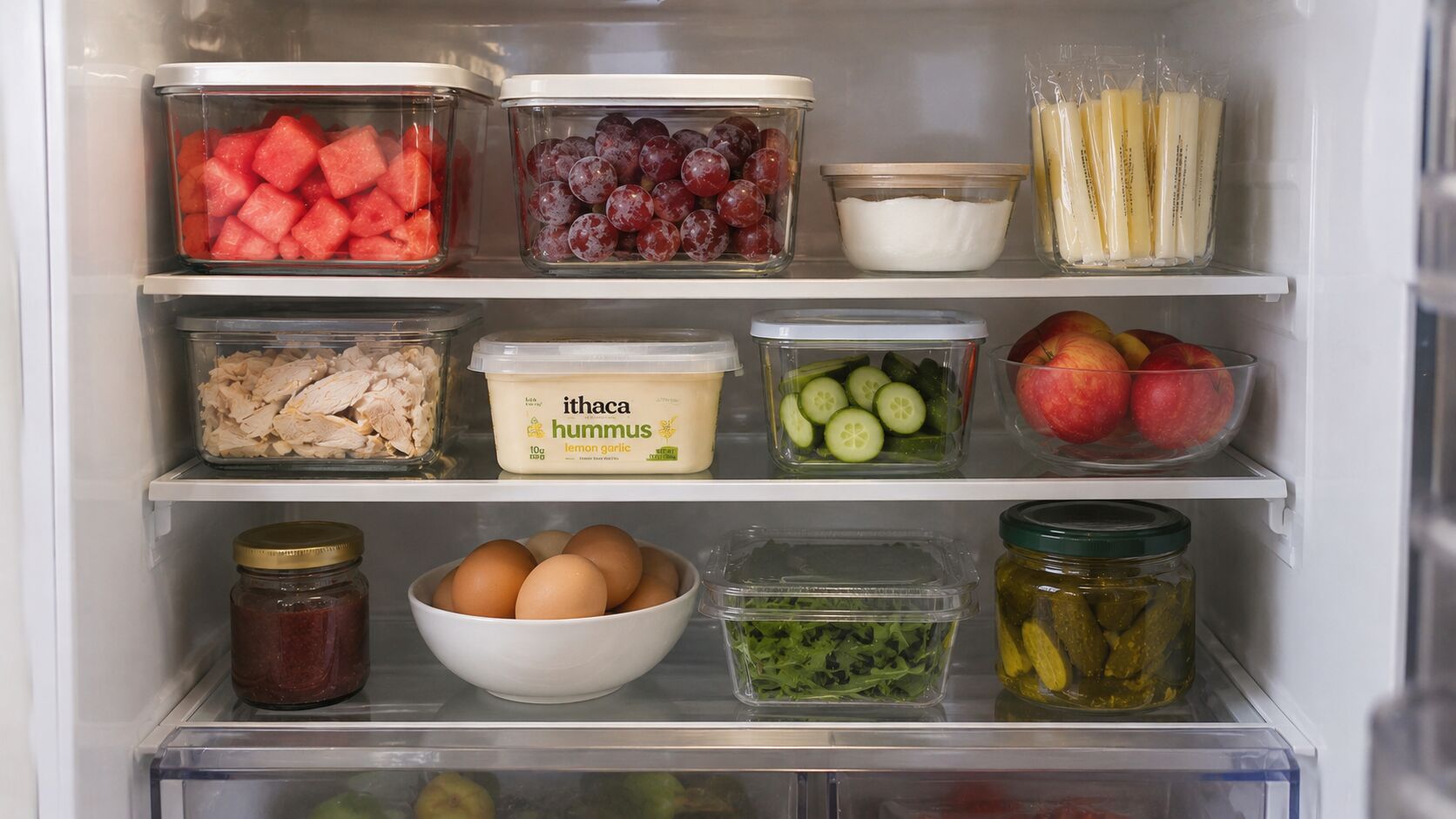
The fridge
- Watermelon (already cut)
- Grapes, frozen
- Yogurt and cottage cheese
- Cheese sticks
- Cold rotisserie chicken (when you can stand it)
- Hummus
- Pre-washed cucumbers
- Apples
- Plain milk or oat milk
- A pitcher of cold water with lemon slices
The freezer
- Frozen berries
- Frozen mango chunks
- Edamame
- Frozen waffles (Eggo does not need to be a moral failure right now)
- Pre-made smoothie packs
- Ice pops, particularly fruit-based ones
- Frozen meals from a service like Mosaic Foods or Daily Harvest for nights you cannot face the kitchen
How to manage nausea while eating
The mechanics of getting food down during the first trimester require a few small adjustments that make a real difference.
Eat before you are hungry. An empty stomach is the enemy. Once you let yourself get truly hungry, the nausea becomes much harder to manage. Eat small amounts, often. A snack every two hours is the rhythm most pregnant women settle into. Set phone reminders if you need to. The bedside crackers exist for this reason.
Stay hydrated, even when water tastes wrong. Many pregnant women suddenly find water repulsive (yes, plain water, the most neutral substance on Earth, can become impossible). If this is you, switch to: cold sparkling water, sparkling water with lemon, watered-down juice, coconut water, electrolyte drinks like Liquid IV or LMNT, popsicles, ice chips, or warm broth. Hydration is critical and dehydration worsens nausea, so any liquid that goes down is the right liquid.
Cold over hot. Hot food smells more, so it triggers more aversions. Cold meals are easier. A turkey sandwich is more likely to go down than a hot turkey dinner. A cold pasta salad is more likely to go down than warm spaghetti. When you can, eat cold.
Outsource the cooking. If your partner is around, let them cook. Better yet, let them cook outside, on a grill, or order takeout. The smell of cooking, particularly of proteins, is the trigger for many women. Removing yourself from the kitchen during meal prep is one of the simplest interventions.
Sea-Bands and B6. Sea-Bands (acupressure wristbands) help some women with motion-related nausea. Vitamin B6 (typically 25 mg, taken with doxylamine, which is the over-the-counter antihistamine in Unisom) is the standard first-line medical recommendation for pregnancy nausea. Talk to your OB about dosing.
Ginger. Ginger tea, ginger candy, ginger ale (the real kind with actual ginger, like Reed's or Bruce Cost). The evidence on ginger for pregnancy nausea is genuinely solid. It is one of the few "natural" remedies with clinical research behind it.
When food aversions become a medical issue
Most first-trimester nausea, however miserable, is self-limiting and not dangerous. Some is. Call your doctor if any of the following happen:
- You cannot keep liquids down for more than 24 hours
- You are vomiting more than three times a day
- You are losing weight
- You are dizzy, light-headed, or have not urinated in eight hours (signs of dehydration)
- Your vomit contains blood or appears coffee-coloured
These are signs of hyperemesis gravidarum, a severe form of pregnancy nausea that affects roughly 1 to 3 percent of pregnant women. It is a medical condition, not a "tough it out" version of regular nausea, and it requires treatment. Untreated hyperemesis can lead to hospitalisation. Anti-nausea medications, IV fluids, and other treatments exist and are safe during pregnancy. Ask for them. Your doctor would much rather hear from you than have you suffer in silence.
What to expect by week 14
The vast majority of women see their food aversions lift between weeks 13 and 16. Suddenly, the chicken sandwich you have not been able to look at sounds appealing again. The coffee smells good. You can stand in your own kitchen without holding your breath. The salad bar at lunch is no longer a horror.
This shift can be disorienting. Many women describe a moment around week 14 of standing in a grocery store and realising they want vegetables for the first time in two months. Trust it. Your body is rebalancing. Your appetite is coming back. The foods you missed will return.
The second trimester is when most women rebuild a normal eating pattern, often with a few new cravings (pickles, ice cream, citrus, salty things). The rest of pregnancy will continue to surprise you. But the worst of the food aversion phase is, for most women, contained to those first thirteen weeks.
You are not eating badly.
You are not failing. You are getting through.
The bottom line
The first trimester is the most physically demanding stretch of pregnancy, and the standard nutritional advice does not account for what your body is actually doing. Eat what you can. Eat when you can. Keep crackers everywhere. Take your prenatal. Hydrate however you can. Trust that your appetite will return.
The version of you who carefully chose every ingredient pre-pregnancy is not gone. She will be back. She will be different. She will, eventually, eat a salad again. For now, the cold pasta on the counter at 11 p.m. is doing the work. It is enough.
Frequently asked questions
What causes food aversions in early pregnancy?
Food aversions are driven by a surge in pregnancy hormones, led by human chorionic gonadotropin (hCG), which peaks around weeks 8 to 11. Elevated estrogen also causes hyperosmia, a heightened sense of smell. Because smell is the largest component of taste, foods — especially strong-smelling ones — can suddenly become overwhelming. Researchers believe the aversions are evolutionarily protective.
When do first trimester food aversions go away?
For the vast majority of women, food aversions lift between weeks 13 and 16, as hCG levels begin to drop and appetite returns. The worst of the phase is usually contained to the first thirteen weeks.
What foods are easiest to eat during first trimester nausea?
Cold and bland foods (watermelon, grapes, yogurt, cottage cheese), salty and starchy foods (saltines, pretzels, plain bagels, toast with butter), sour foods (lemons, pickles, sour candy), cold proteins, smoothies, and cold cereal with milk tend to go down most reliably. Cold foods give off less smell, which makes them easier than hot meals.
What are the most common food aversions in pregnancy?
The most frequently rejected foods are eggs, hot chicken, coffee, fish, garlic and onion, salad and leafy greens, and strong cheeses like parmesan. The common thread is usually smell, which is heightened in early pregnancy.
Is it okay to eat the same few safe foods every day in the first trimester?
Yes. During the first trimester the goal is calorie intake and hydration, not perfect nutrition — your prenatal vitamin covers much of the nutritional gap while your body adjusts. Eating the same safe foods day after day is completely fine until your appetite returns.
When should I call my doctor about pregnancy nausea?
Call your doctor if you cannot keep liquids down for more than 24 hours, are vomiting more than three times a day, are losing weight, show signs of dehydration (dizziness, not urinating for eight hours), or your vomit contains blood or looks coffee-coloured. These can be signs of hyperemesis gravidarum, which is treatable and requires medical care.