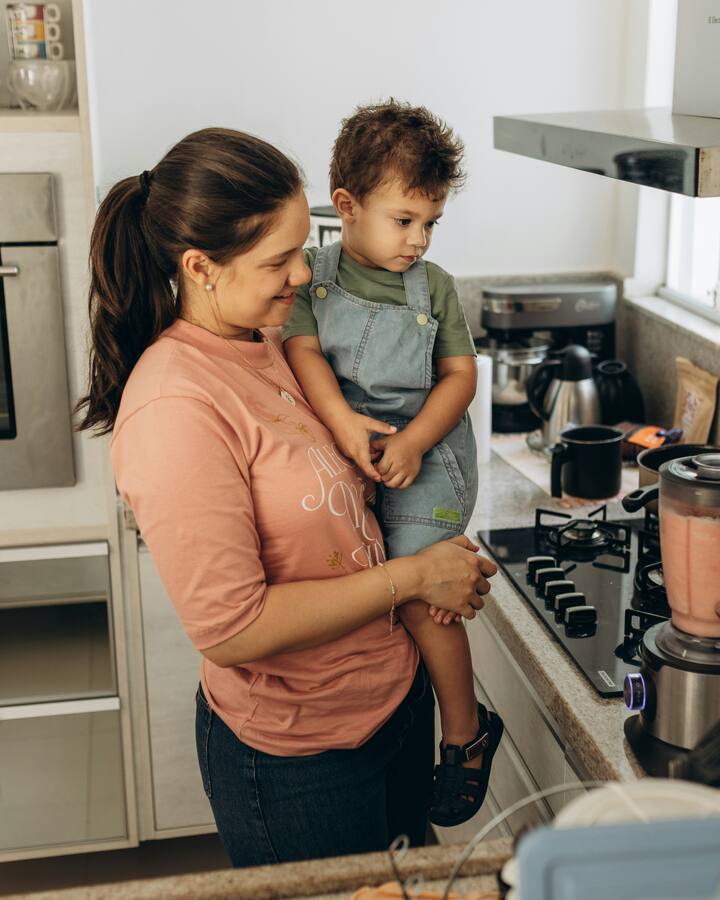
The fantasy of family mealtime: everyone gathered around the table, eating the same meal, connecting over food.
The reality at 6 to 12 months: you're making a separate puree for the baby, fielding a toddler who's decided tonight is the night they refuse pasta, and trying to eat your own dinner before it goes cold.
Instead of preparing separate dishes for your infant, adopt a more efficient strategy: prepare a single meal and adjust it during service. By using the same base ingredients and tailoring the textures, you can satisfy everyone at the table — from a 6-month-old starting solids to adults looking for a seasoned meal.
Within this guide you'll find a practical framework, a list of essential pantry staples for efficient cooking, and eight versatile meal ideas designed to satisfy both your baby and the rest of the family.
How to cook one meal for baby and the whole family
The principle is straightforward: cook ingredients in ways that can be served in different textures and forms simultaneously.
- Cook proteins and vegetables until soft enough for baby.
- Keep seasoning low, or add it at the end, to adult plates only.
- Serve sauces on the side when needed.
- Adjust the texture before serving — blend, mash, shred, or cut to suit the baby.
This approach exposes your baby to the flavours your family eats from the very beginning, which research shows supports more adventurous eating later. It dramatically cuts prep time. And it ends the separate-meal chaos.
8 family meals that work for baby and adults
1. Salmon with roasted sweet potato and broccoli
Cook all three for the whole family on a single sheet pan.
For baby: flake the salmon finely, mash the sweet potato, and offer broccoli florets soft enough to squash between fingers.
For the family: serve as is, with a squeeze of lemon and a drizzle of olive oil.
Prep: 25 minutes · Suitable from 6 months
2. Red lentil and vegetable soup
A big-batch base of red lentils, carrots, sweet potato, zucchini, onion, garlic, and low-sodium vegetable stock.
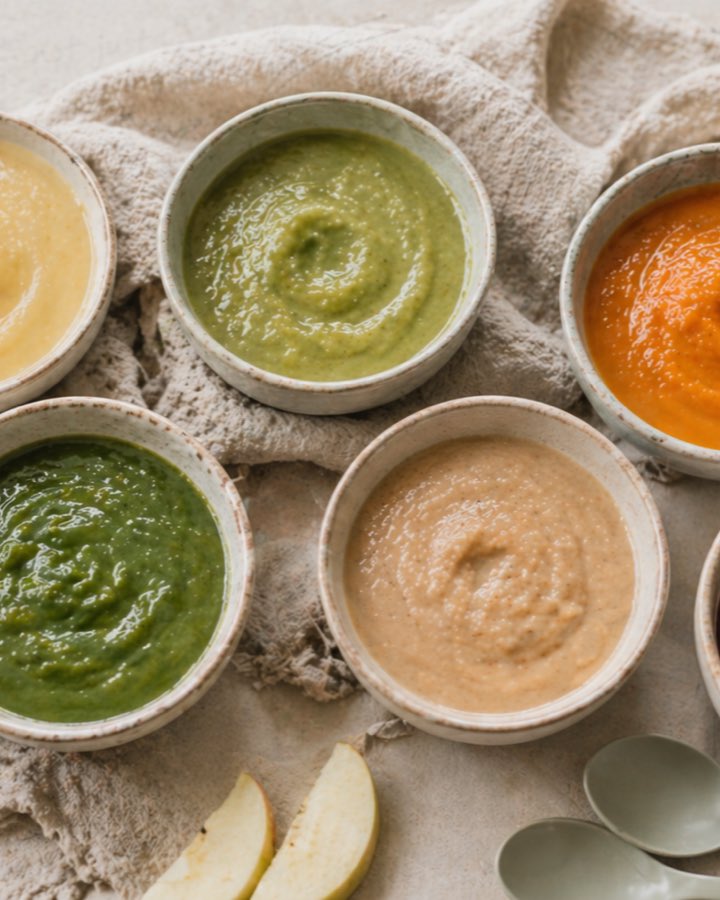
For baby: blend a portion until smooth, or leave chunky for older babies.
For the family: serve with crusty bread. Add salt and pepper to adult bowls after serving.
Prep: 35 minutes · Suitable from 6 months · Freezer-friendly
3. Sheet-pan chicken thighs with roasted vegetables
Season chicken thighs for the adults. Roast a second tray of baby vegetables — small pieces of sweet potato, carrot, zucchini, and capsicum — with just olive oil and nothing else.
For baby: shred the chicken finely and serve with the soft roasted vegetables.
For the family: serve a whole thigh with the fully seasoned vegetables.
Prep: 35 minutes · One oven, two trays · Suitable from 7 months
4. Beef or lentil bolognese
Build a bolognese with ground beef or lentils (or both), canned tomatoes, onion, garlic, carrot, zucchini, and a small amount of tomato paste. No salt during cooking — add it to adult portions only.
For baby 6 to 8 months: blend a portion of the sauce and serve over very soft pasta.
For baby 9 months plus: serve the chunky version with small pasta shapes.
For the family: serve as normal, with parmesan and seasoning.
Prep: 40 minutes · Freezes for weeks
It is also the dish Giada De Laurentiis's daughter requests most — and, as Giada points out, Italians will happily cook one meal and eat it for days.
5. Egg fried rice
Cooked rice, scrambled eggs, frozen peas and corn, and a small amount of sesame oil — all in one pan.
For baby: serve the rice soft with scrambled egg and peas. No soy sauce.
For the family: add soy sauce, extra sesame oil, and spring onion.
Prep: 20 minutes · Suitable from 8 months
6. Avocado and salmon toast
A quick lunch rather than a dinner.
For baby: mash the avocado, flake the salmon, and serve on soft bread or as pieces baby can self-feed.
For the family: toast, and season with salt, lemon, and chilli flakes.
Prep: 5 minutes · Suitable from 6 months · Omega-3s for everyone
7. Slow-cooker chicken and vegetable stew
Chicken thighs, potato, carrot, parsnip, leek, low-sodium stock, and a bay leaf. Cook all day on low.
For baby: pull the chicken and mash or shred finely with the very soft vegetables.
For the family: serve as stew, with seasoning added to taste.
Prep: 10 minutes hands-on · Suitable from 7 months · One pot, zero effort during the day
8. Pasta with hidden-vegetable tomato sauce
Blend roasted capsicum, zucchini, onion, garlic, and canned tomatoes into a smooth sauce. Toss with pasta.
For baby: serve with very soft pasta pieces.
For the family: add parmesan, fresh basil, and more seasoning.
Prep: 30 minutes · Genuinely delicious, not a compromise meal · Freezer-friendly sauce
The 4 modification questions to ask of any family meal
Before you cook, run any family recipe through these four questions:
- Is it soft enough for a baby, or can I easily make a portion softer?
- Can I add salt, spice, and seasoning to adult portions after serving?
- How should the food be prepared to suit the baby — would shredding, cutting, mashing, or blending work best?
- Can I batch this for freezer portions?
If the answer to questions 1 and 2 is yes, you've got a family meal.
Pantry staples for one-meal family cooking
Stock these and one-meal cooking gets dramatically easier:
- Tinned lentils and chickpeas — protein ready in minutes.
- Tinned tomatoes — the base of more meals than any other single ingredient.
- Frozen vegetables — peas, corn, edamame, spinach.
- Good-quality eggs — the fastest protein in the house.
- Oily fish — tinned salmon, fresh salmon, sardines.
- Sweet potato — bakes while you do everything else.
- Greek yogurt and cheese — instant protein additions to any meal.
The bottom line on family meals with baby
The exhaustion of the separate-meal system is entirely unnecessary. By cooking a single nutritious meal and modifying it at the table, the whole family can connect over real food — everyone eating together, with far less time spent in the kitchen.
Family meals aren't an aspirational goal. They're a practical strategy for saner evenings — and the best way to raise a baby who eats a varied, confident diet.
Frequently asked questions
When can babies start eating family food?
From around 6 months, when starting solids, babies can eat modified versions of family food — soft-cooked, low-sodium, and at appropriate textures. They don't need separate baby food.
How do I reduce salt in family meals for babies?
Cook the base meal without added salt and season adult portions after serving. This is the simplest way to make one meal work for everyone, and it's the principle behind every recipe in this guide.
What family foods are not safe for babies?
Added salt, honey (under 12 months), whole nuts, whole grapes and cherry tomatoes (always quarter them), and high-mercury fish. Otherwise, most whole foods prepared at the right texture are suitable.
How do I cook one meal for babies and adults without it tasting bland?
Build flavour without salt using aromatics like onion and garlic, plus fresh herbs, lemon, and tomato. Reserve salt, chilli, and other intense spices for adult servings only — so the meal is sophisticated for parents and wholesome for the baby.
Can I freeze family meals for my baby?
Absolutely. Most of these dishes freeze well in infant-sized servings — use small containers or silicone moulds and thaw only what you need. Tomato sauce, stew, soup, and bolognese can be frozen safely for up to three months.
Do I need to make separate purees if I'm starting baby-led weaning?
No. Family meals modified at the table work for both spoon-feeding and baby-led weaning. Mash, blend, or offer as soft finger food depending on what your baby is ready for.