
There is an hour of motherhood nobody photographs. It happens at 3 a.m., in the blue glow of a phone screen, a woman sitting upright in bed attached to a machine that hums like a metronome for her exhaustion. She is counting ounces. She is wondering if she is the only one.
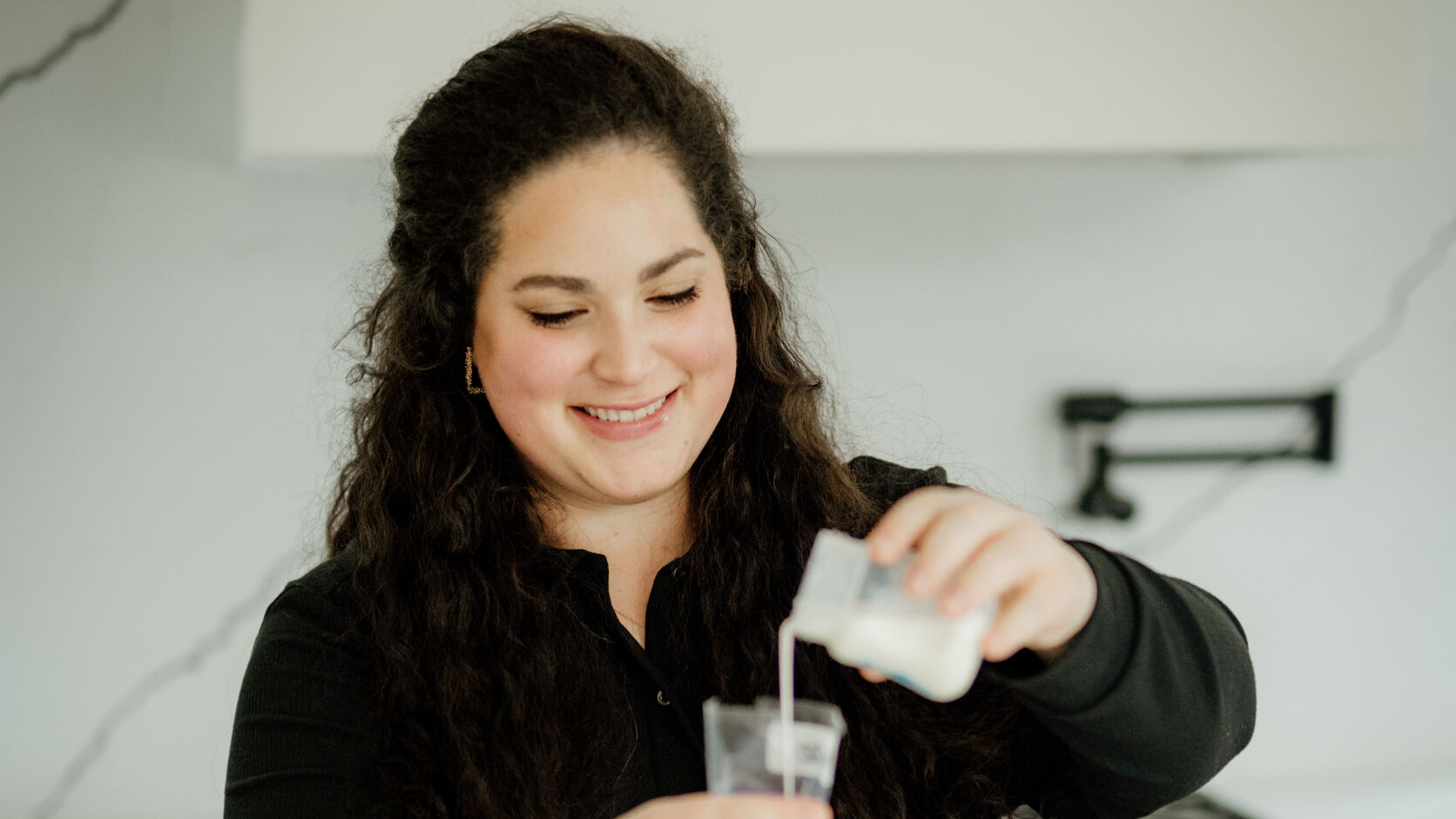
Tamari Jacob knows that hour by heart. She lived it three times over, long before she became a Certified Lactation Consultant and the founder of One With The Pump, the virtual lactation practice that has since guided thousands of moms through exclusive pumping, milk supply struggles, flange sizing, and every tearful question the box never answers.
Before she was the expert, she was the mom in the dark. And that, it turns out, is the whole point.
The Teacher With the Pump Bag
"Before I became a lactation consultant, I was living a completely different life," she says. "I was a teacher working 9 to 5, pumping in between, three babies at home."
Her first son arrived in 2017 and dismantled every plan she had. "I had no idea what I was doing. I tried so hard to be able to nurse him and he was just not on board with my plan. I ended up exclusively pumping for him for 10 months."
With her second child, she was determined it would be different. She would nurse this time. Then her daughter was born five days before the pandemic shut the world down, and every ounce of in-person lactation support vanished overnight. "There was no support and yet again I was forced into pumping."
Notice the word she chooses. Forced. Not decided, not preferred. It is the word at the center of everything she would later build, because the world keeps asking pumping moms why they chose this, and the honest answer is that many of them never did.
But this time, she was not alone in it. A few of her friends were pumping too, everyone stuck at home, everyone drowning in the same questions. So she opened an Instagram account and started sharing what she knew. "One thing led to another. One With The Pump was born, as well as my certification."
The Friday Night Reckoning
Every founder has a moment when the old life stops fitting. Tamari's was not a boardroom epiphany. It was a Friday night, repeated until it broke her.
"I would spend Monday through Friday with everyone else's children, come home on Friday completely beat, unable to actually spend quality time with my own children," she says. "Going back to work on Monday still tired, not reset, constantly feeling like I was battling with children's feelings. I was so unhappy in such a stressful work environment, driving an hour each way early in the morning, giving my babies kisses while they were still sleeping."
I knew I wanted more. I just didn't know how I was ever going to get it.
What she built instead was the thing she needed most in those early days: real support, from someone who actually understood pumping. "All I ever wanted to do was give moms the support that I never had," she says. "Breastfeeding and specifically pumping can be such a lonely journey because people don't understand it. They don't understand why you would choose to pump instead of nursing, but they don't realize that it's not actually a choice for us."
Ask her what supporting thousands of moms means to her personally, and the answer is less about information than about being believed. "Being able to give them not just the practical and physical help but specifically the emotional validity and support that I never had, letting them know how amazing they're doing no matter what their goals are. That means everything to me."
The Truth About Pain
We asked the question everyone whispers: does breastfeeding hurt? Her answer is more honest than the internet's.
"I know everyone likes to say that breastfeeding should never be hurting, however I had so much pain the first couple of weeks and nothing was wrong," she says. "My nipples were just burning. They hadn't been used in four years in the way that I was using them. Nothing was wrong, everything I was doing was correct. They just needed a little bit of adjustment time."
The crucial detail is what she did first. She got everything checked — her latch, her flange size, her pump settings — to rule out an underlying problem. "That's why I felt confident that I kind of just had to work through this a little bit." A majority of the time, she notes, pain shows up specifically with pumping, which is exactly where professional eyes matter most. According to the CDC, early pain is one of the top reasons mothers stop breastfeeding before they intended to, which makes that first check less of a luxury and more of a lifeline.
Her in-the-meantime remedy, however, is pure best-friend energy. "My biggest advice here is to not wear a bra and just walk around your house in a big tee and let the girls breathe." (When you do need one, a bra that actually fits a changing body does more work than any hack.)
The Myth She Would Delete From the Internet
If Tamari could erase one belief from every mom group on earth, it is the idea that milk supply is nothing more than a reward for effort, determined only by how often you empty your breasts.
"Genetics and just your natural biology play a massive role in how much milk you're making," she says. "Myself and another mom could have a baby at the exact same time, do everything the same from day one, and we could make vastly different amounts of milk. Yes, your schedule, your flanges, and making sure that you're using everything correctly absolutely matter. However biology plays a huge part." (What you eat matters too, though rarely in the way the internet insists — here's what actually helps while breastfeeding.)
It is a truth that frees mothers from a quiet, corrosive guilt. And it sets up the most tender thing she told us: the words she keeps for the mom who desperately wants to breastfeed, cannot, and is devastated.
"I tell her that her baby needs her more than her breast milk. The baby does not care what's in the bottle. The baby only cares that she has a mom that is present. Formula is not failure. Formula is a tool to get you to where you need to be and to ensure that your baby is happy and healthy."
She refuses to rush past the heartbreak, either, because she still carries a version of it herself.
Breastfeeding grief is absolutely real. It's OK to not be over it, as long as you can move forward.
"I still think back to the fact that I couldn't nurse my first child, and sometimes it does hurt," she says.

Before You Open the Box
Every new mom stares down the breast pump box like it holds all the answers. According to Tamari, it holds two traps and one secret.
First, the flanges inside probably will not fit you, which is why flange sizing is the very first thing her team handles in a One With The Pump consultation. Second, those buttons are not decorative. "The buttons of the pump mean something. They're not a video game. Using them correctly could make a massive difference in your milk supply."
And the mistake she sees over and over, the completely fixable one? Crowdsourcing your care. "The biggest mistake that moms make is getting their information from their friend, their cousin, or the internet and thinking that that's going to be helpful," she says. "If something was going on with you medically, you would go to a doctor. You wouldn't go online for hours and hours. Well, maybe you would, but you shouldn't. Just like with lactation, you should go to a professional to get the real information from day one, to avoid permanent damage as well as possibly ruining your milk supply."
Flange sizing, pump settings, output anxiety — where do most moms go wrong? Her answer arrives with a laugh and zero judgment. "Can I say all of the above? And it's not their fault. There's so much information out there. But I want to help them know what it is from the beginning."
The Classroom With the Mini Fridge
For moms heading back to work, Tamari's formula is refreshingly concrete: pump every three to four hours, for about 30 minutes. Her advocacy strategy starts before day one.
"I always say to try to connect with your boss before going in, asking for a 35 minute coverage so you have two and a half minutes on each end to set up and pump in peace," she says. "Most bosses are helpful, but some of them of course do not make it easy. Thankfully there are laws in place now that require them to give you pumping breaks."
She is right. In the United States, the federal PUMP Act requires most employers to provide break time and a private space that is not a bathroom, and the Office on Women's Health offers resources for making pumping at work sustainable. (If you're heading back and negotiating more than break time, this is worth reading too.)
Which brings us to the bathroom stall, the supply closet, the whole genre of "creative" pumping setups moms are praised for surviving. Tamari is not handing out medals.
"You can call it creative. I kind of call it disgusting, to be honest, because no one should ever be pumping in a bathroom stall," she says. "Your car is actually not a bad place, because you can be by yourself and really just take a beat. The best is the large corporate places that really have a beautiful setup for moms, including a lounge chair, a sink, and more."
Her own solution, back in her teaching days, was scrappy brilliance. "For me, I had a classroom and I made it work. I bought myself a mini fridge for the classroom as well as a dish rack for cleaning."
The Momé Q&A: Rapid Fire With Tamari
Some answers deserve to be heard exactly as she gave them. So we are handing over the mic.
We're going there. Does it feel… weird?
"It's definitely weird in the beginning. It gets a lot easier as it goes on. It never gets less weird when your uncle has an inappropriate comment, but I've learned to ignore them and make sure that he's the one feeling uncomfortable in the end. I use pumping either as a break to go into a room by myself and scroll on my phone or read a book, or if I don't want to leave the room I use a pumping cover. Everyone can do what feels comfortable for them. I didn't personally feel the need to give everyone a show."
Is there such a thing as pumping too much?
"If the amount of times you're pumping is mentally affecting your health, then yes, there's too much pumping. A lot of times moms who are oversuppliers are able to pump less if they don't want to manage that amount of milk. While a freezer stash can be great, and for someone like me it allowed me to extend my breastfeeding journey up to 18 months because I had a big stash in the freezer, it's not necessary for a lot of moms."
What do you say to a mom who is terrified her supply will drop the moment she's back at her desk?
"Nursing and pumping are actually not the same thing. If nursing is going well but then she goes back to work and pumping isn't, that's where she needs some support. And we're going to help her through that."
I have to ask, and I'm not a mom yet, so be gentle with me. Does pumping actually hurt? Because from the outside, it looks intense.
"Pumping should not hurt. If pumping is hurting, it's an immediate SOS to come to us for a consultation to help you get out of it."
Grey's Anatomy and the Pump Squad
Here is the part nobody expects from a lactation expert: Tamari genuinely misses pumping. Not the exhaustion. The ritual.
"I tell moms to bring their phone, bring a book, or have a pumping show," she says. "I cannot even tell you how many seasons of Grey's Anatomy I have binged in my pumping years. Honestly, I made it so peaceful for myself that sometimes I miss it. The only requirement of me was sitting in my bed, watching TV, and pumping."
But logistics were never the heaviest part of the journey. Isolation was. "Emotionally, having a community is the best thing for you." Inside her membership, the Pump Squad, moms gather for weekly calls and a community forum where nobody has to explain why they are counting ounces at midnight. It is the room she never had in 2017, rebuilt so no one else has to go without it — the kind of company the fourth trimester quietly demands and rarely provides.
And for the hardest night, the 3 a.m. session where a mom sits alone wondering if any of it is worth it, her advice is disarmingly practical and strangely tender. "Put a set of earbuds on your nightstand and watch on your phone. The other option is stacking a bunch of pillows behind you. I literally would fall asleep and wake up when the pump auto shut off by itself. That was wonderful."
Knowing When to Stop
Weaning may be the most guilt-soaked decision in all of breastfeeding, and Tamari hands it back to the only person qualified to make it.
"There's no right time to stop breastfeeding. The right time is when it stops feeling worth it to you," she says. "When you see your output and you're just like, I cannot do this anymore, that is when it's time to start thinking about stopping."
She speaks from experience, not theory. "Personally, I had a goal of one year for each child. Besides my first child, I was thankfully really able to reach that goal, so I felt zero guilt in stopping."
Your Worth Is Never Measured in Ounces
August is National Breastfeeding Month, and One With The Pump is celebrating the way Tamari does everything: by giving moms what they actually need. All month long, her team is offering free breastfeeding and pumping resources, from a free breast pump quiz that matches you with the right pump for your lifestyle and insurance, to breast milk storage charts and pumping checklists for every kind of feeding journey.
Exclusively pumping, exclusively nursing, combination feeding, supplementing with formula, or somewhere in between — her message this month is the same one she gives at every consultation, on every weekly call, to every mom awake in the dark.
Your worth as a mother is never measured in ounces.
You are doing an amazing job. And you never have to figure it out alone.
Learn more: for virtual lactation consultations, flange sizing, milk supply support, and back-to-work pumping plans, visit onewiththepump.com, explore the National Breastfeeding Month campaign, and follow @onewiththepump for daily tips, encouragement, and real-life motherhood.