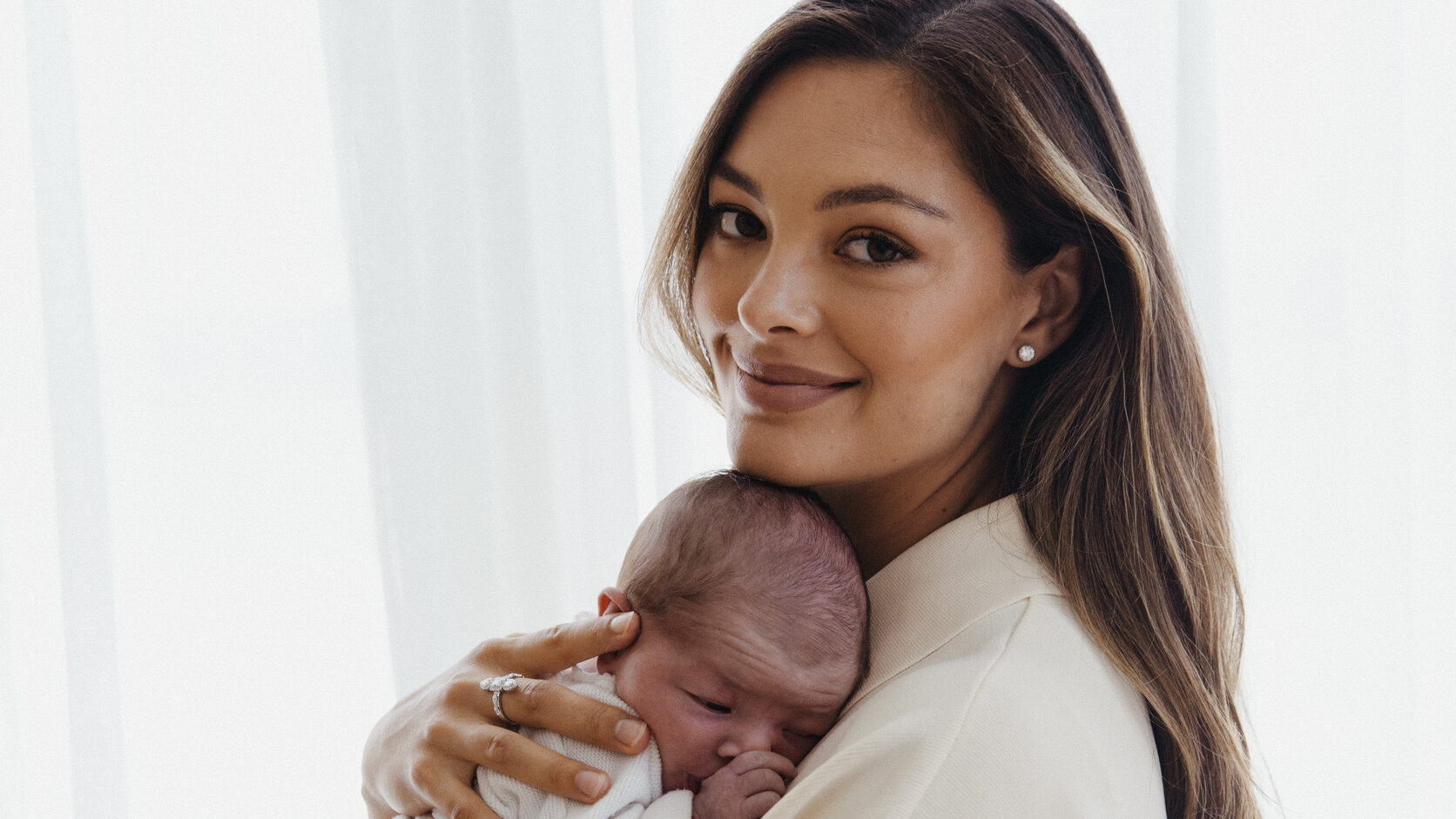

Demi-Leigh Tebow can tell you the exact moment she learned the arithmetic of new motherhood. It was December, and she was well into her pregnancy, deep into a morning of Christmas shopping, and the kind of hungry where you could, as she puts it, eat a whole buffet by yourself. When she finally slipped into a restaurant, the host asked if she wanted a table for one. In her heart, she knew the honest answer.
"I knew it was really a table for two," she remembers. It felt, she says, like their very first little lunch date.
This may sound like a fleeting moment, but it stuck with Tebow. For most of her adult life, she has been reduced to a figure — a number on a scorecard, a title, a woman the whole room turns to look at. In 2017, she was crowned Miss South Africa and then Miss Universe. She has built businesses, written books, and spoken from stages on several continents. She is, by any public measure, a person the world has always had its eyes on. And then Daphne arrived, and she quietly redid the math.

The Most Selfless Version of Herself
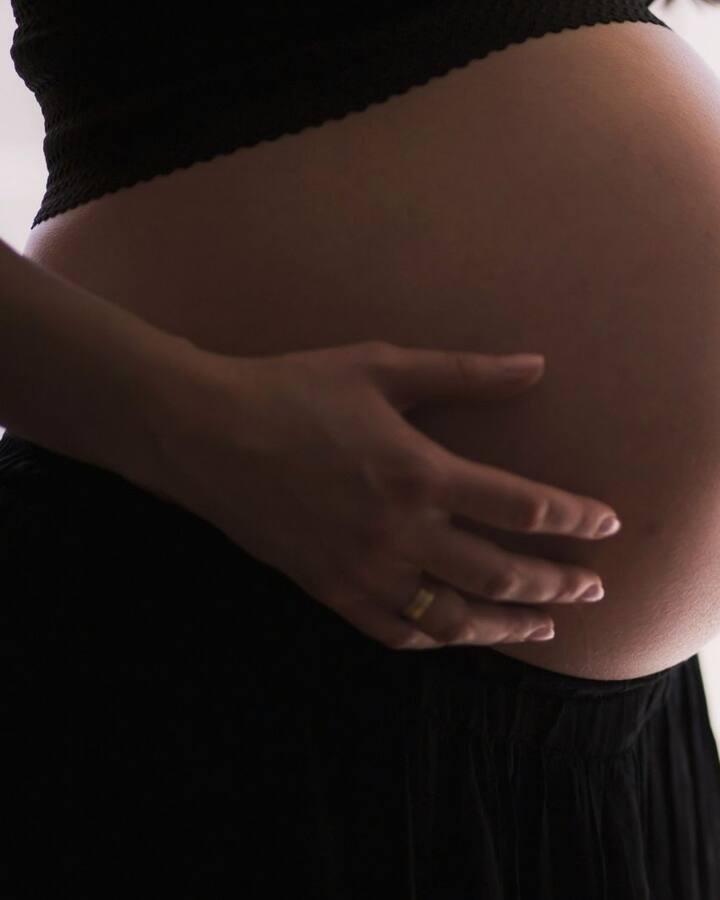
"So much of my life has put the focus on me," Tebow says. "Pregnancy shifted that focus completely away from me." She loved being pregnant. "Loved it," she'll tell you. Every minute, even hair loss, the sudden inability to look at meat, the nausea, and the exhaustion. None of it could compete with what she was carrying. "The selflessness just kicks in naturally," she says. "You know you're nurturing a little life growing inside of you. That awareness, responsibility, and incredible blessing made everything worth it."
Not that pregnancy was without its surprises. She knew about postpartum hair loss, but nobody warned her about the possible shed in the first trimester, which meant she shed twice over. She had heard the word "nesting" without grasping what a consuming thing it actually is — every surface in the house cleaned, organized, reorganized, then reorganized again. There was the insomnia. And then there was the genuinely good news nobody thinks to mention: her golf game, she swears, had never been better. "Apparently, it has something to do with your center of gravity being in the perfect spot," she says. "I'll take that win."
In my heart, I knew it was really a table for two.
A Lesson in Stillness
If pregnancy taught Tebow selflessness, the newborn season taught her something harder to name. A few weeks into motherhood, she was trying to prepare for an upcoming speech, Daphne contact-napping on her chest, when she noticed the baby couldn't settle. Couldn't get calm. And then it landed.
"It was because I wasn't calm," she says. "It's incredible how God designed moms to literally regulate their baby's nervous system. That's how babies learn to regulate their own. In the moments I wasn't fully present with her, she could feel it, and she reflected it right back to me."
For a woman whose calendar had always run on motion, the instruction was almost subversive: be still. "I don't think I've ever been this present in my entire life," she says. "She is a little walking, crawling reflection of my actions, my words, my feelings, and that's made me so much more intentional about who I am when I'm with her."
Behind Closed Doors
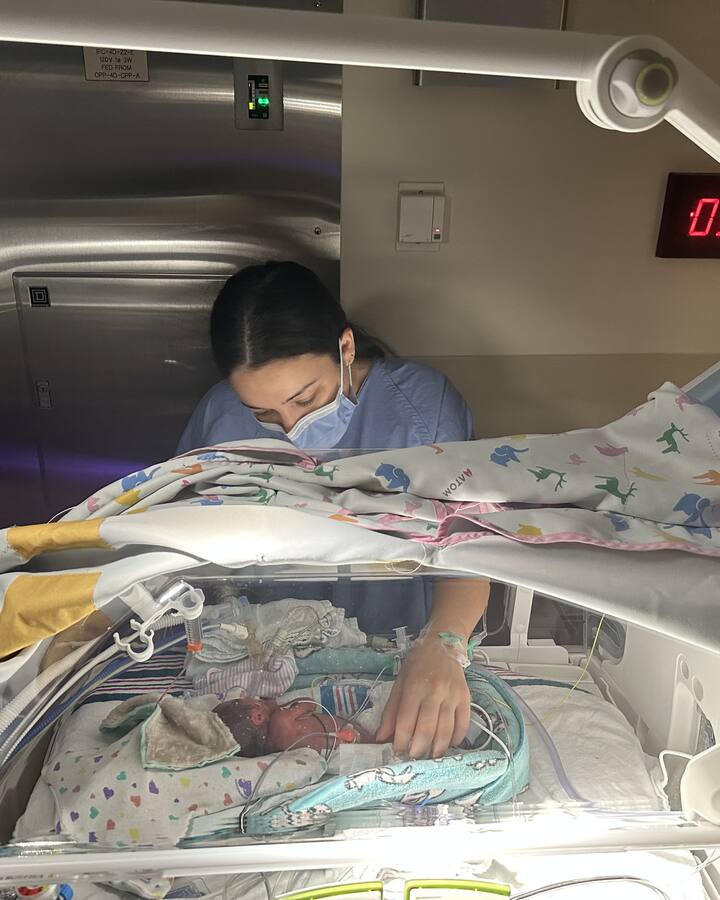
The picture of new motherhood is often cropped tightly around the joy. But Tebow leaves the rest of the frame in. Her labor lasted forty and a half hours, from the moment her water broke to the moment Daphne arrived. Recovery, she says simply, was a real journey.
What made it harder was something that had been unfolding for a year and a half. Her father had been battling cancer. He and her mother were meant to be in Florida for the birth, but the week of her due date, his health turned suddenly, and they canceled their flights. Three months after Daphne was born, in October of 2025, Tebow's father died in South Africa, the home that was now a seventeen-hour flight away.
"There's no quick fix for that kind of distance," she says. So on top of recovering from labor, she was grieving, and her family couldn't be there. "It felt lonely in a way I hadn't anticipated."
Tebow leaned on her husband, on a handful of close friends, and on those she refers to as near-strangers who showed up in the most beautiful ways. She is especially grateful for the women who make caring for new mothers their calling: her doula, who stayed well past the birth, and a community of postpartum doulas in Jacksonville who came alongside. "I learned so much from them," she says, "especially since my own family couldn't be close during those newborn months."
Grief and the body don't take turns. Tebow's hunger was a constant reminder of this. Her pregnancy hunger had surprised her, but her breastfeeding hunger was on another level. She still laughs about the meal when Tim watched her eat twice as much as he did in one sitting. "I think he was equal parts surprised and proud."
Between the long labor, the grief, and a body relearning itself, recovery was never going to be quick. Healing, Tebow learned, looked less like a finish line than a practice: physical therapy, thoughtful nutrition, supplements, sleep whenever she could steal it. "Healing looked like grace," she says. "And truthfully, I'm still adding to that story."
The Part Nobody Talks About
Ask Tebow what postpartum truths women still don't say out loud, and she answers without hesitation: "All of it, honestly." She is grateful she was able to give birth naturally, but like most new mothers, she found the world's timeline for healing to be a fiction. "After a really long labor, six weeks felt impossibly short, especially while breastfeeding," she says. "I genuinely don't know how the world expects women to bounce back that quickly."
Nothing puts the labor in "labor of love" quite like breastfeeding. Nursing and pumping consumed more of Tebow's day than she could have imagined — waking to pump in the middle of the night, even when Daphne was sleeping, scheduling everything around it when they were apart.
And there is the body, which she addresses not as a problem to fix but as a peace to make. Eleven months in, she feels stronger and healthier than maybe ever, even if some of her clothes simply don't fit the way they used to. One day, she walked into her closet and made a decision. "I was done trying to squeeze back into an old normal that no longer exists because the truth is it may never come back, no matter how many workouts or pilates classes I do. And that's okay. This new normal is fuller, more colorful, and more beautiful than the old one ever was."
I was done trying to squeeze back into an old normal that no longer exists.
Ninety Minutes at a Time
Tebow had been warned about sleep deprivation. But knowing prepared her for none of it. The hardest stretch wasn't the newborn fog she'd braced for; it was months four through seven. For four straight months, she didn't sleep longer than ninety minutes at a time. "That is a particular kind of hard that's difficult to describe," she says. "There were days I couldn't think beyond my own front door. Days I couldn't finish a sentence."
And here is the part that took Tebow by surprise: once Daphne finally began sleeping in longer stretches, she missed the wakeups. "I actually missed being able to snuggle her multiple times a night," she admits.
How We're Loved
Tebow has prayed over the big decisions in her life, questioning, again and again, whether a given road was one she was meant to walk. Clarity, she says, rarely came. Peace, sometimes; certainty, almost never. Daphne was the exception. "The moment I found out, it was unmistakable," she says. "This was something God had called me to. That might be the greatest feeling I've ever experienced."
Tebow can point to the afternoon it all crystallized. She'd taken Daphne to a routine pediatric visit and come home as the rain was coming down in a full monsoon. Tim was out of town. She settled into the nursing chair, rocking the baby asleep on her chest, and out of nowhere began to cry — a wave of love she couldn't fully fathom. "It really does feel like your heart is living outside your body," she says. In that moment, she thought: this must be a tiny glimpse of the way God loves us. "It deepened my relationship with Him in a way I didn't expect. I think this is part of why God created families. It's one of the ways He shows us who He is."
It really does feel like your heart is living outside your body.
Permission to Be Cared For
Tebow found that grace was easy to extend to other mothers, yet hard to extend to herself. There are so many small, humbling surprises that nobody warns you about. That cutting a newborn's nails is genuinely hard. That the massive volume of baby laundry never ends. Those she can laugh about. The bigger one she takes seriously: the guilt that pools around the simplest acts of self-care. A long bath. A little mascara. A hot meal eaten sitting down.
For a long time, Tebow ate standing up, grabbing bites on the go, as though tending to herself were a theft from her daughter. Then the math changed again. "Taking care of yourself is not selfish," she says. "When you're breastfeeding, especially, it's directly taking care of your baby. You cannot pour from an empty cup. That realization changed everything for me."
These days, the reset comes on Mondays. In the fall, when Tim travels for work, the weekends are when Tebow has the least help. It's just her and her girl, all weekend long. By Monday, with a little support again, she draws a long bath, takes a breath, maybe sneaks in a nap. Sundays used to serve that purpose. Life looks different now. "And I love it," she says.
In Her Own Words
In the quiet moments — just you, the baby, and your thoughts — what has this season taught you?
"Every time I look at my daughter, I'm in awe that God chose me to be her mom. It's the sweetest, most humbling feeling. Even on the hard days, even through the sleep regressions, there's this deep joy and sense of purpose that doesn't leave. Watching her at eleven months — seeing the little things you've been intentionally working on start to click, the ways she's beginning to love you back, to reach for you, to light up when you walk through the door — those first months there's so little of that. And then one day it's just there. That little light switches on. There's nothing like it."
What would you tell another mother in the thick of it right now?
"That looking back, I felt guilty for not showing up better for my own mom friends in those seasons — because I didn't understand until I lived it. It's one of those things you can't fully understand until you've walked through it yourself. So give yourself, and the women around you, an enormous amount of grace."
The Most Colorful Season
Years from now, Daphne may ask her mother what this season of life felt like. Tebow already knows what she hopes to say: that it was the most colorful, most fulfilling time. The baby taught her to embrace a little chaos, not just tolerate it, but enjoy it. The house is literally more colorful; the neutrals have given way to every shade of pink, and she wouldn't have it any other way.

Even on the days when the only accomplishments were a shower and a hot meal, even in pajamas with her teeth unbrushed until three in the afternoon, she could find contentment in a single certainty: that she was exactly where she was supposed to be, doing exactly what she was meant to do. All day, she had poured herself into caring for her daughter.
And that is enough. That will always be enough.
Follow along: Follow Demi-Leigh Tebow on Instagram @demitebow.