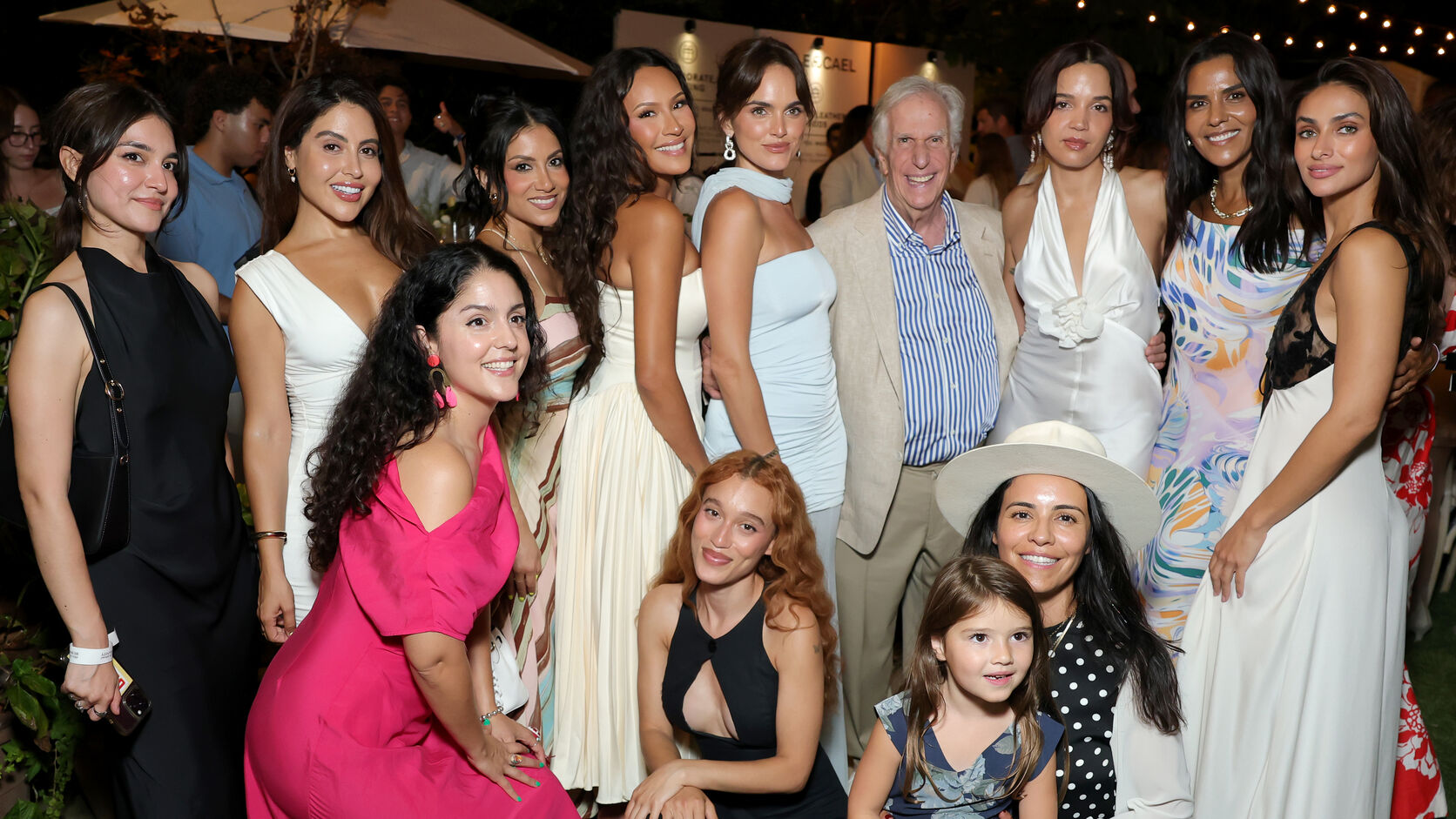
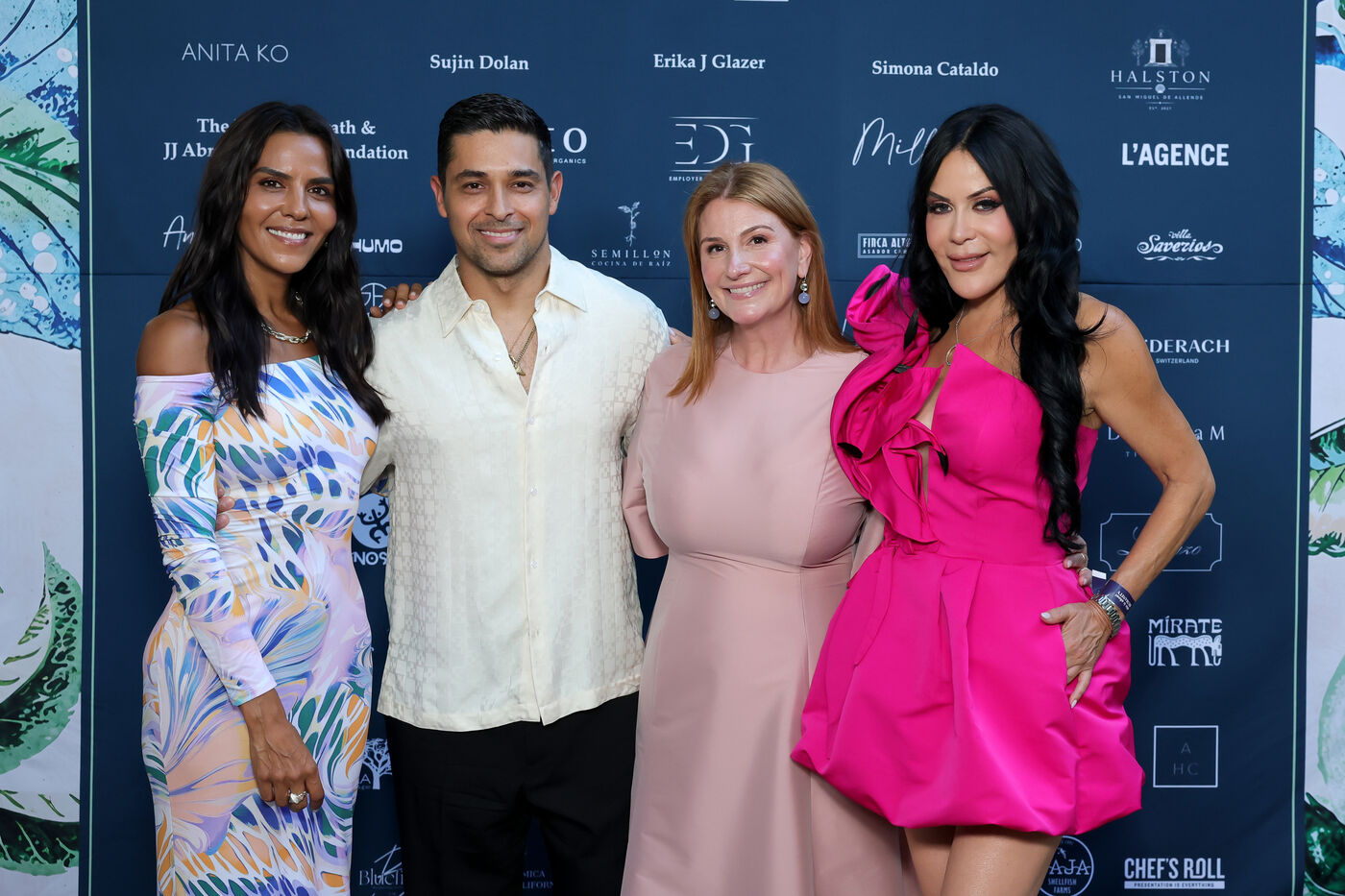
LOS ANGELES — This past weekend, This Is About Humanity hosted its eighth annual Soirée, gathering 400 supporters at a Brentwood estate to honor actor and producer Wilmer Valderrama with the This Is About Humanity Humanitarian Award and to raise funds for families separated and reunified at the U.S.-Mexico border.
Co-founded in 2018 by Elsa Marie Collins, Zoe Winkler Reinis and Yolanda Selene Walther-Meade, the organization directs its support to a fund at the International Community Foundation, programs with the Immigrant Defenders Law Center, and a food relief kitchen at the border. Held Saturday, Aug. 29, at the Los Angeles home of Henry and Stacey Winkler, the evening featured a culinary showcase led by Michelin-honored chef Javier Plascencia and sommelier Lauren Plascencia.
Valderrama, recognized for years of advocacy on behalf of immigrant children and families, accepted the award after two immigrants shared firsthand accounts of deportation. “People need people,” he told the room. During the live auction that followed, led by Henry Winkler, the first paddle raised belonged to Kim Kardashian, who pledged $50,000. Guests included Katharine McPhee Foster, Constance Marie, Annie Gonzalez, Michael Cimino and Mayan Lopez.
To date, This Is About Humanity has helped serve more than 3,500 meals a day to shelters and community centers, funded mental-health and educational services for children, and provided relief to Los Angeles families affected by wildfires.
The story behind the Soirée
Long before there was a soirée, there was a woman loading boxes into her car.
In 2018, as family-separation stories filled the news, Elsa Marie Collins began quietly gathering everyday essentials from friends. She wasn’t building anything. She was answering a need she couldn’t ignore. Then Zoe Winkler Reinis saw one of Elsa’s Instagram posts and sent a direct message that would change both their lives: “Whatever you’re doing, I want to help.”
For Zoe, the pull was immediate and personal. She had seen a video of the separations that she couldn’t stop thinking about. “I saw my kids in those kids, and myself in those moms,” she says. “It completely haunted me.”
The two women knew each other only a little: SoulCycle, the same restaurants, mutual friends around Brentwood. Zoe expected to drop off a few boxes. Instead, they filled a twenty-five-foot U-Haul within days, with Elsa’s sister, Yolanda Selene Walther-Meade, helping organize the distribution. Then came a bus trip. Then another.
Partnership wasn’t a plan so much as a recognition. “Building it as partners was never really a decision,” Zoe says. “It happened very naturally, because neither of us could carry what we were seeing by ourselves.” For Elsa, the speed of it made the point: this was never something any of them could, or should, do alone.
“Being a mother changes the math”
Both women trace the work back to the same instinct: they are mothers, and they could not unsee other mothers.
“Being a mother changes the math completely,” says Elsa, who has three children and grew up with border families as her neighbors. “There’s no version of me that can hear about a child being separated from a parent and not put myself in that mother’s shoes.” What she refuses to look away from, she says, is any framing that treats the crisis as distant or removed, “when it’s really just a parent not knowing where their child is. Even as a kid, I knew it wasn’t okay.”
Zoe felt the same the first time she watched the footage. “I saw my own sons in those kids,” she says. These were someone’s children, with someone’s mornings and bedtimes and worries, exactly like hers. “Being a mother means I can’t unsee that, and I don’t want to.”
Where the work comes from
For Elsa, the cause is also a homecoming. She was raised on both sides of the border, crossing every day from Tijuana to attend school in San Diego. Twenty minutes, she points out, is all that separates one side from the other, a closeness that makes “the border” impossible to treat as an abstraction. Leading This Is About Humanity, she says, is really just an extension of where she’s from: making sure the place that raised her is treated with the dignity it deserves.
Zoe’s path ran through classrooms. She spent years as a preschool teacher and behaviorist before any of this, watching closely how young children process fear, disruption, and change. That training still shapes how the organization designs its programming. “We ask what a child needs to feel steady,” she says, “not just what a system needs.”
Raising kids inside the work
Their own children have grown up alongside the mission. For Elsa, the conversations happen daily; the stories unfolding in the city where she grew up are touching the city where her kids now live, which makes fairness real to them in a way a headline never could. “What they’ve taught me,” she says, “is how naturally fairness makes sense to a child before the world complicates it.” It is the same thing parents discover whenever they stop bracing and simply tell a child the truth about something hard: children can hold far more than adults expect.
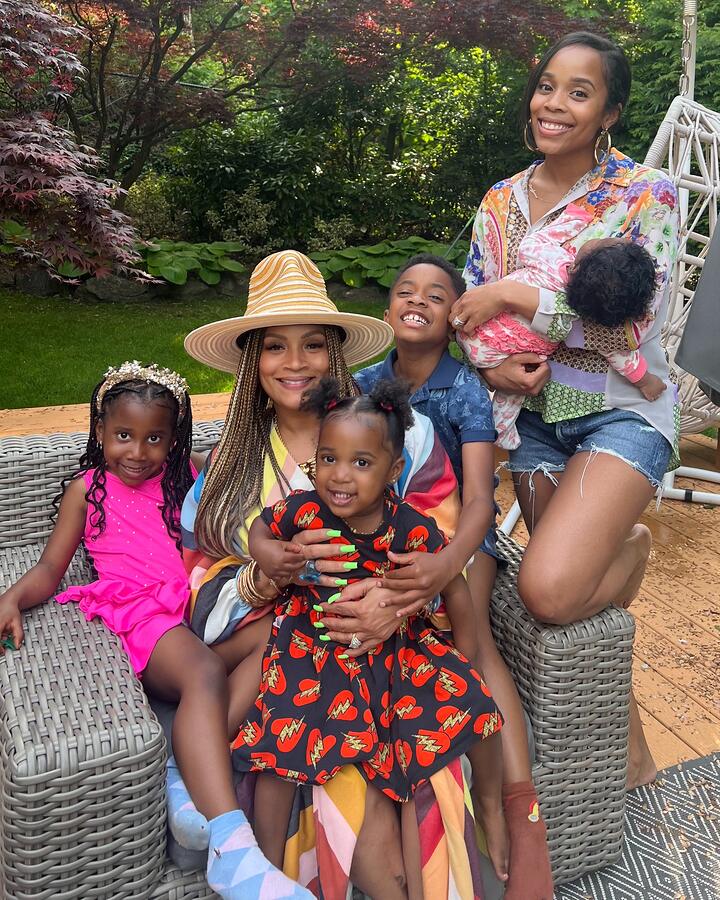
Zoe’s kids have volunteered at events for years and, she says, have seen what it means to show up for people you don’t yet know. Her son raised more than $50,000 for the organization through his bar mitzvah philanthropy project, and he still cooks alongside the chefs at the gala each year.
Kids don’t need convincing to care about each other. They just need to be given a real way to help.
What the border does to people
Both founders bring supporters directly to the border to meet these communities, and both describe it as the thing that changes people fastest. “Your life will change in one day,” Elsa tells them. You can read about a shelter or a family’s story, she says, but standing there and hearing from people directly does something a page cannot. “Every trip recalibrates me. It keeps me tethered to why we started.”
For Zoe, the shift comes when community stops being a concept and becomes people you have actually sat with: strangers who introduce themselves in the morning and leave as friends. One of those trips rewired something permanent. She is now the legal sponsor of a family she met along the way. “They’re family to me now,” she says.

Staying close without burning out
Work this near to heartbreak takes a toll, and neither woman pretends otherwise. Elsa doesn’t believe in fully armoring herself — “some of it is meant to touch you,” she says — but she balances that by nurturing her own soul so that she is able, in turn, to care for others. In practice that means real boundaries, time that belongs only to her family, and people she can be unguarded with.
Zoe leans on the fact that she has never had to carry it alone, and holds onto the relationships rather than the need: the family she sponsors, the volunteers who keep returning, the kids at the gala. “Those relationships remind me why we keep going,” she says, “even on the harder days.”
The balancing act at home
Ask either of them what a day actually looks like, and the answer will sound familiar to any working mother — the same arithmetic behind the invisible emotional labor most mothers are already running in the background. Elsa is devoted to her routine, and it begins with tending to herself first. “It starts with feeding myself first before I go out and help others,” she says. Her mornings belong to her kids and to a workout, non-negotiable; once they’re off to school, she dives into the work. Some days tip toward the office and some toward the children, and she simply tries to balance the scale back the next day.
Zoe, raising three sons while running a nonprofit, describes a day that is never quite “off.” What she’s had to release is the fantasy of doing all of it perfectly. “Some days TIAH gets my full attention, some days it’s my boys,” she says, “and I try not to feel guilty about whichever way the scale tips that day.” It is the same trade-off facing the women rewriting the rules at the top of their fields: not balance, exactly, but a scale you keep resetting.
“Start smaller than you think you need to”
For the mother who feels the same pull but doesn’t know where to begin, both founders offer the same counsel.
Start smaller than you think you need to. You don’t have to solve the whole system, you have to do one true thing… Pick a thread and pull it.
“You don’t have to solve the whole system,” Elsa says. “You have to do one true thing. A feeling of overwhelm usually comes from trying to hold the entire problem at once. Pick a thread and pull it.”
Zoe puts it even more plainly. “Our whole organization started with boxes in a car. You don’t need a plan, a title, or an organization. You just need to start.” Show up once, she adds, and that is usually what opens the door to showing up again.
What they hope their children inherit
What keeps them hopeful is, in the end, other people. Elsa points to a community that refuses to accept that hardship is simply the way things are — the same refusal that shows up wherever a crisis turns out to be a policy outcome rather than an accident. Zoe points to how naturally the next generation steps in: her son raising money, Elsa’s kids volunteering at every event.
That is the throughline from a single carload of donations to a room of 400 this past weekend. As for what they hope their own children carry forward, neither answer is complicated. Elsa wants her kids to hold onto the importance of showing up for their family, their friends, and the issues they care about, for the rest of their lives. Zoe hopes her sons inherit one belief above the rest: that helping people isn’t a special occasion.
“It’s just what you do,” she says.
This Is About Humanity is at thisisabouthumanity.org.