

A note before you read: this piece discusses traumatic childbirth, postpartum depression, and alcohol dependency.
Before her daughter arrived, Hayden Panettiere had a plan. Not a birth plan. A whole picture, fully rendered, of the mother she was going to be — the bonding, the activities, the future "mini me," as she'd later call her. Her pregnancy was smooth, and she loved every part of it. The plan held right up until the day it didn't.
"It wasn't until the delivery of Kaya," she says, "where all of that changed."
What followed were the hardest years of Panettiere's life: a near-fatal birth, a depression no one around her recognized, a sacrifice no one should have to make. Through it all, one thing stayed constant: She never stopped being Kaya's mother. She just had to find out what that would cost.
The Delivery
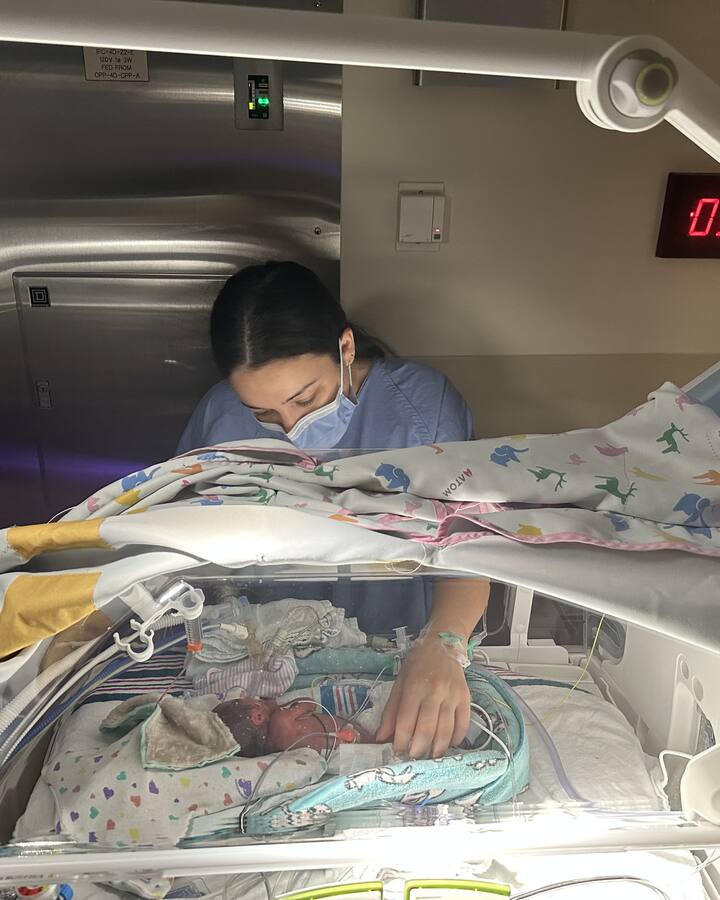
It began with pain in her lower back — sharp and specific, like a knife at the base of her spine. (Evidently, the baby was pressed against a bundle of nerves there.) She pushed and bore down, but the baby would not leave her body, and Panettiere was taken in for a C-section. When it was over, they laid the newborn on her chest. She wept.
"She was the most beautiful baby."
Suddenly, a voice cut across the room. "Code crimson. Everyone step back."
She's hazy on the specifics of what happened next, but the baby was handed to Wlad (Panettiere's fiancé at the time, Wladimir Klitschko), and they were rushed out. She remembers the room moving fast around her and a sound she couldn't place — a suctioning, vacuuming noise. She learned later that it was her own blood being drawn out of her body. She was hemorrhaging.
"I closed my eyes and just prayed for my daughter to be okay," Panettiere says. "I truly was ready to go if it was my time. Kaya being safe and healthy was all that mattered."
It took seven blood transfusions and a second surgery to repair the vessels that had begun to fail, to keep her alive. But the first clear thing she remembers feeling, in the place where the rush of love was supposed to be, was not love at all.
I closed my eyes and just prayed for my daughter to be okay.
I truly was ready to go if it was my time.
The Emptiness
It is the part no one prepares you for, and the part Panettiere most wants other mothers to hear. In recovery after the surgery, she was getting her vitals checked while Wlad rocked the baby to sleep across the room. Looking at her daughter — the child Panettiere had nearly died for only days earlier — she felt like she was looking at a stranger's baby.
"I felt nothing," she says. "And now I had to figure out how to bond with her. It seemed like an impossible task."
The shame came fast, and it came from a story she had been told her whole life. "I had always heard that moms feel an instant rush of love, but I didn't — and I had no idea why." This is how postpartum depression often works: not as obvious despair, but as a flat, frightening absence where another feeling should be, made worse by a false certainty that everyone else got the version you were promised.
Days before she felt nothing, Panettiere had been ready to die so that her daughter could live. The love was never the question. The illness had simply taken her ability to feel it, which is a different thing entirely, though almost no one in it can tell the difference at the time.
I felt nothing.
And now I had to figure out how to bond with her.
What No One Could Name
For a long time, she didn't have a word for it. Only the feeling: empty, inside a life that, from the outside, had everything. "I had this great life, and was blessed in so many ways, but I felt empty."
To quiet the emptiness, she reached for something to dull it. "I turned to wine, which ultimately ended up leading to an alcohol dependency. It was how I would get through each day."
The people in her life saw the drinking and read it as the whole problem. "Everyone thought it was just me falling into some sort of addiction." Eventually, she went to treatment and came home sober, and with a diagnosis of postpartum depression. But the help Panettiere received had been aimed at the wrong target.
"Despite the diagnosis, the treatment was centered around the addiction — not the root cause."
The depression came first. The drinking was how she survived it. But the system called upon to treat the drinking never touched the foundational issue — the depression underneath. That is the order of things, and the order is the whole point: she got help for the symptom while the cause went on quietly hurting her. Panettiere thinks often about how much earlier the depression itself could have been recognized. "I wish more people had known what it was at the time. Maybe I wouldn't have waited so long to get help." She says she went home sober and diagnosed, but in denial about how far she had to go to heal the thing that was actually hurting her.
The Hardest Decision
What came next is the chapter most people think they already know from headlines. Panettiere's own words tell a deeper story: She was in an active battle with substance abuse. The father of her child was living in another country. And she made a decision about her daughter's custody that she describes, plainly, as the hardest of her life.
"It wasn't a decision I made lightly, nor was it a decision I even wanted to make," she says. "I was going through a really challenging time in my life… I knew I needed to be able to put her first so that I could get the help I needed and be the mom she needed me to be."
This logic was identical to what Panettiere used on the operating table when she was prepared to give up her life for her daughter's safety. Now she had to give up something else — the daily presence she had dreamed of since before her daughter was born — for the same reason. This was not a mother walking away. It was a mother doing the most painful arithmetic there is, and choosing her child's well-being over her own wishes, again.
A Warrior
Ask Panettiere who she is now, and the answer is immediate and a far cry from a victim. "I'm a warrior. I'm a woman who has been through more trauma than I ever thought I'd face, but I'm resilient."

The numbness eventually lifted, as it does when the right thing is finally treated. The love she had always carried, that prayed for her daughter in the operating room, is one she can now feel. "I love my daughter, and I'm so proud of the young woman she is becoming. I talk to her all the time, and I feel so connected to her." The stranger's baby of those first weeks is now unmistakably hers.
"She's like a mini-me."
It is the same phrase Panettiere used about the child she imagined while pregnant. The picture she'd drawn in her head had been destroyed, then slowly redrawn, not as the seamless fantasy she'd planned, but as something she had to fight for and earn.
What She Carries
None of this resolves to a tidy ending, and Panettiere doesn't pretend otherwise. What she's proudest of is not a triumph but a constancy: "I've been able to put her first no matter how I've felt or what I've experienced."
The grief is real, and it lives alongside the love. She holds onto what the years taught her and the person they made her, and she hopes — this is the ache underneath everything — that "one day she'll understand my story, and why I wasn't able to be with her all the time." Panettiere explains that in treatment, they teach you about forgiveness, and that it has to include yourself. "You have to let go of what you wish you could change, and be present, and make the most of what you have now."
Ask her what being a good mom means to her, after all of it, and the definition that comes back is nothing like her original plan. Not seamless. Not perfect. "A good mom is someone who loves their child unconditionally, puts them first, tries to live by example, and always lets them know that they're rooting for them — no matter what. Someone they can turn to in any season of their life, without judgment."
It is a definition built to survive the truth: that you can love a child completely and still not be able to give them the childhood you pictured. She had to lose the first version to discover this truer one.
I've been able to put her first no matter how I've felt
or what I've experienced.
Where She Is Now
Panettiere does not declare herself fixed. "I'm a work in progress — we all are. I take each day as it comes. I'm doing the work, and I'm doing my best."
These days, taking care of herself looks specific and ordinary: setting boundaries, learning not to people-please, journaling, keeping close the people who make her feel safe. "A good book and a tea are also nice," she offers. A small, human sentence from a person who has been through enormous things. She says that she feels most alive when she can create things to bring into the world. And finally, importantly, she wants what she's lived through to be of use to others.
In the end, this is why she's willing to tell any of it.
If she could sit beside her frightened, exhausted self during the worst of it, she knows what she'd say. It's the same thing she'd say to any new mother reading this who feels nothing right now and doesn't know why, who is certain she is failing, certain she is alone:
You're stronger than you know.
And you're going to be just fine.
Learn more: Hayden Panettiere's memoir, This Is Me: A Reckoning, is available now, sharing her journey through postpartum depression, addiction, recovery, and resilience. Follow @haydenpanettiere for more.
Related reading
- The Fourth Trimester: What No One Tells You About the First 12 Weeks
- The Mother You Didn't Expect to Be — and Why That's Okay
- Rage, Grief, and Unexpected Joy: The Full Emotional Range of Becoming a Mother
If you're struggling with your mental health during pregnancy or after birth, you're not alone, and help is available. Postpartum Support International (postpartum.net; call or text the helpline at 1-800-944-4773) offers free, confidential support and connections to local resources. If you're ever in crisis, call or text 988.