
There is a particular kind of silence that surrounds the hardest parts of trying to become a mother. It is the silence of the woman who conceived and then lost the pregnancy and told almost no one. The silence of the couple three years into fertility treatment who smile through the baby shower. The silence of the mother who did everything right and still ended up sitting alone with a grief she was never taught how to name.
Recently, two of the most recognizable women in the world sat down and broke that silence on purpose.
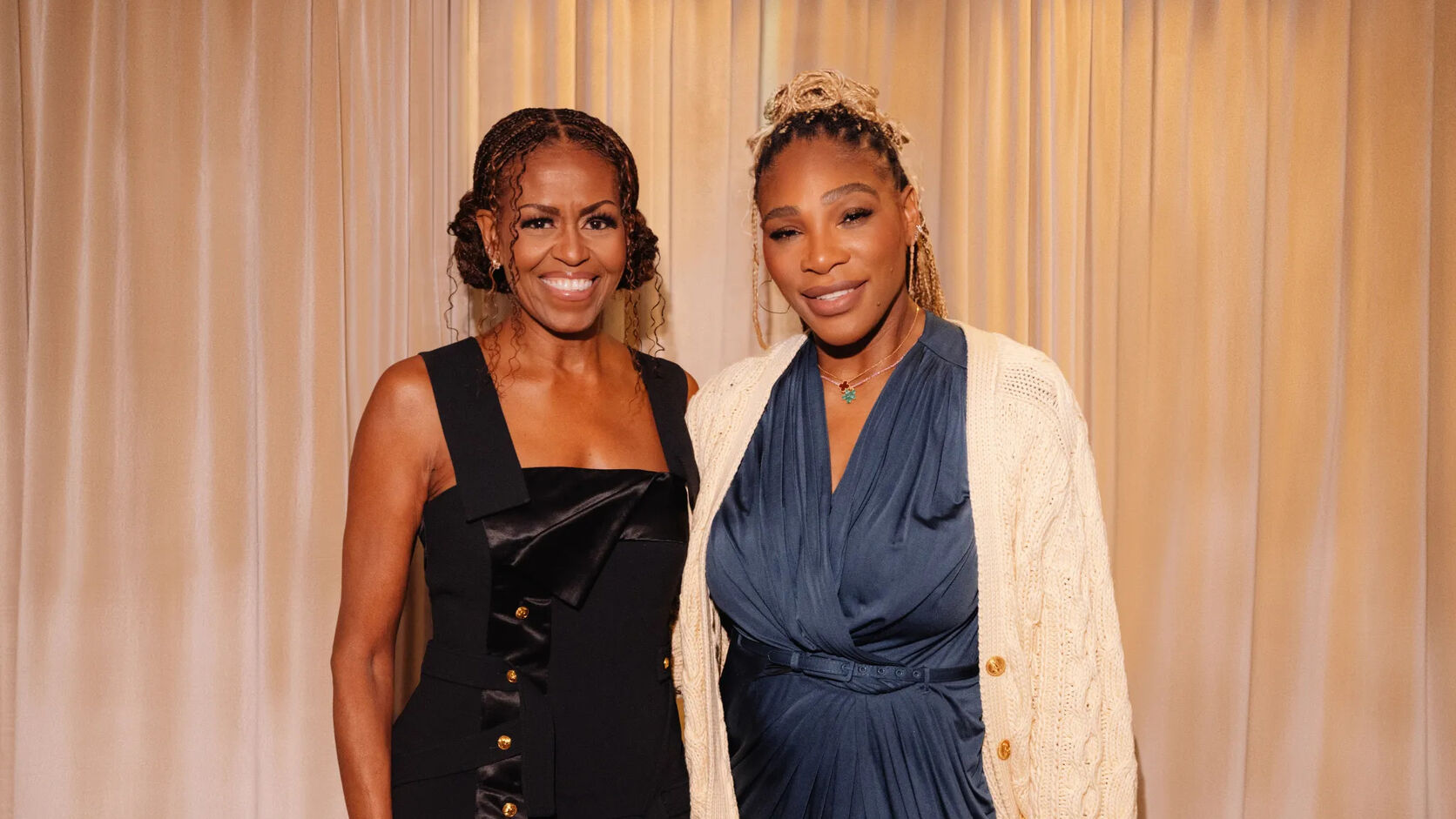
It happened on a live taping of her podcast, IMO with Michelle Obama & Craig Robinson, and it was anything but the polished version. Obama opened the door herself, steering the conversation toward her own path to motherhood before anyone asked. She recalled the pregnancy she lost early in her marriage. “I got pregnant once and miscarried,” she said, calling it devastating, and described how she and Barack eventually turned to IVF to conceive both of their daughters. Then she said the quieter part, the one most women only think. When she struggled to conceive, she admitted, “I took that on, like a personal failure.” She had a warning, too. The biological clock, she said, is real, and no one had told her, so now she tells younger women exactly that.
Williams met her honesty with her own. Women do not talk enough, she said, about how often you “conceive and you have a miscarriage,” or try and simply have it not work. She described freezing her eggs in her late twenties, at the height of her tennis career, when she was not ready to stop playing. Afterward, she said, “all this pressure came off of my shoulders.” Someone had encouraged her to do it, and she has spent the years since paying that forward. Her whole approach, she explained, is “talking about the uncomfortable and making them comfortable.” Between them, two of the most accomplished women alive kept landing on the thing no one had told either of them. “There is no right way to be a mother,” Obama said.
The shame is the point, and the problem
What makes that conversation matter has very little to do with celebrity.
It matters because the feeling Obama described is nearly universal, and nearly invisible. So many women carry the private conviction that a miscarriage or a fertility struggle means their body failed, that they did something wrong, that they are somehow broken. And they carry it quietly, because we have collectively agreed that these are things you do not say at dinner.
But the numbers tell a different story than the shame does. According to the American College of Obstetricians and Gynecologists, roughly 10 percent of known pregnancies end in miscarriage, and the true figure is likely higher when you count losses that happen very early. It is one of the quiet fears of the first trimester that almost nobody says out loud. Infertility, too, is far more common than the silence around it suggests. The experience that so many women interpret as a personal failing is, statistically, one of the most ordinary things a body can do.
The gap between how common these experiences are and how little we talk about them is exactly where the shame lives. And shame, it turns out, does not survive being spoken out loud. It is the same thing the founders of WeNatal found after two pregnancy losses a week apart: the loss was isolating until they started saying it in public.
When silence becomes dangerous
The conversation did not stay in the territory of feelings. It moved, pointedly, to the body, and to what happens when women are not heard about their own.
Williams described the birth of her first daughter, a delivery that became a medical emergency. She has a condition that makes her prone to blood clots, and in the hours after her C-section she knew something was wrong. She told the nurse the same thing, over and over. “I can’t breathe,” she said, and asked for the scan she was certain she needed. She was reassured she would be fine and, in her telling, not taken seriously, until a doctor finally listened and found exactly what she had described. Her verdict on that moment was quiet and chilling. “If she hadn’t listened,” she said, “I wouldn’t be here.”
That story is not a coincidence, and it is not only Serena’s. Black women in the United States face significantly higher rates of maternal complications and death, and are too often disbelieved in the very rooms meant to keep them safe. Obama named the larger failure directly. Maternal health, she said, “should not be a political football,” and “we don’t pay enough attention to women’s health,” handing women too little information about their own bodies and too little encouragement to ask for more. Knowledge, both women kept returning to, is the thing we owe one another and the generation coming up behind us.
Why talking to each other is the whole thing
The most quietly radical part of the exchange was not any single revelation. It was the format. Two women, telling each other the truth, in front of an audience, and modeling what happens next: the room exhales.
That is the entire mechanism. When one woman says the thing, she gives every other woman in earshot permission to stop pretending. The friend who nods a little too quickly. The coworker who suddenly has something to add. The stranger who goes home and finally tells her partner what she has been carrying alone for a year.
There is no right way to be a mother. There is only the truth, said out loud, to someone who needed to hear it.
This is not a small or soft idea. Breaking the silence around miscarriage, infertility, and IVF has real consequences. It changes whether a woman advocates for herself in a doctor’s office, the way Serena did when it counted most. It changes whether she seeks support instead of suffering privately. Speaking plainly, and insisting on being heard, can genuinely change what happens next.
What you can actually do with this
You do not need a podcast or a platform. You just need to be a little braver than the silence expects you to be.
Tell your friend what your first trimester was actually like. Ask the harder question when someone says they have been “trying for a while,” and then really listen to the answer. If you have been through loss or treatment, consider saying so, once, to one person who might need to hear it. And in the exam room, say the thing again if you have to, the way Serena had to, until someone listens. Normalize the words miscarriage and IVF and fertility the way we have finally learned to normalize therapy and postpartum depression, by simply refusing to whisper them.
Michelle Obama and Serena Williams did not solve anything on that stage. What they did was smaller and more powerful. They showed a room full of women that the thing they thought made them broken and alone is, in fact, the thing that connects them to nearly everyone else. “The world needs this information,” Obama said as they closed.
That is where it starts. Not with a solution, but with a sentence. Someone has to say it out loud first.
Let it be you.
Frequently asked questions
What did Michelle Obama say about miscarriage and IVF?
On a live taping of her podcast IMO with Michelle Obama & Craig Robinson, Obama recalled the pregnancy she lost early in her marriage — “I got pregnant once and miscarried” — called it devastating, and described how she and Barack eventually turned to IVF to conceive both of their daughters. When she struggled to conceive, she said, “I took that on, like a personal failure.”
What did Serena Williams say about freezing her eggs?
Williams described freezing her eggs in her late twenties, at the height of her tennis career, when she was not ready to stop playing. Afterward, she said, “all this pressure came off of my shoulders.” Someone had encouraged her to do it, and she has spent the years since paying that forward.
How common is miscarriage?
According to the American College of Obstetricians and Gynecologists, roughly 10 percent of known pregnancies end in miscarriage, and the true figure is likely higher when you count losses that happen very early. Infertility, too, is far more common than the silence around it suggests.
What happened when Serena Williams gave birth to her first daughter?
Her delivery became a medical emergency. She has a condition that makes her prone to blood clots, and in the hours after her C-section she knew something was wrong. She told the nurse “I can’t breathe” over and over and asked for the scan she was certain she needed. In her telling, she was reassured and not taken seriously until a doctor finally listened and found exactly what she had described. “If she hadn’t listened,” she said, “I wouldn’t be here.”
Why does talking about pregnancy loss and fertility matter?
Because breaking the silence has real consequences. It changes whether a woman advocates for herself in a doctor’s office, and whether she seeks support instead of suffering privately. When one woman says the thing out loud, she gives every other woman in earshot permission to stop pretending.
Related reading
- WeNatal Founders Ronit Menashe and Vida Delrahim on Turning Loss Into a Fertility Revolution
- Gigi Gorgeous Has Wanted to Be a Mother Her Whole Life. She’s Not Done Yet.
- The First Trimester: 13 Truths Every Mom Learns the Hard Way
- The CDC Stopped Tracking Maternal Deaths. That Should Terrify All of Us.
If you are living through pregnancy loss or infertility, you do not have to do it quietly. Postpartum Support International offers free support groups and a helpline (1-800-944-4773), and RESOLVE: The National Infertility Association runs peer-led support groups across the US. This article is for general informational purposes and is not medical advice.