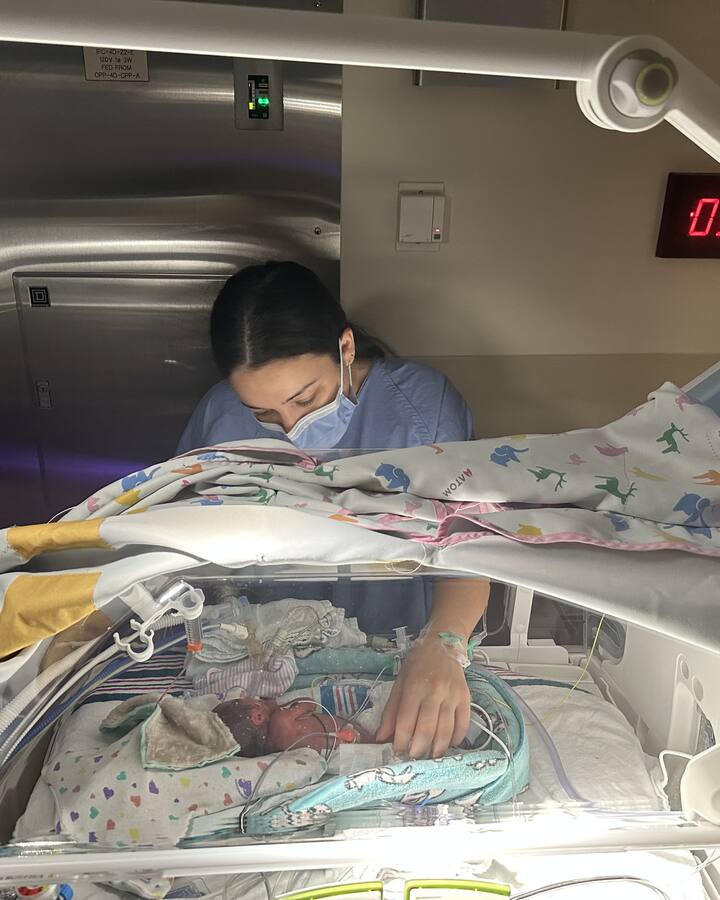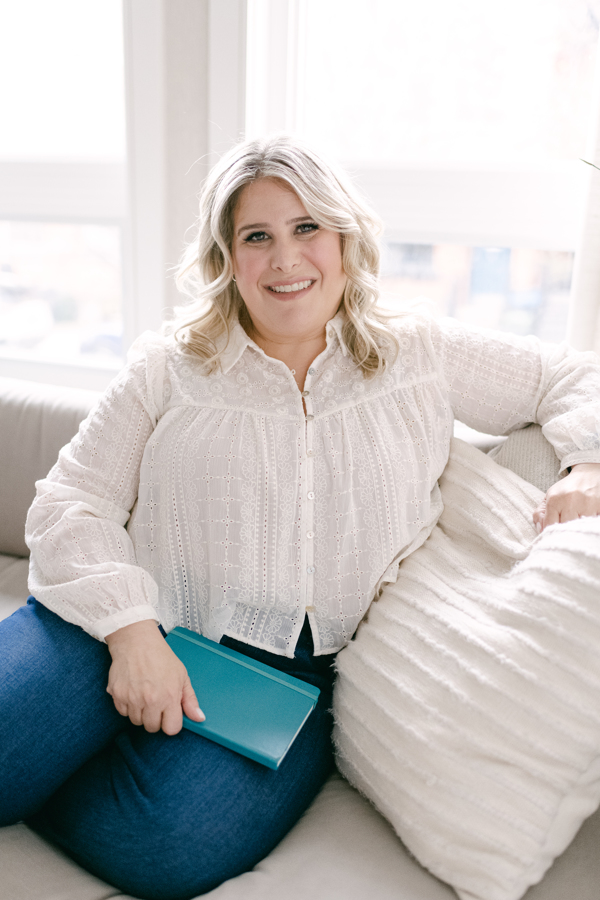


"We started WeNatal because we needed it ourselves, and we keep going because when both partners show up prepared and in it together, the impossible becomes possible." — Ronit Menashe, Co-Founder of WeNatal
There is a specific kind of silence that lives inside an ultrasound room when the heartbeat disappears.
It is not an absence of sound. It is the presence of something else entirely. The hum of the machine. The stillness of a technician who has learned, over years, to keep her face neutral. The particular quality of air that exists in the seconds before a life changes.
Ronit Menashe knows this silence. So does Vida Delrahim. And in early 2020, one week apart, each of them walked out of separate ultrasound rooms, into separate parking lots, carrying the same unbearable weight. Two women who did not yet know each other. Two losses that would become, over the years that followed, the unlikely origin story of a movement.
Today, WeNatal has supported over 30,000 families. It has changed the conversation around male fertility, upended assumptions that have calcified in the prenatal industry for decades, and given couples a new framework entirely: one they call Trimester Zero. The brand has grown without venture funding, without traditional advertising, built entirely on clinical science and the kind of word-of-mouth that only happens when something truly works.
But before all of that, there was a parking lot. And a grief that had nowhere to go.
I sat down with Ronit Menashe and Vida Delrahim to talk about where WeNatal came from, what the science actually says, and what they most want every woman reading this to hear.
"We found ourselves with almost no clinical direction"
I asked them both to take me back to the beginning. To the grief that started it all. Ronit leaned forward and said it simply: this came from the most personal place possible.
Tell us what inspired you both to create WeNatal.
"WeNatal came from the most personal place possible. Vida and I both experienced devastating pregnancy losses just one week apart in early 2020. Despite doing everything 'right,' we found ourselves with almost no clinical direction from our doctors. That grief sent us down a research rabbit hole, and what we found shocked us: the entire prenatal industry was built exclusively around women, leaving men out of the conversation entirely.
This felt fundamentally wrong, since sperm accounts for half of the genetic equation. We also realized the female prenatal market was saturated with formulas that overpromised and underdelivered, lacking real clinical rigor. WeNatal became our mission to turn personal pain into a solution, reimagining fertility as a shared journey that finally meets the standards modern couples deserve."
The ultrasound that rewrote everything
There is a specific kind of woman who responds to devastation by going to the library. Ronit Menashe is that woman. When her 11-week ultrasound went quiet, when the room emptied of everything she had planned and hoped for, she did not accept the dismissal her doctor offered with a pat on the shoulder. She went to PubMed. She called functional medicine experts. She sat with the silence, and then she turned it into research.
She walked me through what that period felt like with an honesty that is almost startling — the kind that only comes from having processed something fully and decided to stop protecting anyone else from the truth of it.
Ronit, can you take us back to that period and the moment the idea began to take shape?
"I had just turned 41 and thought I had the wellness piece completely figured out. I had left Nike to work with Dr. Mark Hyman. I ate clean, removed toxins from my home, and took my prenatals. Yet, at our 11-week ultrasound, the room went quiet. There was no heartbeat. My doctor patted my shoulder and said, 'It's just an age thing. Go home and keep trying.'
That answer didn't sit right. I went deep into PubMed and called every functional medicine expert I could reach. I discovered a glaring omission: male health drives half of every fertility outcome, yet my husband's preconception protocol was just a standard multivitamin and a good attitude. That was the shift. I built a research-backed supplement stack for both of us, and three months later, I was pregnant. At 42, I delivered our daughter, Emma, with no IVF or major intervention. That DIY stack became the prototype for WeNatal For Him."
She says the last line quietly, and it carries everything in it. A daughter named Emma. A protocol built inside grief that became a lifeline — first for herself, and then for 30,000 families she would never meet.
The weight women carry alone
On the other side of the country, Vida Delrahim was living her own version of this story. Two losses. Multiple doctors. Not a single one had thought to ask about her husband's health.
When I asked her about the isolation of those early months after her miscarriage, she described something I think most women will recognize immediately: the internal spiral that begins in the parking lot and follows you home.
Vida, you've spoken about how isolating miscarriage can feel, and how you later learned that friends and even your own mother had experienced loss too. Why do you think these stories stay so hidden?
"When I walked out of that ultrasound, I went home and immediately started blaming myself. Too much stress, too much coffee, working too hard. That internal spiral is exactly why these stories stay hidden. Because cultural messaging dictates that pregnancy is solely the woman's domain, you absorb the shame quietly. You assume it's something you must have caused or should have been able to prevent.
In reality, across multiple losses, not one doctor had ever asked about my husband's health. We carry the grief and blame privately because the conversation has been built around only one half of the biology, leaving women to hold the silence alone."
There is something almost radical about hearing this said so plainly. The silence around miscarriage is not accidental. It is the logical conclusion of a medical system that built prenatal care as a solo sport, handed the woman the full weight of a biological process that requires two people, and then offered nothing when things went wrong except the suggestion to try again. If you are walking through that silence right now, our guide to the mental prep for motherhood nobody talks about was written for exactly this — including where to turn when the loss has nowhere to go.
When personal pain becomes a paradigm shift
When they first went public with their story, neither of them knew what to expect. What happened next changed the direction of everything.
What did sharing your own story open up for you, and what do you hope it opens up for the women reading this?
"When we first shared our story publicly, the content went viral. But it was the messages that struck us. Hundreds of women wrote in saying they had gone through the same thing but had never told a soul.
Over the last four years, we've watched the conversation genuinely shift. More couples now know that male health is a critical part of the equation. What we hope this opens up for readers is permission. Permission to talk about your loss without shrinking it for other people's comfort, permission to ask harder questions, and permission to bring your partner in as an equal participant. You do not have to carry this alone."
The data that changed everything
Ronit told me that the personal reckoning was only the beginning. What came next was the data, and the data was impossible to ignore.
So much of the fertility conversation centers on women. At what point did you realize the other half of the equation was missing entirely?
"For me, it was researching sperm quality, DNA fragmentation, and oxidative stress, and realizing how heavily male preconception health impacts outcomes. For Vida, it was the phone call where we realized that through her two losses, her husband's biology had been completely invisible to every provider.
But what really stopped us in our tracks was the systemic data: sperm counts have declined by more than 50% over the last 50 years, and one in six couples now experiences infertility. These aren't fringe statistics. They point to a massive reproductive crisis that the prenatal industry was ignoring. That's when WeNatal stopped feeling like a personal project and started feeling like a necessity."
The numbers are worth sitting with. A 50% decline in sperm counts over fifty years. One in six couples. The scale of what is being described is not a personal failing. It is a systemic one. And for years, the industry responded by making better prenatal vitamins for women, and nothing else. It is still the gap one Momé writer ran into when no fertility clinic offered her husband a sperm DNA fragmentation test across months of appointments.

Trimester Zero: the 90 days nobody talks about
This is where the science gets revolutionary. I asked Ronit to explain Trimester Zero to me the way she would explain it to a couple sitting at their kitchen table, trying to understand what they can actually do.
You describe shifting the conversation from "me" to "we." What does that reframe actually look like in practice?
"It looks like a shared morning ritual instead of a solitary one. It changes the image of a woman alone at the kitchen counter, carrying the full emotional and physical weight of what comes next.
A massive part of this is what we call Trimester Zero, the 90 days before a couple starts trying to conceive. Biology shows that it takes roughly 90 days for sperm to fully mature, meaning a man's lifestyle in that window directly shapes the genetic material he brings to conception. The same period influences how a woman's eggs mature. When a couple commits to Trimester Zero together, the partner becomes a co-parent from day zero, distributing the emotional load and making the responsibility mutual."
By the time a woman sees a positive pregnancy test, the baby's neural tube is already beginning to close. Within days of that first flutter of awareness, critical developmental windows have already passed. Ronit said it to me simply: the conversation about prenatal health does not start at conception. It starts three months before it. And it starts with both people in the room.
Share some of the research you uncovered about the science behind Trimester Zero.
"Trimester Zero is the most underestimated window in the reproductive journey. By the time most women see a positive pregnancy test, the baby's neural tube is already closing, around day 28. Vital nutrients like folate, choline, and iron need to already be present in meaningful reserves.
Our Citruslabs clinical trials confirmed that a targeted three-month preconception protocol directly improves female fertility markers and ovarian function. For men, the matching study showed WeNatal For Him significantly reduces oxidative stress to improve sperm health and libido. Furthermore, the science of epigenetics shows that what both partners do in these three months influences how the baby's genes are expressed, shaping their long-term immune and cognitive foundation."
Why male fertility has been invisible for so long
I asked Ronit why this gap has existed for as long as it has. She had a clear answer.
Men contribute half the genetic picture, yet sperm health is rarely discussed. Why has that gap persisted for so long?
"It comes down to a deeply ingrained assumption. Women have a finite number of eggs and a visible reproductive timeline, so female fertility is highly monitored. Men regenerate sperm continuously, which created a false cultural shorthand that men are always fertile and ready.
But science tells a different story. Sperm is highly sensitive to environmental toxins, diet, stress, and lifestyle. A man's sperm today is a direct reflection of his health over the last 90 days. Because prenatal care was historically categorized strictly as a women's health issue, the medical system was slow to communicate this. Men were never told they had a role to prepare for, so they never knew to ask."
What WeNatal actually is
The word "bioavailability" travels through wellness culture the way most good ideas do: widely repeated, rarely explained. I asked Ronit to break it down, and she did so with the precision of someone who has spent years making sure the science actually lands.
Tell us exactly what WeNatal is, and which products are most helpful for moms?
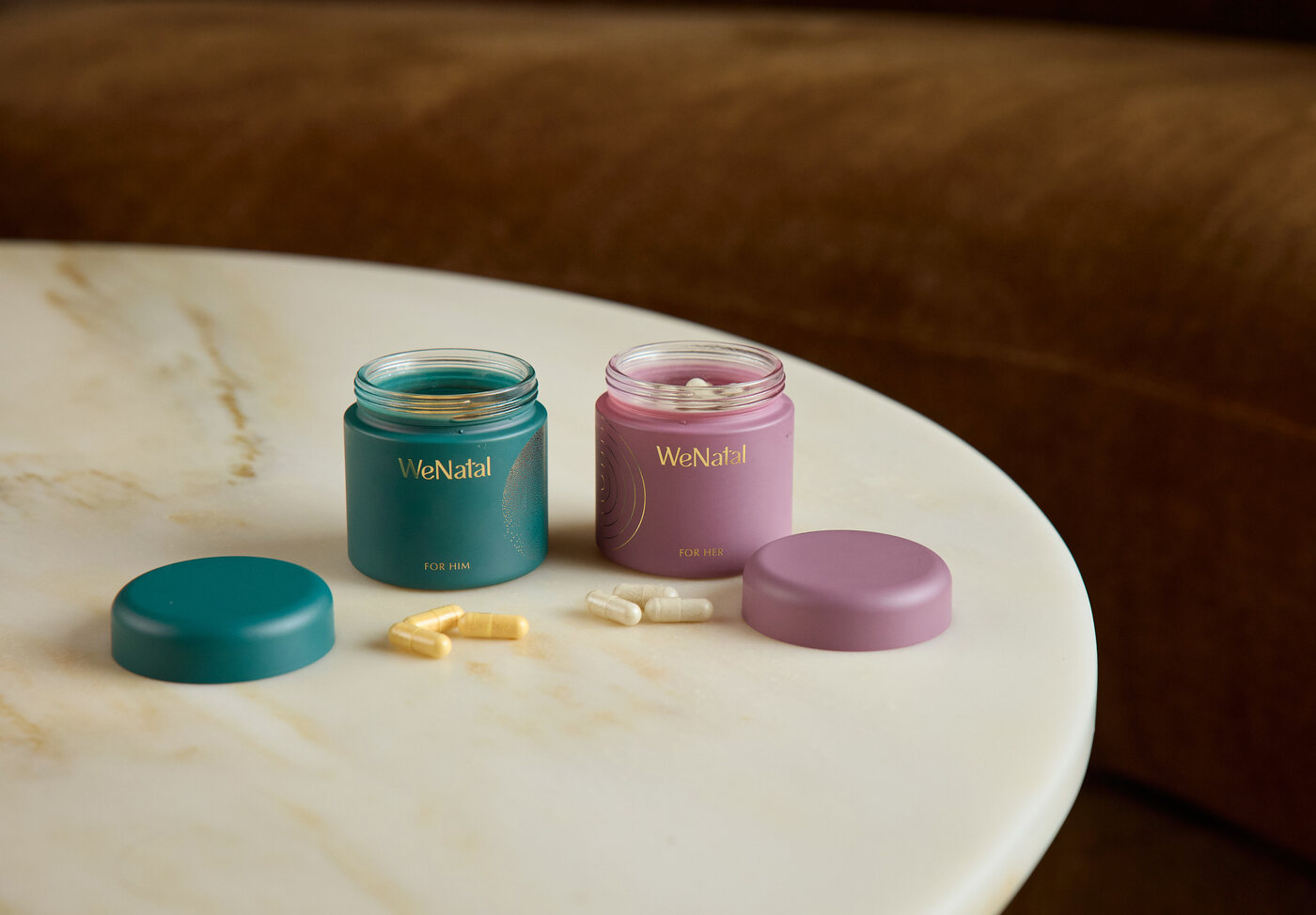
"WeNatal is a science-backed prenatal supplement system designed for both partners, spanning from preconception through postpartum. For moms, our core product is WeNatal for Her. It delivers 24 bioavailable nutrients and roughly twice the nutrient density of standard prenatals. This includes 400 milligrams of choline, critical for fetal brain development, and targeted iron for postpartum recovery.
An independent clinical study by Citruslabs proved its efficacy. WeNatal For Her significantly improved Vitamin D and D3 levels, critical for ovarian function, while 84% of women reported improved overall well-being and 75% experienced increased energy. For women looking to support egg quality specifically, such as those over 35, freezing their eggs, or navigating loss, we also created Egg Quality Plus to optimize mitochondrial health."
For a reader who isn't familiar with the term, why does bioavailability matter so much in prenatal nutrition?
"Bioavailability is the difference between swallowing a vitamin and your body actually absorbing it. Much of the prenatal market is filled with synthetic dyes, cheap fillers, and low-quality nutrient forms that look complete on a label but underdeliver in the body.
Folate versus folic acid is the perfect example. Folic acid is a cheap, synthetic form, but up to 40% of the population has an MTHFR gene variant that makes it incredibly difficult to convert into a usable form. We use methylated folate, which bypasses that conversion entirely so it can go straight to work for the baby's development. We applied that exact clinical rigor to all 24 ingredients."
If you're comparing options for yourself, our editors' guide to the best prenatal vitamins walks through exactly what to look for on a label — methylated folate, choline, and the forms that actually absorb.
Shop WeNatal: the full product line
Backed by experts including Dr. Mark Hyman and Kelly LeVeque, WeNatal's bestselling products are available now.
- WeNatal for Her — $69.95. 24 key nutrients for healthy pre-pregnancy, pregnancy, and postpartum support. Clinical results: 84% of women reported improved overall well-being; 75% experienced increased energy.
- WeNatal for Him — $69.95. Key nutrients specifically formulated for healthy sperm cycles and beyond. Clinical research showed a significant reduction in oxidative stress and measurable improvements in sperm health.
- WeNatal Prenatal Protein+ — $95. A complete 3-in-1 protein, collagen, and prenatal support system designed for couples, covering multiple nutritional bases in a single daily routine.
- Rest + Digest Magnesium — $39.95. Because preconception health is not only about nutrients. It is about the nervous system, stress recovery, and the quiet work of rest. This magnesium supplement rounds out any regimen with the relaxation support both partners need.
- Omega DHA+ — $39.95. Omega-3 fatty acids to support baby brain development and optimize the health of both mom and dad before, during, and after pregnancy.
A movement, not a company
I asked Ronit what rewriting the fertility narrative actually looks like in real terms. She told me about a customer, and I understood immediately why she leads with this story.
You've called WeNatal a movement, not just a supplement company. What does that look like to you?
"'Fertility Reinvented' means showing couples that they have far more power over their reproductive outcomes than they've been led to believe. Education is central to everything we do, which is why we partner with doctors, midwives, and functional medicine experts to help people understand the underlying biology.
We see the impact constantly. One customer had been trying for years and hit a wall with IVF when her first retrieval yielded zero viable embryos. After hearing us on a podcast, she and her husband committed to WeNatal and optimized their lifestyle for three months. On their next round, they retrieved seven viable embryos, and she is now pregnant. That is what this movement looks like in real life."
Every week, Vida told me, she opens her inbox to photographs. Newborns, mostly. Couples who were told IVF was their only option. Couples who were told they were too old. She said she cries almost every time, because she remembers exactly what it felt like to sit in that doctor's office with no plan and no hope. The inbox photographs are the answer to that room. They are what the silence eventually became.
What they most want you to know
Near the end of our conversation, I asked Ronit and Vida the question I always save for last. Not about the business. Not about the science. Not about the research, formulations, or fertility statistics.
I asked them what they would say to the woman reading this in her car, sitting in a parking lot after another appointment, another difficult conversation, or another moment when a room went quiet and she was left alone with her thoughts.
Their answer came without hesitation.
"First, it is not your fault. Please let that land."
For so many women, miscarriage and fertility struggles become tangled with guilt, self-blame, and endless questions about what they could have done differently. Ronit and Vida have spent years speaking with women carrying that weight, and they want readers to know it was never theirs to carry.
"So much of what women hold onto after a miscarriage is misplaced blame," they explained. "It is a weight you should never have been given."
Just as importantly, they want women to remember that they do not have to walk through loss alone. Whether it's a partner, a friend, a family member, or a trusted community, support matters. "Reach out to your partner or your village to hold this with you," they said.
And when the time comes — when grief softens enough to allow room for possibility again — they hope women will remember that knowledge, education, and proactive care can make a meaningful difference.
"I say this knowing how hard it is to hear in the middle of the pain," Ronit shared. "But I am ultimately grateful for my loss. It gave me a purpose I never could have found otherwise."
It's a perspective that only comes with time, but one that has become the foundation of everything they have built.
"Hold onto hope. There is a path forward, and we are rooting for you."
The story isn't really about supplements
Today, WeNatal has supported more than 30,000 families, a milestone the founders achieved without outside venture funding or traditional paid advertising. Instead, they built the company through a practitioner-first model, earning the trust of doctors, fertility specialists, and midwives who believed in the science as deeply as they did.
Yet for Ronit, the numbers are not what stay with her. "Every week I open my inbox to photos of newborns from couples who were told IVF was their only option or that they were too old," she told me. "I cry almost every time because I remember exactly what it felt like to sit in that doctor's office with no plan and no hope."
That memory — the uncertainty, the heartbreak, the feeling of having nowhere to turn — is what continues to drive their work. "We started this because we needed it ourselves," she said. "And we keep going because when both partners show up prepared and in it together, the impossible becomes possible."
The prenatal industry spent decades telling one half of the story. Ronit Menashe and Vida Delrahim decided that wasn't good enough. What began as two women asking uncomfortable questions became a company that has helped more than 30,000 families and sparked a much-needed shift in the fertility conversation — challenging an industry that had spent years focusing almost exclusively on women, bringing men back into the equation, and putting science at the center of the discussion.
This isn't really a supplement story. It's a story about what happens when smart women refuse to accept the answer, "That's just the way it's always been."
Follow WeNatal on Instagram @we_natal, and the founders at @ronitmenashe_ and @vidadelrahim.
This interview reflects the founders' experience and WeNatal's own clinical claims; it is not medical advice, and supplements are not a substitute for care from your physician or fertility specialist. If you are grieving a pregnancy loss or struggling to conceive, you are not alone. In the US and Canada, call or text 988 for mental health support, or reach Postpartum Support International at 1-800-944-4773. Momé may earn commission on items purchased through links in this article.