There is a particular kind of confidence that does not need an audience. It does not raise its voice or wait for permission. It simply exists, in the certainty of who you are in each moment, no matter where you are, or what you're faced with.
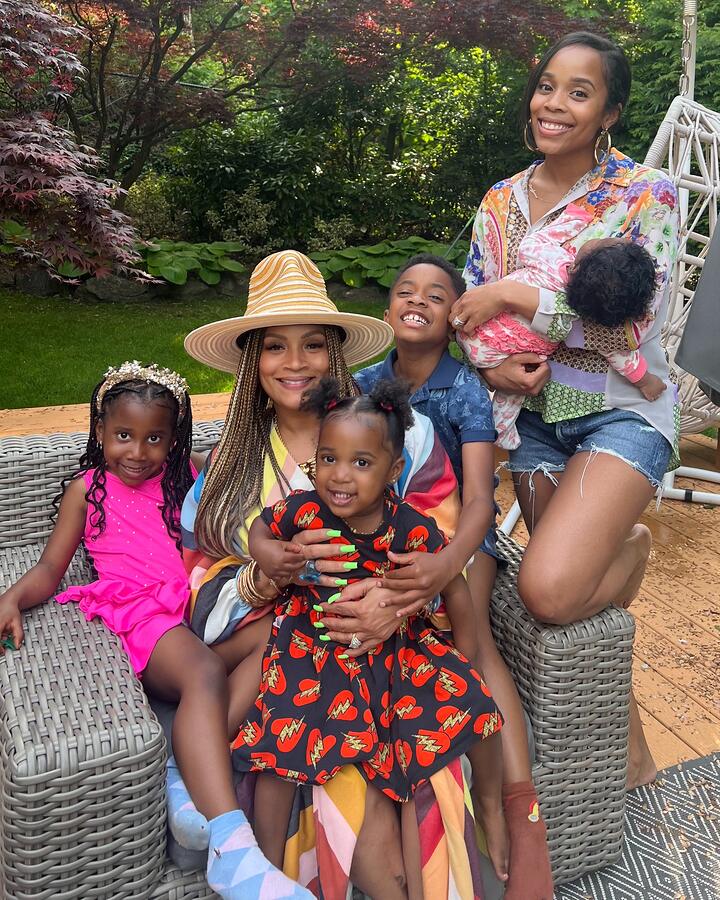
Long before Mielle Organics became a name recognized on store shelves across the country, it was simply what was happening at home. "There were products everywhere, boxes being packed, conversations about the business happening around us," Mia Rodriguez remembers. "It was just normal life." She was too young to understand what her mother, Monique, was building. The risk that came with entrepreneurship, the need to scale it, and the sheer improbability of it. What she did understand was that one day she walked into a major retailer and watched a stranger reach for something her mother had made by hand. "That was when I started understanding the scale of what my parents were creating," she says, "and how many people it was reaching."
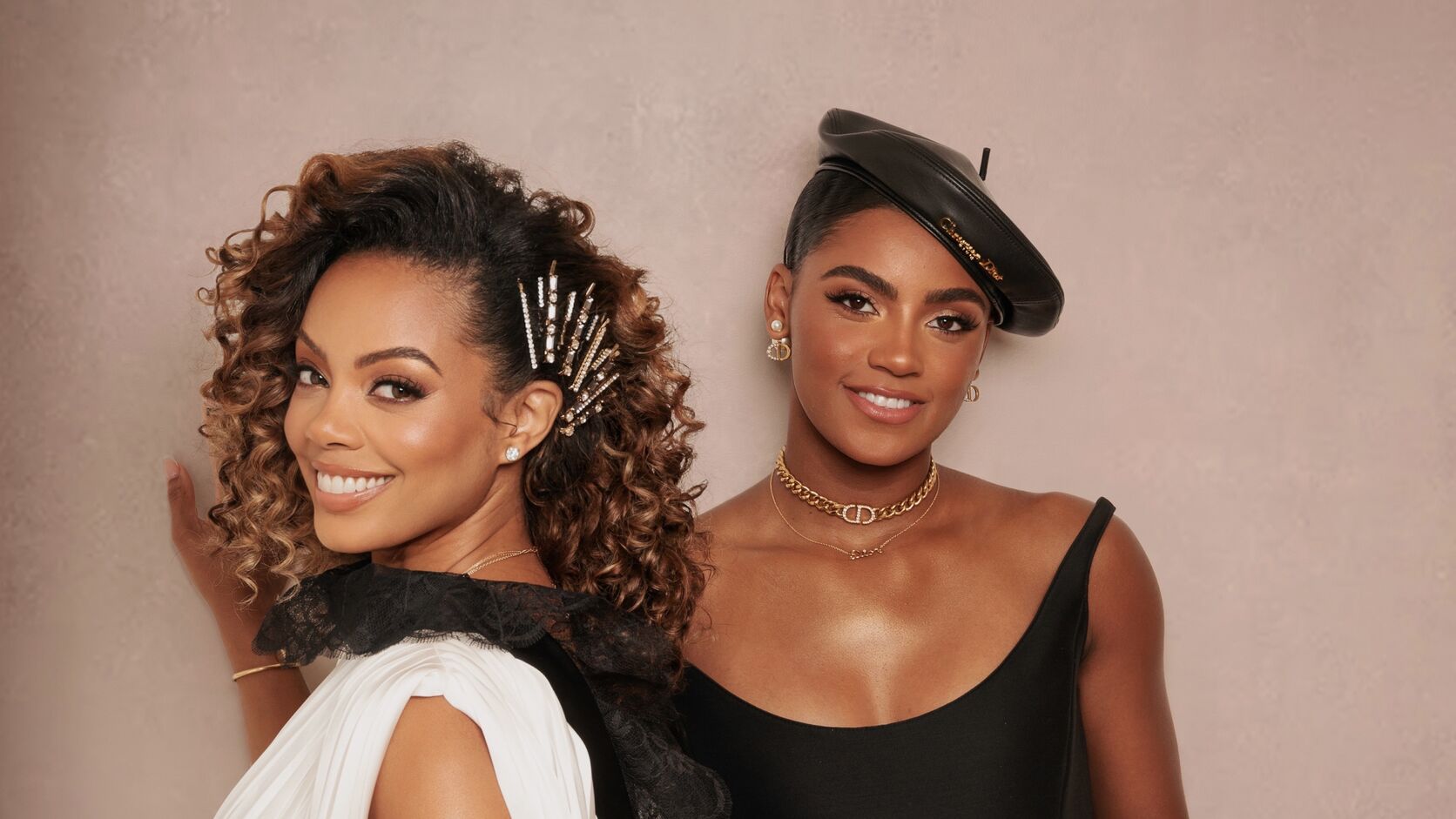
This is not, strictly speaking, the story of how Mielle Organics was built. This is the journey of the two women who grew up on either side of it; one who learned to build an empire while shielding her daughters from what it cost her, and one who learned, simply by watching, that ambition and self-possession were never supposed to be separate things.
The girl before the brand
Before any of that scale registered, before store shelves, before a following of her own, Mia was simply a little girl her mother was paying close attention to.
"Mia has always been observant and creative," Monique says. "She pays attention to details, to style, to how things feel and how people respond to them. She also has always had her own opinion." That combination — the noticing and the certainty — never really left her. "As she's gotten older, I've watched those qualities become part of how she approaches fashion, content, D.I.M.E.S. and the communities she's building."
It is a specific kind of foresight, watching a small child's particular attentiveness and recognizing, correctly, what it will grow into fifteen years later.
What she carried alone
Ask Monique what was actually happening during Mielle's earliest years, underneath what her daughters saw as "Mom and Dad working on Mielle," and the answer arrives without the gloss.
"There was a lot she couldn't have understood as a child," Monique says. "I was navigating a deeply personal season of grief, transitioning from nursing, raising a family, and building something without knowing how big it could become. There were financial decisions, uncertainty, long nights, and enormous responsibility." None of it, she decided, belonged on her daughters' shoulders. "As parents, we tried to carry the adult weight ourselves. I wanted my children to witness perseverance, but I didn't want them carrying anxiety that wasn't theirs to carry."
It is one thing to build a company. It is another to build it while quietly absorbing every uncertain night so your children only ever witness and experience the grit, resilience, and perseverance and none of the fear underneath it. That is its own kind of labor that never makes it into a founder profile — the work nobody sees, done in the hours nobody counts.
The tension did not resolve itself once the company found its footing, either. "The hardest part was realizing that there would always be somewhere else I could be," Monique says. "When I was working, there were moments I wanted to be home. When I was home, there was something happening with the business. Mom guilt can convince you that being committed to one means you're failing the other."
Mom guilt can convince you that being committed to one means you're failing the other.
She has since made peace with the imperfectly perfect equation. "I have more grace for that version of myself now. My children didn't need a mother who executed some perfect version of balance," she says. "They needed to know they were loved, protected, and prioritized. They also got to see their mother pursue something she believed God had called her to build. Both things can be true."
Two versions of the same woman
Everyone else met Monique Rodriguez as a beauty mogul first. Mia knew her as mom, and never had to reconcile the two.
"I don't really see them as two different people," Mia says, "because the qualities that make her successful are the same qualities I've always seen at home. She's very driven and intentional, but she's also really funny, nurturing, and deeply rooted in her faith." What the public sees, Mia says, is the confidence and the business instinct. What they miss is everything underneath it. "They don't always see how much prayer, thought, and care go into the decisions she makes. She's still my mom at the end of the day, so I get to see all the sides that don't necessarily make it to social media or in interviews."
It is a rare thing, watching someone build a public identity and learning that they are exactly who they say they are in each room of the house — life, business, motherhood, partnership, friendship. Most daughters eventually discover a gap between the mother and the myth. Mia has spent her whole life looking for one and comes up empty every time.
What she learned instead is something to aim at. "I've watched her enter spaces where there weren't many women who looked like her, sometimes as the only Black woman in the room, and never make herself smaller to make other people comfortable," Mia says. "She's very clear about who she is and what she brings to the table. Growing up around that showed me that being ambitious and being yourself don't have to be separate things." It is the same posture that has carried the women rewriting the rules of the C-suite: refusing, quietly and permanently, to take up less room.
Ask Mia to describe the relationship in three words and she doesn't reach for anything more complicated than the truth: Close. Honest. Supportive.
Where they diverge
For all the ways Mia is a clear extension of her mother, Monique is quick to draw a line around exactly where the resemblance stops.
"Obviously, one can say the interest in beauty came from me," Monique says, "but aesthetically, we're different. Mia has her own perspective on beauty and fashion, and I actually enjoy that." The handoff is not always smooth in real time. "Sometimes she'll show me something, and I'll think, 'Absolutely not,' and then I see how she puts it together and understand it." She has made peace with not fully understanding it in advance. "I don't want her beauty identity to look exactly like mine. That's part of the fun."
It is a small thing, a mother raising an eyebrow at her daughter's styling choices — and it is also the whole thesis of this family in miniature: inheritance without imitation.
Community before scale
If Mia absorbed one lesson simply from proximity, it was learning to discern what comes first.
"The biggest lesson is that community comes before scale," Mia says. "I watched my mom build trust with women long before Mielle became the company people know today. She wasn't just selling products. She was listening, showing up consistently, and creating a relationship with her audience." She carries that instinct into her own work now, building her platform D.I.M.E.S. the same way. "I don't just want followers. I want people to know what the community stands for and feel like they're part of it."
It is easy to admire a finished brand and mistake scale for the strategy. Mia watched the years before the scale: the version of her mother that showed up consistently for an audience of a few, before there was a company large enough to notice. That is the part most people skip when recounting their journey — and the part that shows up again and again in the businesses Black mothers are building. Most aim for the finish line or the glory years. Mia didn't.
What money actually means
The business lessons inside the Rodriguez household were never only about brand-building. They were about a distinction most families never get around to making explicit.
"I want our children to understand the difference between having money and building wealth," Monique says. "We talk about ownership, equity, saving, investing, and making decisions with a longer vision than what's immediately in front of you." But the lesson doesn't stop at accumulation. "I also want them to understand responsibility. If God gives you resources or access, the question becomes what you do with them and who else benefits from them."
It sounds simple when stated out loud and yet takes most people decades to actually absorb — that money is a tool in service of a longer vision, and that vision was never supposed to end at the household walls.
Not her blueprint to follow
For all the ways Mia has inherited her mother's instincts, Monique has been extremely intentional about the one thing she refused to hand down: the exact shape of her own path.
"One of the most important things Melvin and I can do as parents is not confuse our dreams with our children's dreams," Monique says. "Mielle is something we built, and our children grew up alongside it, but that doesn't mean their responsibility is to recreate our path." She is careful to frame her role now as counsel and guidance, not command. "Mia has her own perspective. She understands her generation in ways I never could because she's living it. I want her to explore that. My role now is to give her the benefit of what I've learned without making my experience the blueprint she has to follow."
That philosophy shows up in something smaller and more practical than any mission statement: the way Monique has learned to talk to her daughter. "I've had to learn that guidance changes as your children get older," she says. "When they're little, you're making decisions for them. As they become young adults, you're helping them learn to trust themselves." These days, she leads with questions instead of answers. "What do you think? What feels right to you? What are you trying to accomplish? I can tell her what I've experienced, but ultimately she has to develop confidence in her own decision-making."
Mia feels the difference. "When I need advice, she's usually the first person I turn to," she says, "especially when I'm overthinking something or want another perspective." She can be reached about almost anything, she says — school, a friendship, a brand opportunity, D.I.M.E.S., or literally what to wear somewhere. "She knows me well enough to tell when I already know the answer and just need somebody to say it back to me." But something has shifted as she's gotten older, too. "She gives me more room to figure things out on my own. She'll tell me what she thinks, but she doesn't make every decision for me."
Earning the room
Ask Mia what single thing from her mother she expects to carry for the rest of her life, and the answer has nothing to do with hair care or entrepreneurship. It has to do with how to walk into a room.
"She taught me not to walk into rooms feeling like I have to prove I belong there," Mia says. The lesson has mattered more with each year, as her own career has shifted shape. "That has stayed with me, especially as I've gone from being an intern behind the scenes to being invited into spaces as talent or as a creator." She is careful not to overstate her own readiness. "I'm still young and still learning, but I know I deserve to be in the room. My job is to show up prepared, be myself, and make sure the opportunities I say yes to actually align with who I'm becoming."
The process of becoming
Ask Mia what people get wrong about growing up with her last name, and she does not deny the obvious advantages. She names them plainly, then complicates them.
"People definitely see the access first, and I understand that," she says. "I've been exposed to rooms, people, and opportunities that a lot of young women my age haven't, and I'm grateful for that. But access doesn't automatically tell people who you are or what you're capable of." At twenty, she is still assembling the answer. "I'm a student at Hampton, growing my own community, creating content, exploring modeling, fashion and media, and learning what kind of spaces I eventually want to build for other young women." The pressure, she says, is the assumption that she should already have it figured out simply because her parents did. "A big part of my personal brand is embracing the process of becoming, rather than pretending you already know exactly who you're going to be."
A big part of my personal brand is embracing the process of becoming.
It is not an accident that Monique describes watching her daughter in almost identical terms. "What surprises me most is how clear she already is about what she likes while still giving herself permission to evolve," Monique says. "At twenty, she's not pretending she has everything figured out. She'll say, 'I want to model,' 'I want to grow D.I.M.E.S.,' 'I want to build community,' 'I want a coffee shop one day.' I love that she allows herself to be curious." Where another parent might read the range as indecision, Monique reads it correctly; as a generational fluency her daughter was simply born into. "She understands that her life doesn't have to be one thing, and I think that is very reflective of her generation."
Neither of them frames Mia's undecided future as a problem to be solved. It is, instead, the entire point. Mia puts it more plainly than either of them needs to. "I think one of the best things my parents have given me is the freedom not to feel like I have to become them," she says. "I can take the lessons I grew up around and apply them to something that looks completely different."
Sharing the vision
There is a particular vulnerability in telling your parent what you actually want, especially when that parent has already done it at a scale most people never will. Mia describes it as surprisingly low-stakes.
"It feels good because I don't feel like I'm presenting my mom with a five-year plan that she has to approve," Mia says. "I can tell her, 'I'm interested in this right now,' or 'I think D.I.M.E.S. could become this,' and we can actually talk about it. I'm still learning what I want, and she's given me room for that answer to evolve." Monique confirms the design was intentional. "That's exactly what I want for her. At her age, she should be exploring," she says. "She's at Hampton, she's building D.I.M.E.S., she's been able to contribute her perspective through opportunities like the Hello Sunshine Gen Z Advisory Board, and she's learning what excites her. I don't need her journey to look linear. I want her to build enough confidence in herself that when she finds the thing that is hers, she recognizes it."
Room to disagree
None of this is to say the relationship is without friction. Two women this similar, cut from the same conviction, were never going to move through life in perfect agreement.
"Honestly, I feel like whenever you're dealing with someone similar to you, things come up," Monique says, laughing. "I raised my girls to be strong, so we're both opinionated, we both know what we like, and neither one of us is afraid to say it." She has learned to catch herself mid-argument. "Sometimes I have to remind myself that she's not asking me to be the manager of her life, but to be her mom. And sometimes she has to remember that I've learned a few things along the way." As for who apologizes first, Monique will not commit to an answer. "We might disagree, but we don't stay there long. Who apologizes first probably depends on who you ask."
The smallest things
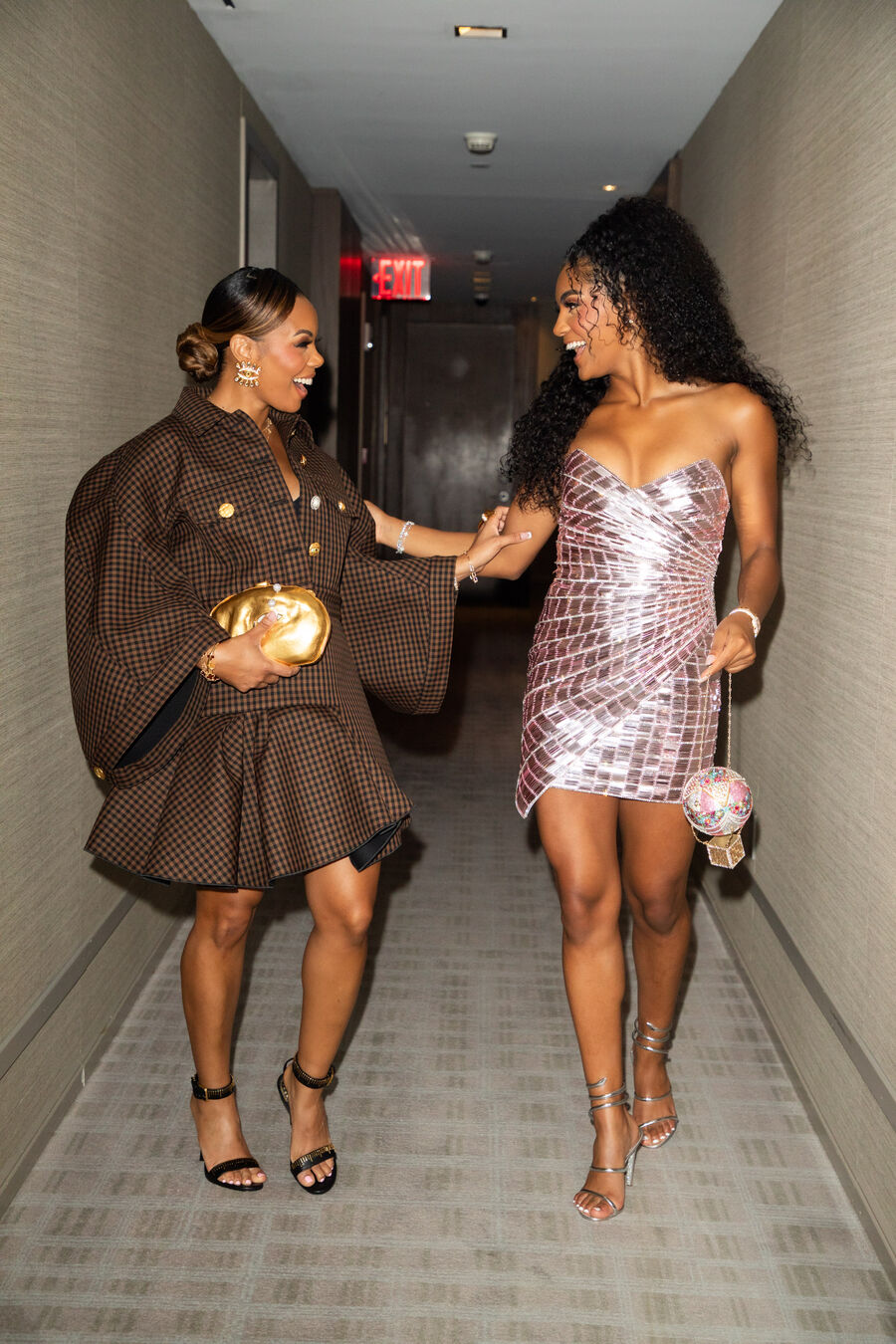
For a family built partly in public, the golden thread between Monique and Mia is woven on the most simplest moments.
"Honestly, it's usually the smallest things," Monique says, when asked what keeps them close. "Getting ready together, talking about beauty and fashion, trying products, catching up when she's home from Hampton." None of it sounds remarkable on its own. That, she has come to understand, is exactly the point. "Those ordinary moments matter even more now because she's building a life of her own. You learn not to take having your children right down the hall for granted once they go to college."
Worth before accomplishment
Beneath the business advice and the career guidance is a single conviction Monique returns to more than any other, and it has nothing to do with ambition at all.
"That who she is comes before what she accomplishes," Monique says, when asked what she hopes her daughter never forgets. "Our faith has always been central to our family, and I want her to know her worth is not something she has to earn. There will always be another title, opportunity, follower count, or room to get into. None of those things can become the source of your identity because they can all change."
Her worth is not something she has to earn.
It extends beyond a single conversation into something closer to a standing hope. Asked what kind of woman she wants her daughter to become, Monique resists the instinct to answer with a résumé. "I don't need Mia to become a particular version of a successful woman," she says. "I want her to become more and more of herself. I want her to stay rooted in her faith, have integrity even when nobody is watching, be confident enough to make unconventional choices, and use whatever influence she develops to create opportunities for others, too."
It is the kind of thing that is simple to say and genuinely difficult to build a life around, especially for a young woman coming of age with an audience already watching. Mia seems to have absorbed it anyway. Ask her what she hopes people take from watching her build something of her own, separate from the family name, and there is no anxiety in the answer, only patience with her own unfinished story.
The joy in it
Ask Monique what part of motherhood has brought her the most joy, and she does not point to a milestone or a launch date. She points to the ongoing, unglamorous work of actually getting to know the people her daughters turned out to be.
"Watching my daughters become themselves," she says. "When they're little, you're responsible for so much of their world. Then one day you're having conversations with these young women who have their own convictions, dreams, and ideas. Getting to know them as women, not only as my daughters, has been such a gift."
Legacy, redefined
There is a version of this story that ends with Mia inheriting Mielle Organics, and it would have been, by most measures, a satisfying one. That is not the story either woman is telling.
"I'm proud of what my parents built," Mia says, "but I'm equally grateful that they've never made me feel like the only way to honor it is to repeat it. I think legacy can also mean being given the freedom and foundation to create something different." Monique agrees without hesitation. "Legacy isn't creating a life for your children and asking them to live it," she says. "It's giving them faith, wisdom, access, and the confidence to build a life that's authentically theirs. As her mother, I get to watch that process happen in real time. My job isn't to decide who she becomes. It's to make sure she feels supported enough to discover that for herself."
That, in the end, is the whole story sitting quietly underneath the beauty brand and the magazine cover and the twenty years between them. A mother who built something enormous while making sure her children never had to inherit her fear along with her success. A daughter who watched closely enough to take the parts that mattered such as the discipline, the faith, the refusal to shrink and leave the rest for a life entirely her own.
She raised her with love. They grew together.
Neither of them ever needed it to look like anything else.
Mielle Organics is at mielleorganics.com.