
There is a particular kind of loneliness that only exists when you're two months pregnant, violently ill, and unable to tell a single person why. You're puking your brains out, you can't perform at work, you're too exhausted to see your friends, and the one thing you should be excited about feels like the loneliest secret you've ever kept.
This is how Rachel Kornblum — better known to her community as Rockin' Rach — describes her first trimester: as a season of complete isolation that no one had warned her about, and that no one talks about, because we all wait until the second trimester to celebrate.
"I felt like it's really taboo to tell people you're pregnant before the end of the first trimester," she remembers. "I totally understand why someone would have that mentality. But I also felt like I was the absolute shittiest and depressed in the first trimester. I was puking my brains out, felt too crappy to do anything so I was socially isolated, I couldn't perform at my job, and I felt like I was constantly hiding this massive secret."
What surprised her most, though, wasn't the physical reality of early pregnancy. It was discovering that the rituals that would hold her together as a mother — the songs she sang to her baby in the womb, the routines that anchored her postpartum, the friendships she'd build while singing in a class — all began long before she ever held her baby. They began with one simple lullaby her mother had sung to her.
The compliments she didn't know how to accept
Weight gain during pregnancy is expected. What's not discussed is what happens after — how your body becomes a topic of conversation, praise, and judgment in ways that are disorienting and often painful.
"I gained weight during pregnancy and I didn't bounce back quickly postpartum. Then I started teaching music classes for babies and toddlers and suddenly I was moving nonstop all day long, running around, carrying things, teaching, planning, surviving on adrenaline. I lost weight, but not because I was taking amazing care of myself or finally doing it right. A lot of it came from overworking myself and forgetting to eat."
A couple of months later, ADHD medication brought more weight loss. And with every pound came more praise. Every comment about looking "good" now made her wonder what people had thought before.
"I wish my body was the least interesting thing about me. I wish we lived in a world where women weren't rewarded for running themselves into the ground — as long as they end up smaller afterward."
This realization — that our bodies are never just ours, and that praise can mask real damage — struck her harder than any number on the scale ever had.
How "You Are My Sunshine" led Rachel back to herself
Pregnancy can be a strange kind of loneliness. Your body is changing by the day, your identity feels as though it's shifting beneath your feet, and the world seems to expect you to simply embrace it all with a smile. For Rachel, there were moments when she felt disconnected — not only from her changing body, but from herself.
Then there was the song.
Every day, she would sing "You Are My Sunshine" to the baby growing inside her. It wasn't just a lullaby; it was a lifeline. The song had once been sung to Rachel by her own mother, and now, in the quiet moments of anticipation and uncertainty, she found herself passing it on. It became a thread connecting three generations of women — a reminder that even before her daughter entered the world, their story had already begun.
What started as a simple ritual soon became something much deeper. Through singing, Rachel discovered a way to communicate when words felt inadequate. Her voice became a source of comfort, connection, and presence. In a season where so much felt unfamiliar, it gave her something to hold onto.
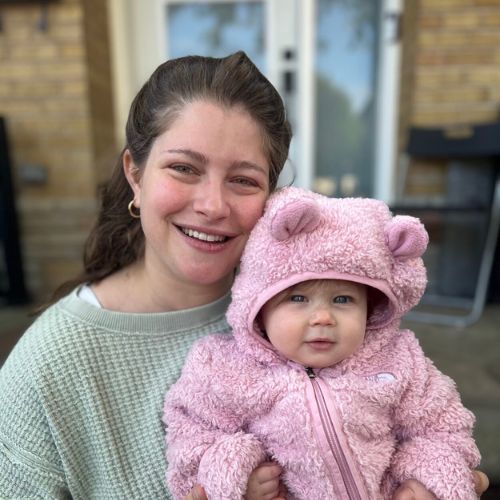
Looking back, Rachel realizes she wasn't only nurturing her daughter. She was rediscovering pieces of herself. And in the process, she learned a lesson many mothers need to hear: your voice matters more than you think. Long before your child remembers your words, they know your presence, your comfort, and the love woven into every note.
"I always sang to my baby when I was pregnant. It felt really emotional and surreal. My mom was just singing this to me, and I was cozy in bed. And now I'm singing it to my daughter." The science is there: babies do recognize songs from the womb, even though their hearing is muffled. But what matters more than the research is what happened after birth.
Did your daughter recognize the song after she was born?
"The only thing that would calm her is the lullaby version of 'You Are My Sunshine.' My husband then started singing 'Moon River' to her and that became her favorite. I've learned that anything that feels familiar to a baby is going to feel really, really calming. That's why I repeat some classics in my teaching each week."
But here's what this mother wants every parent to know: you don't need a perfect voice to sing to your baby. You need presence. You need to show up. You need to believe that your voice — the voice of your baby's mama — is exactly what they need.
What would you tell a mom who feels self-conscious about singing to her baby?
"I would say it doesn't matter. Your voice is good because it is the voice of your baby's mama and the voice that will bring them comfort, even if you're singing off key. Your voice helps them feel calm, safe, and connected to you. More than anything, singing tells your baby: I'm here, you're safe, and we're together."
And here's something nobody expects: singing helps the mother too. It regulates her nervous system in a way that nothing else can. For a few minutes, while singing to your baby, you get to be present instead of anxious. You get to breathe.
The months that changed Rachel forever
"Welcome to the fourth trimester," she says.
There is a term now for the first three months after birth: the fourth trimester. But knowing the term and living through it are entirely different things.
What was the fourth trimester actually like for you?
"It felt like, 'Oh my goodness, this is what postpartum is? This is way worse than what I just went through.' It felt completely disorienting. I didn't feel like myself. I didn't want to spend time with the people I normally spent time with. I wavered perpetually between whether or not this was a good idea, if I was cut out to be a mother. I had so much postpartum rage and I had no idea that was something other people experience."
The rage surprised her. The disconnection surprised her. But what shocked her most was how quickly everything shifted from beautiful to anxious — from that first overwhelming moment of love to wondering if she'd ever sleep again.
What's something about those first 48 hours that nobody really talks about?
"How quickly it goes from 'omg this is so beautiful' to being anxious about the next feed and what that will look like. I didn't feel like myself. I didn't want to spend time with the people I normally spent time with — all of this while everyone is telling you to enjoy the moments."
For Rachel, postpartum wasn't depression at first — it was disorientation. It was rage. It was grief. It was wondering when things would get better, when she'd sleep again, when she'd eat again, when she'd fit back into her clothes. All of this while everyone kept saying to enjoy it, to treasure it, to be grateful.
The feeding journey Rachel never expected
By the time her daughter arrived, everything had already gone off-script. The labor was longer than expected. The delivery wasn't what she'd planned. So when feeding didn't come naturally — when her daughter struggled and cried and couldn't latch, when feeding became a source of stress instead of connection — it felt like another loss, another thing she was failing at.
"My daughter didn't have an easy time feeding, and I held onto my vision of breastfeeding for dear life because everything else about my birth story did not go as planned. Feeding was a massive source of stress because in the middle of the night when she was screaming, that's all she wanted, and I couldn't get the hang of it."
What helped was not willpower or better technique. What helped was asking for help.
What finally helped with feeding?
"I got a lactation consultant to come twice and guide me through strategies. But honestly, I absolutely did not ask for enough help. The real help came from expressing my needs to my friends and family. I would cancel plans and my friends supported me by being there whenever I was ready, in whatever capacity that was."
But there's something harder she wants to say out loud. She eventually had a great breastfeeding journey — 15.5 months of nursing her daughter. But the cost might have been higher than the benefit.
"I sometimes wonder if I ruined my entire postpartum experience by forcing myself to breastfeed even though it wasn't working. I think I felt that nothing went my way already by that point, and I needed ONE thing in control."
This is the part of motherhood nobody warns you about: how you can be "successful" at something and still feel like you failed yourself.
The postpartum crisis: when you think about not existing
For Rachel, postpartum depression wasn't sad — it was terrifying. It was suicidal ideation multiple times a day. It was losing the ability to recognize herself. It was knowing, completely, that she needed help.
"I really thought about not wanting to exist so many times a day. I was unrecognizably emotional, irritable, and had suicidal thoughts multiple times a day. I knew I couldn't manage. I've been depressed before so I knew it was time for some medical intervention. I spoke to my doctor and therapist."
This is not a story about overcoming through willpower. This is a story about asking for help and taking medication. This is a story about knowing your limits.
"Therapy, getting support from professionals who could help, leaning on my husband a lot, my family, building relationships with people who were in the same stage of life as me — that's what got me through."
As Rachel changed, so did her circle
One of the biggest shocks of motherhood isn't the sleeplessness or the feeding challenges or even the postpartum rage. It's how much your entire world changes. Your friends. Your priorities. Your daily schedule. Your sense of who you are. One day you're one person, and the next day you're someone else entirely.
"I didn't know most of these people before I had a baby, and my world just looks so different now. I made a ton of new friends — some through maternity leave and having children at the same time, and some actually through my classes. My entire social network and support network changed. Some friends I've lost touch with, especially if they aren't parents, because it's hard to understand something you haven't experienced."
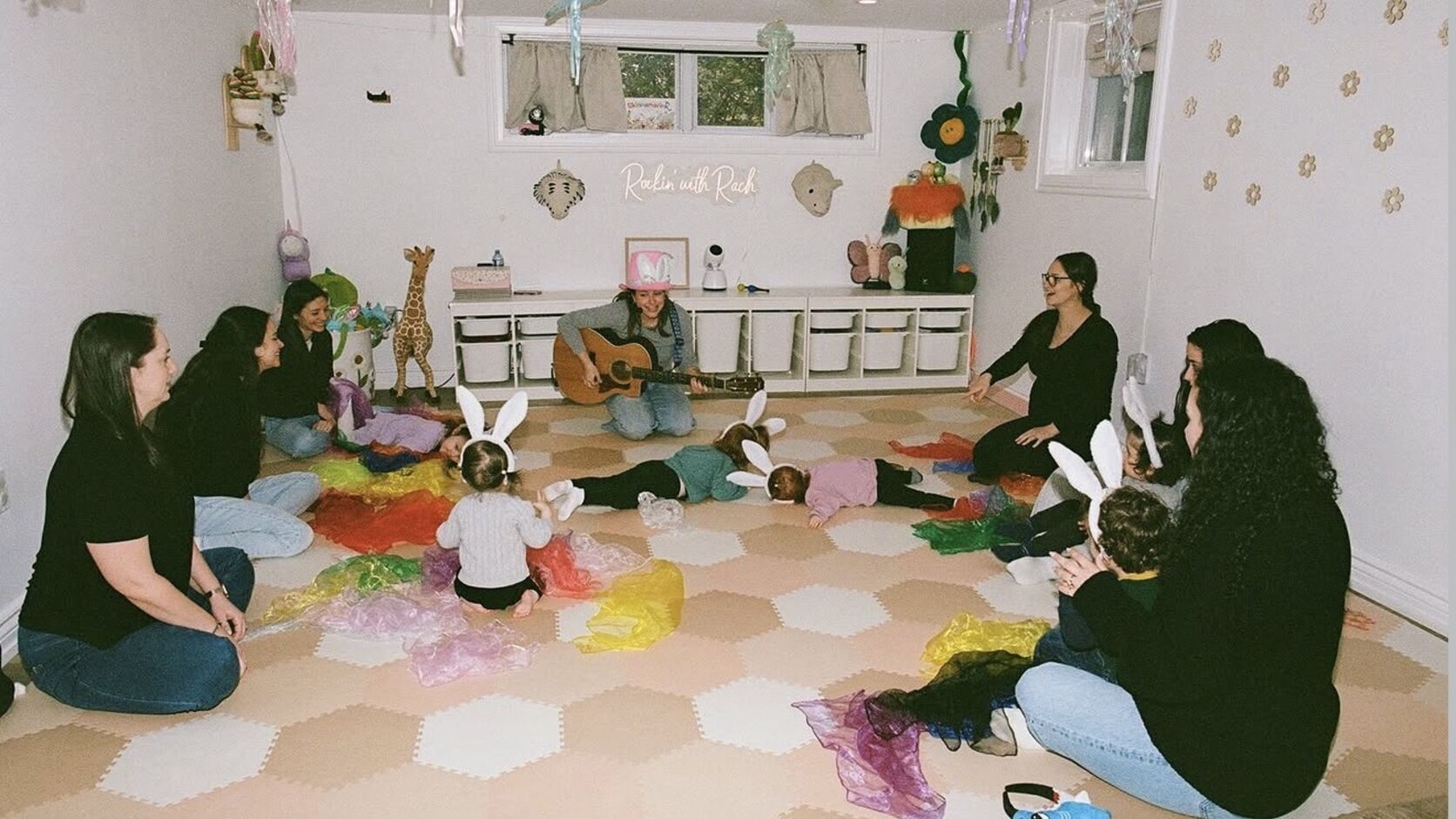
This is where the story becomes interesting. While teaching music classes for babies and toddlers with her baby in tow — something she was doing partly to survive on adrenaline — she met people who would become best friends. Not because she was looking for friends, but because she kept showing up.
How did you build your village?
"I met a best friend through a music class I said yes to, and I speak to her every day. I met another best friend through my music classes for babies and toddlers — she likes to say meeting each other was 'bashert,' which is Yiddish for meant to be. I met another good friend by walking in the neighborhood and saying yes to going for a walk with her. If you are open to it, there are so many amazing people who need to be in your life that you haven't met yet. I have never felt so full and supported by so many amazing people in my life."
When did you finally feel like yourself again?
There's a moment in motherhood when things shift. When the constant crisis energy finally stops. When you can recognize yourself in the mirror. For Rachel, it came at 18 months — a milestone that sounds strangely specific until you hear why.
When did you feel like yourself again?
"I didn't feel like myself until my daughter was around 18 months, and it was a combination of having some time to myself because she was in daycare, and building my business — something of my own that I am passionate about beyond my daughter. That combination of being a mother AND having something that was just mine changed everything. Once I got through the zero-to-six month colicky phase, I felt like I knew she was going to be okay in my hands. That's when motherhood became less terrifying."
This is important: it took time. It took help. It took singing to her baby for 18 months before she felt like herself again. And then it took something that was just for her — a business she cared about, something that made her feel alive outside of motherhood. That combination is what brought her back home to herself.
For the mom reading this right now
If you're in the first trimester feeling impossibly alone. If you're in the fourth trimester convinced you're the only one struggling. If you're trying to breastfeed and it's breaking you. If postpartum has you thinking things you're terrified to say out loud. If you've gained weight or lost weight or just feel completely unrecognizable to yourself. If you're mourning the friendships that died and celebrating the ones that arrived. If you're 18 months in and still don't feel like yourself.
You are not alone. And nothing — not the weight, not the feeding struggles, not the postpartum rage, not the identity crisis — none of it is permanent. Your body will shift again. You will sleep again. You will find your people. You will find your way back to yourself.
And in the meantime, if nothing else feels true, this one thing will: your voice matters. Sing to your baby. Sing to yourself. Show up — messy and imperfect and completely overwhelmed — and sing anyway. That's enough. You're enough.
What's the one piece of advice you'd give every new mom?
"Listen to advice if it's helpful. Ignore it if it's not. At the end of the day, you're the one living your life and raising your kid, not them. Trust yourself. You're the expert on your own motherhood."
Follow Rachel Kornblum and Rockin' Rach on Instagram @rocknwithrach.
If you're struggling postpartum, you are not alone. In the US, call or text 988 (Suicide & Crisis Lifeline) or reach Postpartum Support International at 1-800-944-4773. In Canada, call or text 988. If you are in immediate danger, call your local emergency number.