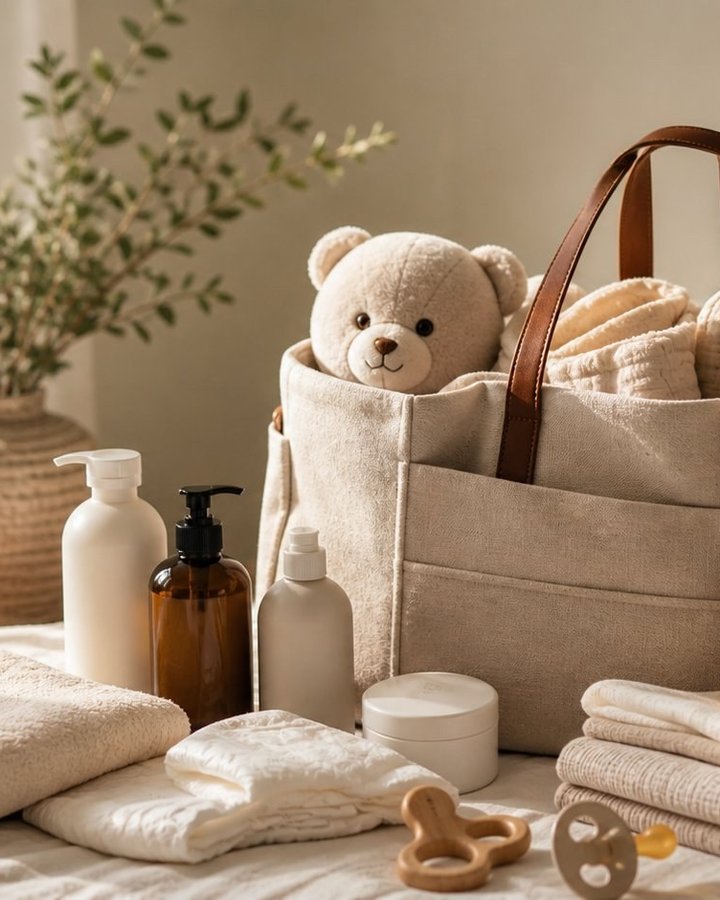
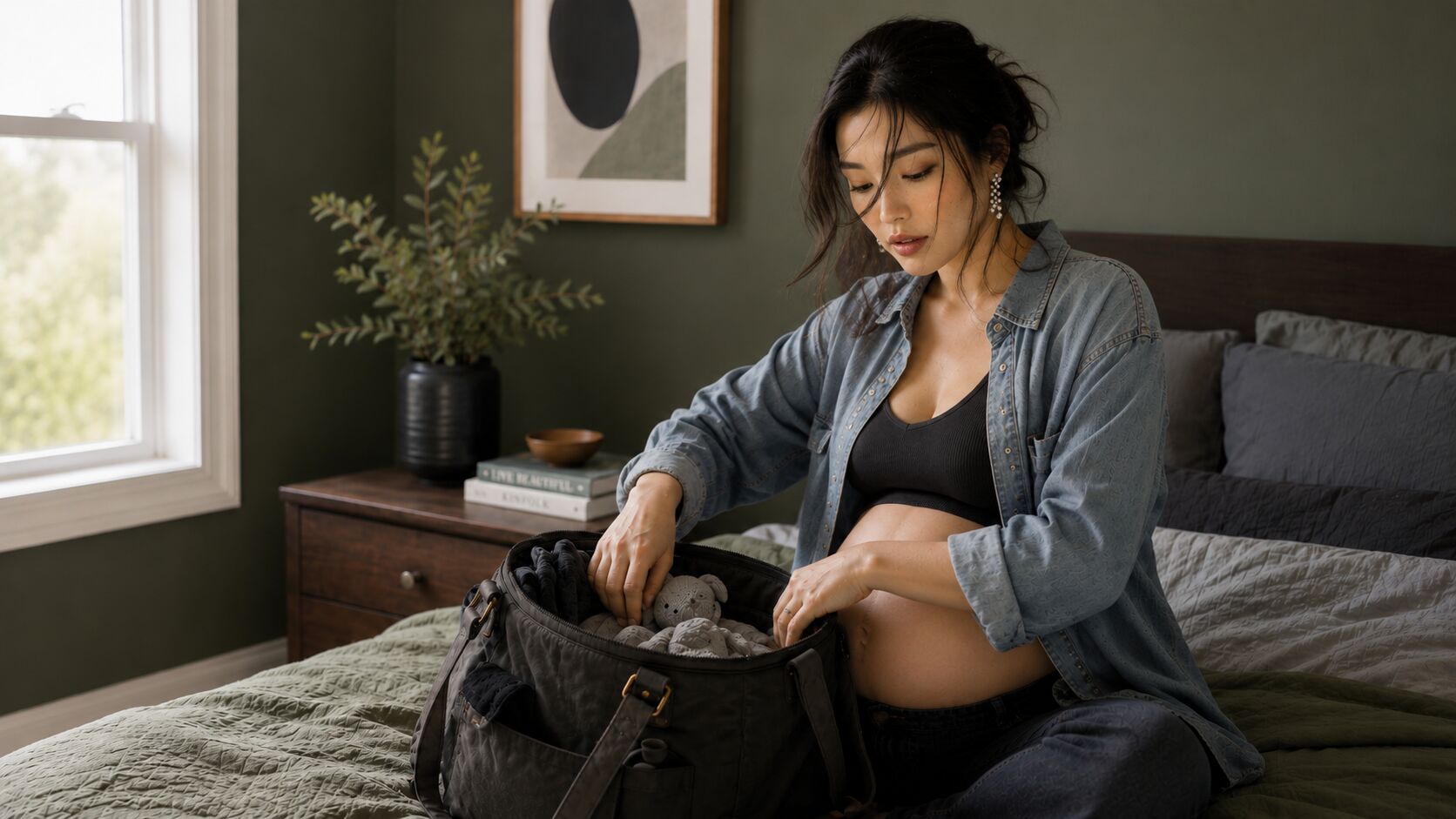

There is a rite of passage every new mom goes through, usually around week two, where she opens her diaper bag at a coffee shop, cannot find the one thing she needs, and tips the whole thing out onto the table to discover she has been carrying seventeen things she has never once used.
Five pacifiers. Three full outfits. A blanket for every possible temperature scenario. A full-size bottle of hand sanitizer. Snacks she packed three weeks ago. A receipt from a doctor's appointment in May. The diaper bag, somehow, weighs twelve pounds.
We have all been there.
The truth is that an overpacked diaper bag is more stressful than an underpacked one. You cannot find anything. Everything is heavy. You are carrying anxiety in physical form, everywhere you go. The right diaper bag holds exactly what you need for the outing in front of you, weighs less than four pounds total, and lets you find any item in under ten seconds.
This is the real list. The diaper bag essentials that genuinely earn their place. What you can leave at home. And how to pack a bag that serves you instead of slowing you down.
The honest rule of diaper bag packing
Most diaper bag checklists are written for a worst-case scenario that almost never happens. They tell you to pack for blowouts, weather changes, missed naps, hunger meltdowns, lost pacifiers, and emergency wardrobe replacements all at once. The result is a bag that is prepared for everything and useful for nothing.
The honest rule is this: pack for the outing in front of you, not the outing your imagination conjures. A two-hour coffee with a friend needs a different bag than a full-day trip to grandma's — and a day of air travel is its own category entirely. Most outings are two to four hours. Pack accordingly.
If something catastrophic happens, you will go home, or you will stop at a drugstore, or a kind stranger will help you. You will not need a complete second nursery to fit in your tote.
How many diapers should you pack?
The most-asked diaper bag question, and the one most articles answer wrong.
The rule of thumb is one diaper per hour of your outing, plus two extras. A two-hour outing needs four diapers. A four-hour outing needs six. A full day at grandma's needs eight to ten.
Not twenty. Not "the whole pack just in case." Twenty diapers in a bag is anxiety made physical. If you are running low, every drugstore in America carries diapers. You can always replenish on the road.
For newborns specifically (under six weeks), bump the ratio slightly. Newborns go through 8 to 12 diapers a day. Pack one diaper per hour of outing, plus three extras, and you are covered.
The actual diaper bag essentials
Here is what genuinely earns its place. Each item exists for a specific reason. Nothing on this list is "just in case."
Diapers (the right number)
Sized correctly. The right ratio for your outing length. Pampers Swaddlers for newborns, Pampers Cruisers for crawlers and walkers, Honest Company if you prefer plant-based, Coterie if you want premium and softer.
Wipes (a travel pack, not the full box)
A small travel-size pack or a refillable travel case. Not the 72-pack from Costco. You need enough for a few changes and any unexpected mess. WaterWipes and Honest Sensitive both make travel-friendly packs. A reusable OXO Tot On-the-Go wipes dispenser is worth $10 if you go through a lot of them — it keeps wipes fresher than the plastic flap on the original pack.
A portable changing mat
Most public changing stations are functional but uninspiring. A foldable changing mat gives you flexibility to change your baby anywhere: a bench, a back seat, a friend's couch, the trunk of your car. The thin foldable ones take up almost no space. Skip Hop and JJ Cole both make affordable, washable versions — and your diaper bag may already come with one. If it does, that is enough.
One change of clothes for baby
One. Not three. One full change — a onesie, a sleepsuit or outfit, and socks, folded small in a ziploc bag. The ziploc keeps it separate from everything else and contains any leaks if the new outfit gets soiled before you use it. If something catastrophic happens that requires more than one change, you are heading home anyway. Trust the math.
A change of top for you
One lightweight tee, rolled small. Spit-up, milk, baby food, and yogurt all land on you as often as they land on the baby. A basic rolled-up shirt takes up almost no space and saves you from the specific misery of wearing someone else's breakfast for the rest of the day.
A small feeding kit
Whatever you need for this outing, not your entire feeding setup.
- Breastfeeding: a nursing cover if you use one, breast pads, and a small tube of lanolin if you are in the early weeks. Bamboobies reusable breast pads or Lansinoh disposables.
- Formula or expressed milk: pre-measured formula in a dispenser, or a prepared bottle in a thermal sleeve. A small insulated bag keeps milk cold for hours.
- Solids: one pouch or a small container plus a silicone spoon, and maybe a silicone bib that folds flat. Not the full feeding apparatus from the kitchen.
A pacifier or two (if your baby takes one)
If your baby uses a pacifier, pack one in a clean pacifier case. Two, max. Not the full collection from the bedside table. A Bibs, a Philips Avent Soothie, or whichever brand your baby has bonded with.
One small toy or teether
One. The one your baby is into right now — not the emergency backup. A Manhattan Toy Winkel, a Sophie la Girafe, or a small soft book. Any single item that holds attention for ten minutes is enough.
A muslin swaddle or small blanket
One lightweight muslin. It works as a light blanket, a nursing cover, a sun shade for the stroller, a spit-up cloth, an emergency burp cloth, and a play surface on dirty floors. Aden + Anais is the standard, Little Unicorn makes prettier prints, Hanna Andersson is softest. One is enough.
Travel-size hand sanitizer
One small bottle. Not the kitchen pump. Touchland makes the prettiest version and they actually smell good. Babyganics or any drugstore brand works just as well.
Your essentials
Keys, phone, wallet, lip balm. Lip balm matters more than people think. That is it. Your diaper bag is not a handbag replacement unless it is genuinely doing both jobs — and if it is, choose a bag that handles both well instead of cramming your purse contents into a diaper bag.
What you do NOT need
This is the section most articles skip. Here is what is heavily packed and rarely used.
- Multiple outfit changes. One is enough for most outings. Two only if you are going to be away from home for more than six hours.
- Full-size anything. Travel-size only. Period.
- Backup toys your baby is not currently interested in. They will not suddenly start liking the wooden rattle if they did not like it this morning.
- Documentation. Your baby's birth certificate does not need to live in the diaper bag — take a photo of it on your phone instead. Insurance card, yes. Birth certificate, no.
- An entire pharmacy. Infant Tylenol if your baby is teething, yes. Saline drops, possibly. Everything else can stay home until needed.
- A bottle warmer. Most cafés will give you a mug of hot water, free of charge.
- Diaper rash cream. It can stay on your changing table at home. You do not need to apply it on the go in a coffee shop bathroom.
- A diaper pail bag. A simple ziploc or two does the job for any used diapers you cannot dispose of immediately.
- More than two pacifiers. Anything beyond two is anxiety, not utility.
- A nursing pillow. If you are out and need to nurse, a folded muslin or your own arm against your bag works.
Choosing the right diaper bag
The best diaper bag is the one you actually want to carry. A bag you find ugly or impractical will get abandoned. A bag you love will come with you everywhere.
Look for these features:
- Multiple internal pockets so each item has a home. Searching for the wipes is the leading cause of diaper-bag rage.
- A wipe-clean interior for the inevitable leaks. Vinyl, nylon, or treated canvas all work.
- Insulated pockets for bottles. Genuinely useful, not optional for many parents.
- Stroller straps so you can hang it from the handlebar instead of carrying it. An underrated game-changer.
- A design you actually like. This is not a small thing. You will carry this bag every day for two years.
The bag styles that consistently work:
- Backpack-style diaper bags for hands-free convenience. Freshly Picked Convertible Backpack and Itzy Ritzy Boss Plus are popular and well-reviewed.
- Tote-style if you prefer shoulder carry. The Béis Diaper Bag is the cult favourite for moms who do not want their bag to look like a diaper bag.
- Convertible (carries as both) for moms who want flexibility. Fawn Design and Lily Jade are well-loved here.
- A regular tote with a diaper bag insert if you already love a bag and don't want to replace it. ToteSavvy makes the most popular insert — it slips into any large tote and turns it into a fully organized diaper bag.
Monogramming is optional. Aesthetic matters more than people admit. Pick the bag you would carry without a baby. You will live in it for the next two years.
A complete diaper bag checklist
For the mom who wants a single packing list to screenshot:
Always in the bag (refill weekly)
- Diapers (4 to 8 depending on outing length)
- Travel pack of wipes
- Foldable changing mat
- One full change of clothes for baby (in a ziploc)
- One change of top for you (rolled, in a ziploc)
- One small feeding kit (specific to your feeding method)
- One or two pacifiers in a clean case
- One small toy or teether
- One muslin swaddle
- Travel-size hand sanitizer
- A few extra ziploc bags
- A small pack of tissues
In your essentials pouch
- Keys
- Phone
- Wallet
- Lip balm
- Travel-size hand cream (optional but worth it)
Add only if relevant for the outing
- Sunscreen, if going outside
- A sun hat
- Infant Tylenol, if teething
- A bottle in an insulated sleeve, if formula-feeding or pumping
- Snacks for an older baby
- A book or thin magazine for you, for the long waits
A note on the newborn diaper bag
The first three months are different. Your bag will be heavier, you will pack more, and that is okay. Newborns blow out diapers more often, leak through more outfits, and need more accessories.
For newborns specifically, add:
- More diapers (one per hour plus three extras instead of two)
- More wipes
- Two outfit changes instead of one
- More breast pads if you are nursing
- A burp cloth in addition to the muslin
- A small bottle of saline drops if you are entering cold and flu season
By month four, the bag will lighten naturally. By six months, you will look back at your week-two bag and laugh.
The bottom line
A well-packed diaper bag should feel light, navigable, and like it has exactly what you need for the outing in front of you. Not everything you might possibly need in any conceivable scenario for the next three years.
The freedom is in the editing. Pack less. Find everything.
Leave the house easily.
That is the real diaper bag essential.
Frequently asked questions
How many diapers should I put in my diaper bag?
One per hour of your outing, plus two extras. For a typical day trip, four to six diapers is plenty. For newborns under six weeks, pack one per hour plus three extras.
What do I need in a diaper bag for a newborn?
For newborns: more diapers (they go through 8 to 12 per day), a changing mat, a travel pack of wipes, two outfit changes, breast pads or a small feeding kit, a muslin swaddle, a burp cloth, and your personal essentials. Pack heavier than you will for older babies, but still resist the urge to pack the entire nursery.
What is the best type of diaper bag?
The best diaper bag is the one you will actually carry. Backpacks are popular for hands-free convenience, totes work well if you prefer shoulder carry, and convertible bags that work as both diaper bag and handbag are worth the investment if they fit your style.
Do I need a special diaper bag or can I use a regular bag?
You can absolutely use a regular bag. A large tote or backpack works fine, especially with a diaper bag insert like ToteSavvy. The advantages of a dedicated diaper bag are the wipe-clean lining and pre-organized pockets, but they are not essential.
How often should I clean out my diaper bag?
Every Sunday, ideally. Take everything out, throw away wrappers and old wipes, restock diapers and wipes to your standard count, and check that all the essentials are accounted for. A weekly reset prevents the slow accumulation that turns every diaper bag into a junk drawer by month three.
What should I keep in the car instead of the diaper bag?
Backup diapers, backup wipes, an extra outfit, a backup pacifier, and a small blanket. The car kit is your safety net if the diaper bag runs short, which means you can pack the diaper bag itself lighter.