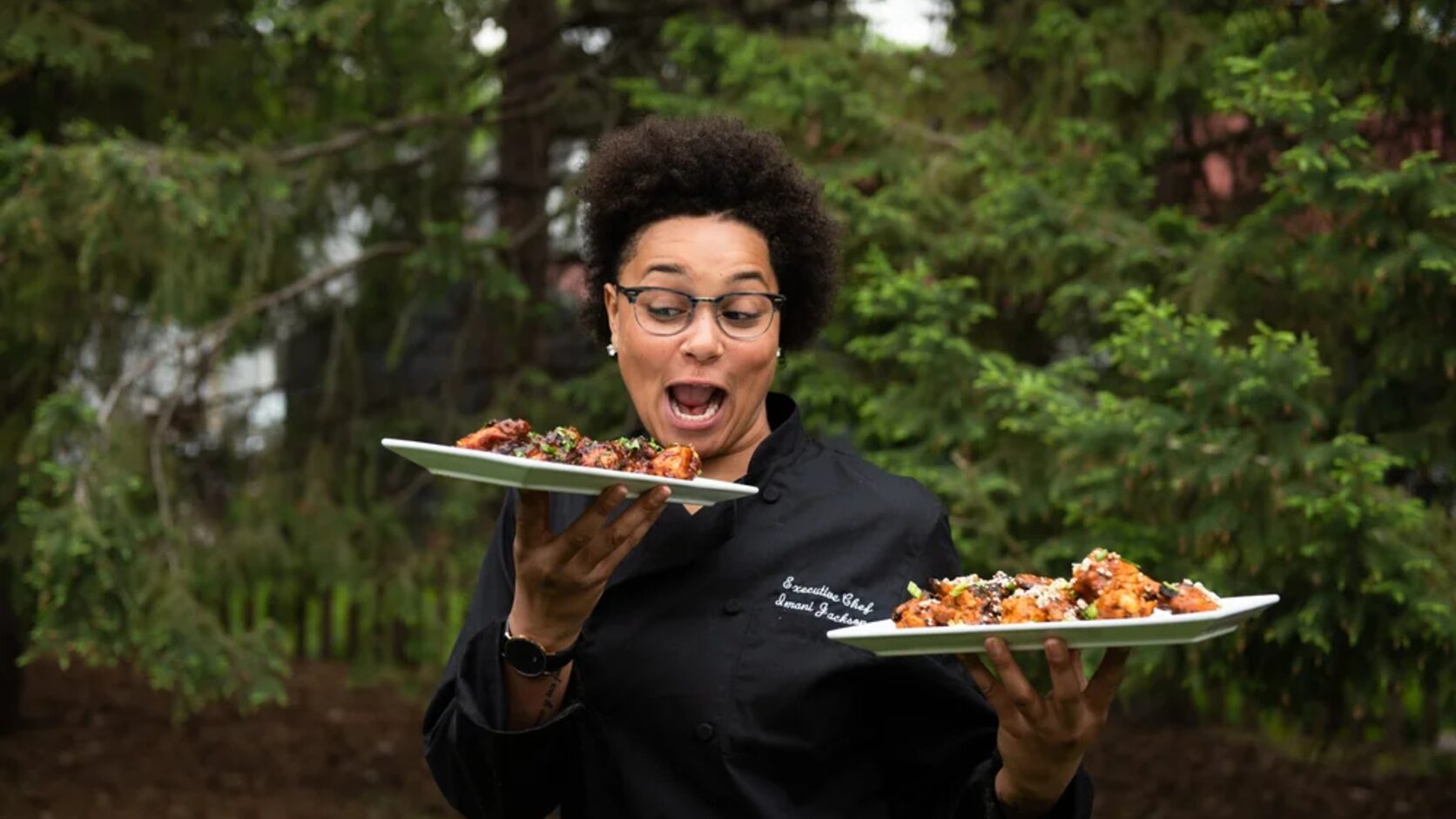

It started in fourth grade. Imani Jackson was frying chicken for her friends, already fluent in a language most people spend a lifetime trying to learn. Not French. Not culinary school technique. The language of feeding people, of taking what you have, adding love, and watching something ordinary become meaningful.
Decades later, she is a chef, caterer, food writer, and founder who got her start at one of the most significant addresses in America: the historic George Floyd Square in Minneapolis, Minnesota. Her business, Chopped & Served, feeds wedding guests and corporate clients and underserved communities through a monthly sponsorship program. Her culinary identity — Blewish, a word she coined herself, a word that is simply her — has been chronicled by Smithsonian Folklife Magazine, The Forward, MTV News, Twin Cities PBS, and Amazon Prime Video.
But ask Imani Jackson what food is really about, and she will tell you the same thing she told you in fourth grade, standing at that stove: connection. Culture. Coming home.
"Food has a way of bringing people closer together," she says. "And that's exactly what Blewish cuisine is all about."
What Blewish Actually Means
The word sounds like a punchline until you taste the food, and then it sounds like a revelation. Blewish is Black American and Jewish, two traditions that shaped Imani's identity growing up and two cuisines she has spent her career weaving together into something entirely her own.
"Blewish is me," she says simply. "Black plus Jewish equals Blewish."
The dishes that emerge from that collision are specific and soulful. Her Soulafel, falafel reimagined with black-eyed peas instead of garbanzo beans, because black-eyed peas carry a cultural meaning that the garbanzo bean simply does not. Her candied yam latka, vegan and not deep-fried, that hits whether it is Hanukkah or Sunday dinner with the family. Her Hoppin' Shabbat, which most people know as Hoppin' John — a black-eyed pea stew with meats and vegetables served over rice or mashed sweet potato, two traditions landing on the same plate without apology.
"Growing up, I learned how to see the world through two different lenses," she says. "That's what my food will always showcase: two cultures, two perspectives, and two traditions colliding to create the ultimate masterpiece."
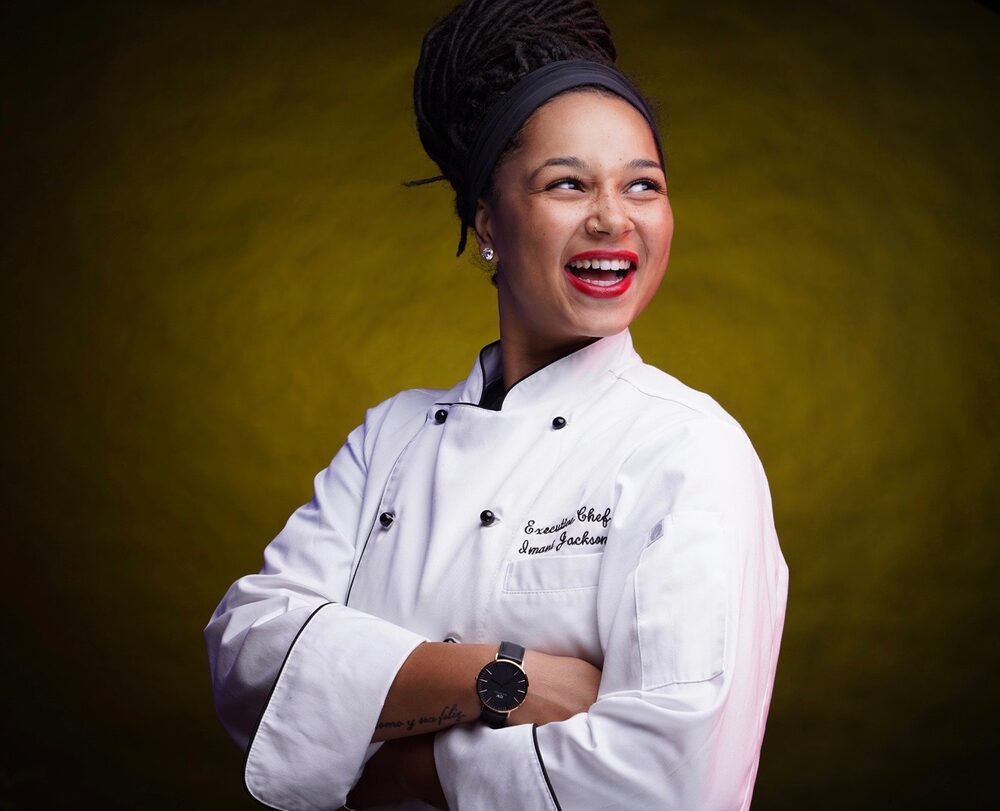
For a mother who has never encountered Blewish cuisine, where do you start? What's the dish that opens the door?
"Matzo Ball Soup. Truly a staple around here. Or a Tuna Noodle Pasta Salad with all the sides and your favorite grilled protein. Honestly, we really love shawarma around here too. Once people sit down and eat, the conversation about where it came from happens naturally. That's the whole point."
What's the dish from your childhood you've carried into your own kitchen and now make for your kids?
"Chicken and Rice Bake. It was my favorite growing up. We could always make it with ingredients from the food shelf, but that didn't matter because my mama always made it taste like love. I've elevated it over the years to make it more sustainable and gut-friendly, but the feeling it gives people when they eat it — that's still there. That part doesn't change."
On Staying Ready
Imani Jackson is a chef and a founder and a mama of two boys under two. She is not here to pretend that weeknight dinner is a serene, unhurried experience. She is here to tell you how to actually do it.
"I have to stay ready so I don't have to get ready," she says. "Starting dinner from ground zero every night doesn't help anybody — especially an overstimulated mama."
She is also a quiet evangelist for the right store-bought shortcut. Not every sauce needs to be made from scratch. Not every broth. The key word, she emphasizes, is right. "Check those nutrition labels, y'all."
And then there is bread. Imani bakes a couple of fresh loaves each week — not because she has unlimited time, but because some things are worth the ritual. Challah dressing for all your smothered needs, she says, because sauce is the boss.
What's your actual advice for the mother who wants to cook more intentionally but feels like she has no time?
"Make your meals work for you. Sunday resets are a must — meal planning, aligning your schedules, grocery shopping as a family. Prep the items that take the longest: marinate your proteins, pre-chop your vegetables, store everything separately. That way, when you get home, you can get straight to it. And find good premade sauces that buy you time until you're ready to make them from scratch. Store-bought can be life-changing if it's the right store-bought."
That cook-ahead instinct — prep once, eat all week — is the same one behind our guide to cooking once and feeding the whole family.
What's a quick Blewish meal that's weeknight-fast but still feels special?
"A Pastrami or Brisket Po'Boy. Hoppin' Shabbat over mashed sweet potato. Shawarma. These are not complicated, but they carry something. They taste like somewhere. That's the difference between a meal and a memory."
The Dish She Will Never Give Up
If you want to understand Imani Jackson, ask her about hummus.
"Don't ever play with me and my hummus," she says, and she means it.
The story behind it is not just about taste. It is about a trip to Israel that reshaped her sense of identity and belonging in ways she says go beyond easy explanation. It is about the power of sitting at the same table with someone different from you and sharing a meal anyway. It is about what hummus, in her experience, has always been: an icebreaker, a bridge, a beginning.
What do you want your boys to inherit from watching you cook?
"Awareness. Capability. Self-sufficiency. When we meal plan together, when we grocery shop together, when they see me in the kitchen building something from what we have — that's not just dinner. That's the beginning of raising boys into men who know how to take care of themselves and the people around them."
What the Table Has Always Known
Ask Imani Jackson what she is really building, and the answer is bigger than a catering company. It is bigger than a culinary identity, or a media platform, or a product line. It is something closer to what she has been doing since fourth grade, when she stood at a stove and fed her friends and understood, without having words for it yet, that this was the work.
Food as language. Food as healing. Food as the thing she now serves across a counter of her own in St. Paul, and the thing her two boys are already learning to make with their hands.
"There's something powerful about breaking bread, sharing a meal, and sitting at the same table," she says.
Her cafe is open now, Chopped And Served in St. Paul, at 60 Empire Drive.
Come hungry.
Related reading
- What to Eat in a Day While Breastfeeding
- Cook Once, Feed Everyone: 8 Family Meals for Baby and the Whole Family
- Anti-Inflammatory Foods for Postpartum Recovery
- Giada De Laurentiis on Love, Food, and the Secret Ingredient That Holds Her Family Together
Imani Jackson is the founder of Chopped & Served, a Blewish catering company and cafe rooted in community, culture, and healing. Her work has been featured in Smithsonian Folklife Magazine, The Forward, MTV News, and Twin Cities PBS. Find her at @choppednserved and @theimanijackson.