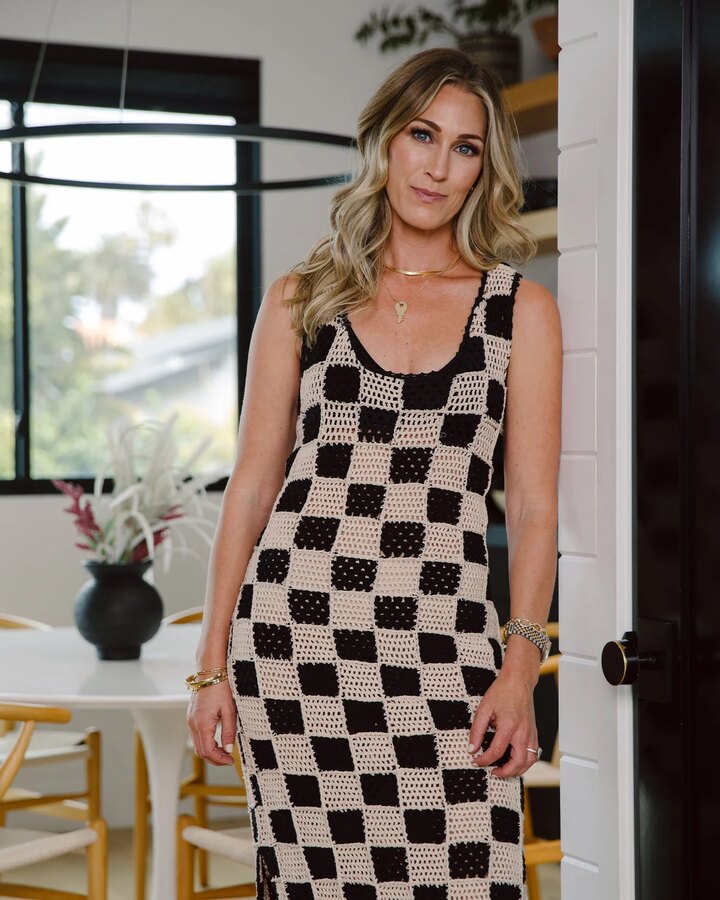

Some parenting advice tells you to do more. Optimise the routine, pack the perfect bag, be everywhere at once. Margarita Nazarenko, the author of Unbothered, is interested in the opposite. Her whole argument is that the calm you keep chasing was never waiting on the other side of doing more. It was waiting on the other side of letting go.
Nazarenko is a bestselling author, host of the podcast Being Her, and one of the most-followed voices on feminine energy and modern detachment, with an audience of more than two million across TikTok, Instagram and YouTube. She trained as an actor before finding her way to self-development and coaching, and she writes about attachment, nervous systems, and what she calls emotional sovereignty: the ability to feel a wave of emotion without being dragged out to sea by it. It is not a cold philosophy. It is, she says, the most present a mother can learn to be.
We sat down with her to talk about the myth of losing yourself, why detachment is not distance, and how choosing yourself sometimes might be the ingredient the whole thing was missing.
Security is a practice
Nazarenko did not always live this way. For years she was, by her own account, anxiously attached, one of those women who chase love and cannot work out why it keeps receding. “Anxiously attached people like I used to be find the idea of detachment hard, because we are seeking love, desperately,” she says. The cruel joke, as she tells it, is that the chasing is the very thing that does the damage. “You chase someone unavailable and all you do is reinforce the unavailability. You teach your own nervous system that love is something you earn by running.”
What changed was not a person who finally loved her correctly. It was the discovery that steadiness could be built. “Security isn’t something you’re born with, and it isn’t something you fake,” she says. “You can practise your way into it.” You start by behaving like a secure woman before you feel like one, the rewards begin arriving, and the brain quietly rewires around the evidence: the calmer and more secure you are, the more of the thing you actually crave comes toward you. “You stop performing ‘I don’t care,’” she says, “and slowly become someone who trusts she’ll be okay either way.”
Motherhood, when it arrived, turned out to be the strangest and most effective teacher of all. For a woman who had spent years auditioning for love, here was a love that asked for no audition. “You’re not auditioning for this love. It’s just yours,” she says. In pouring it out, she found she was reinforcing the exact security she had spent years chasing in everyone else.
The myth of losing yourself
Ask her about the thing mothers fear most, the slow erosion of the self into everyone else’s needs, and she pushes back on the question itself. “I think the whole idea of ‘losing yourself’ is something we’ve been taught, and it isn’t quite real,” she says.
Her reframe is seasonal. “There’s summer, autumn, winter. You’re not meant to be in summer all the time.” Early motherhood, in her view, is a season we have been trained to treat as an inconvenient blip, something to sprint out of and back toward a job, a face mask, a version of life that photographs better. She refuses the sprint. “You are a living, breathing goddess. You literally created life and you’re walking around amongst everyone like it’s nothing.” No one, she points out, is going to hand a mother a medal for it, which is exactly why she has to be the one to honour it.
Maybe the answer was never ‘find yourself again.’ Maybe it’s glorify the season you’re actually in.
And when a woman genuinely is drowning, Nazarenko is unsentimental about the fix. “It is your job to make yourself happy. It is your job to look after you,” she says. Your own wellbeing is your responsibility before it is anyone else’s, even when honouring it gets you called selfish, or vain, or mean. Reclaim the words, she says, and put yourself first anyway, “because you cannot give from an empty vessel.” As for the guilt that trails a woman the moment she does something for herself, she reads it as evidence, not warning. “That isn’t a red flag, that’s the proof,” she says. “It means you’re a good mother and it means you finally did something for yourself.”
What detachment really means
If one word in her work gets her into trouble, it is detachment. People hear it and picture a woman going cold, and to a mother already afraid she is not giving enough, it can sound like permission to give less. That reading, she says, misses the point entirely. “Detachment was never about detaching from the human beings who need you and love you. It’s about detaching from an outcome,” the precise version of how you had decided things must go, the one you built in your head and were never actually promised.
So much suffering, she argues, is a woman gripping the wheel on things that were never hers to steer: other people, their choices, the exact result she wanted by the exact time she wanted it. “Maybe God, or the universe, has something so much bigger outlined for you,” she says, “and the only reason you can’t see it is that you’re white-knuckling the smaller thing you thought you wanted.”
The version of a mother we should actually worry about, she says, is not the detached one. It is the resentful, depleted one. Here she reaches for an image that tends to stay with people. “Nobody celebrates the dishcloth,” she says, the used-up cloth wrung out at the sink, praised by no one for everything it wiped. “You are not a dishcloth. You are a living, breathing work of art.” The real danger is a woman who performs until she curdles, then snaps at the dinner table at a partner who has done half of what she has. Detachment, done right, is the opposite of cold. It is what leaves “a soft, present woman left at the table.”
The pause between the trigger and the snap
For all the philosophy, the question mothers actually ask her is smaller: what do I do at six in the evening, no sleep, a toddler melting down on the floor. Her answer is almost too simple to trust. “You do not have to react straight away,” she says. Between the trigger and the snap there is a tiny gap, and the whole job is to find it and put one breath inside it.
There is real physiology under the advice. Depleted, the nervous system starts reading a tantrum over the wrong cup as a genuine threat and floods you before your thinking brain can catch up. A long exhale, longer out than in, tells the body the truth: nobody is actually attacking us. And it matters beyond you, she says, because a small child has no working nervous system of his own yet. “They borrow yours. They co-regulate off your calm.” Soften instead of matching the chaos and you become the thing they can climb back down to. “You become the thermostat, not the thermometer.”
You become the thermostat, not the thermometer.
On the days calm is nowhere to be found, she gives permission to fake it, which is not the cop-out it sounds like. “I say this as someone with an acting background: you do not have to feel the calm to be the calm,” she says. Lower the voice, slow the body, behave like the most unbothered woman in the room, and the feeling tends to catch up to the action.
Partner, not third parent
The same letting-go, she says, is what quietly resurrects a marriage after children have shoved it to the bottom of the list. The thing that keeps a partner reaching for you, in her telling, is not how much you do for him. It is playfulness, the light, flirtatious energy that tends to be the first casualty of the mental load. What kills it is control, and control has a way of casting a woman in one of three roles. “No man on earth desires his mother, his martyr, or his manager,” she says.
Real detachment here means letting him do it imperfectly, even if the dishwasher ends up “stacked like a raccoon got to it first.” The feminine, as she describes it, does not nag a man into stepping up; it leaves an open space and invites him to step in. “You would be amazed how much more capable he suddenly becomes” once you stop filling every inch of that space yourself. The choice she puts to women is blunt. “Do you want a partner, or do you want another child? You cannot mother him and desire him at the same time.” Let go of the control and you stop being his third parent and get to be his woman again. What detachment gives back to a marriage, she says, is not distance. “The polarity.”
Presence, and being watched
For all the talk of nervous systems and polarity, her picture of loving a child well is startlingly cheap. We have been sold the idea that it takes stuff, she says, the gadgets and stickers and juice boxes some advertisement swore they could not live without, and she has no patience for it. “My son’s favourite thing in the entire world is to go to the park with me and look at the geese,” she says. It costs nothing, and it is not a sacrifice of her for him; wandering after birds settles her nervous system as much as his. The trick, she says, is to stop treating your needs and theirs as a competition and find the overlap. The walk. The park. The undivided moment.
The rest is a matter of lowering the bar on your own performance. “Choose peace over perfection every single time,” she says, because no child remembers whether the kitchen was clean. “They’ll remember whether you were there, actually there, phone down, eyes up. Presence was always the whole gift.”
And presence, she is careful to say, is not only something a child receives. It is something a child studies. This is where she turns most serious, because she thinks emotional sovereignty is the inheritance her generation owes its daughters, the way earlier generations fought for the financial kind. “We hand our emotions away so easily,” she says, spilling our whole story to a man we have known for two dates, reacting to a feeling as though the feeling were the boss of us. Sovereignty is the opposite: seeing the wave and choosing your response instead of being dragged by it. It cannot be taught in a lecture, she says. “You can only show her one.” A daughter absorbs how her mother holds a disappointment, whether she falls apart the second someone dislikes her, whether she chases or stays rooted. “She’s watching the woman, not the words.”
You’re already her
If there is a single line Nazarenko wants a mother to keep from all of this, it is not a technique. It is a verdict. “You are already enough,” she says. “Right now, in the mess, on no sleep, with the unbrushed hair and the raised voice you regret. Enough.” The chaos is not proof of failure, and the calm was never on the far side of doing more. “You are not a problem to fix. You’re a whole woman having a hard season. Breathe. You’re already her.”
If nothing needs to be added, though, plenty can be taken away, and she is specific about what goes first. The pattern that exhausts most mothers, she says, is parenting the people who do not need parenting while trying to parent the ones who do. The grown man in the house does not need rescuing from every small thing he fumbles. “Let him fail,” she says. Step in to manage him and you have simply acquired a second child and robbed him of the chance to rise. “You’ll be amazed how capable everyone around you becomes the second you stop being everyone’s mother. Drop that one pattern first, and half your exhaustion goes with it.”
What she hopes a woman feels, closing the book, is not instructed but accompanied. “I have been her. Every bit of it,” she says. “This isn’t me talking down from somewhere sorted and serene. It’s me handing you the thing I wished someone had handed me.” More than anything, she wants a reader to feel less alone, and a little more at home in herself. As for what comes next, she is not done. “There’s always more to say. I’m not finished yet.”
For now, the invitation is small enough to fit inside the gap she keeps returning to, the one between the trigger and the reaction. Put down the thing you were gripping, drop your shoulders, and see who steps into the space you stop trying to fill.
Related reading
- Losing Yourself in Motherhood? The Identity Shift Nobody Prepares You For
- Dr. Morgan Cutlip on the Invisible Weight You Can’t Quite Name
- Nervous System Regulation for Moms Who Cannot Meditate
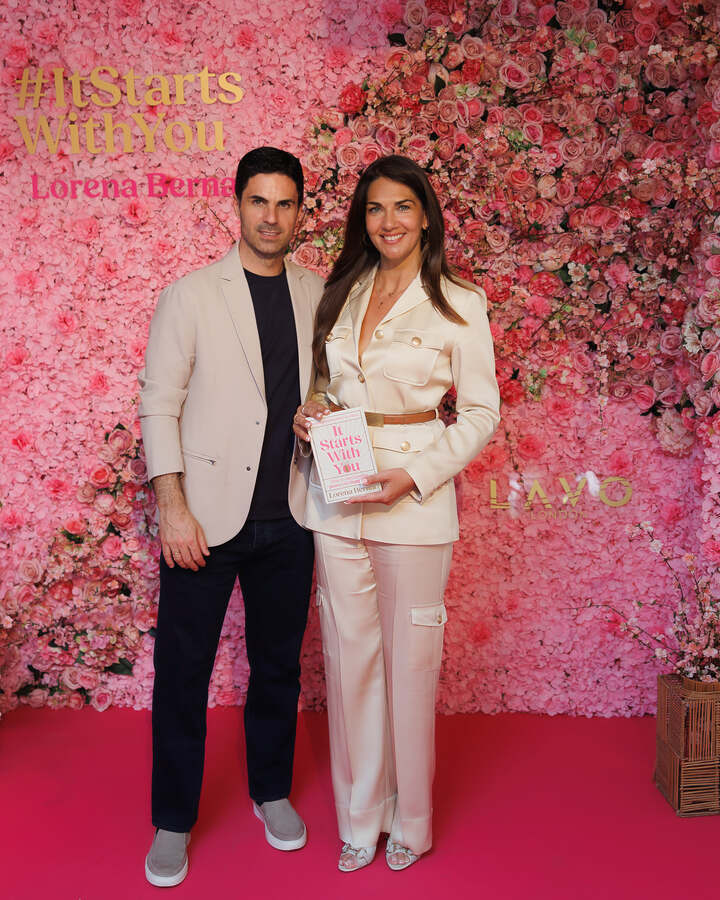
Unbothered: The Art of Letting Go to Find Yourself by Margarita Nazarenko (Orion Spring) is out now in Australia, New Zealand and the UK, and available in the US and Canada from September 1.