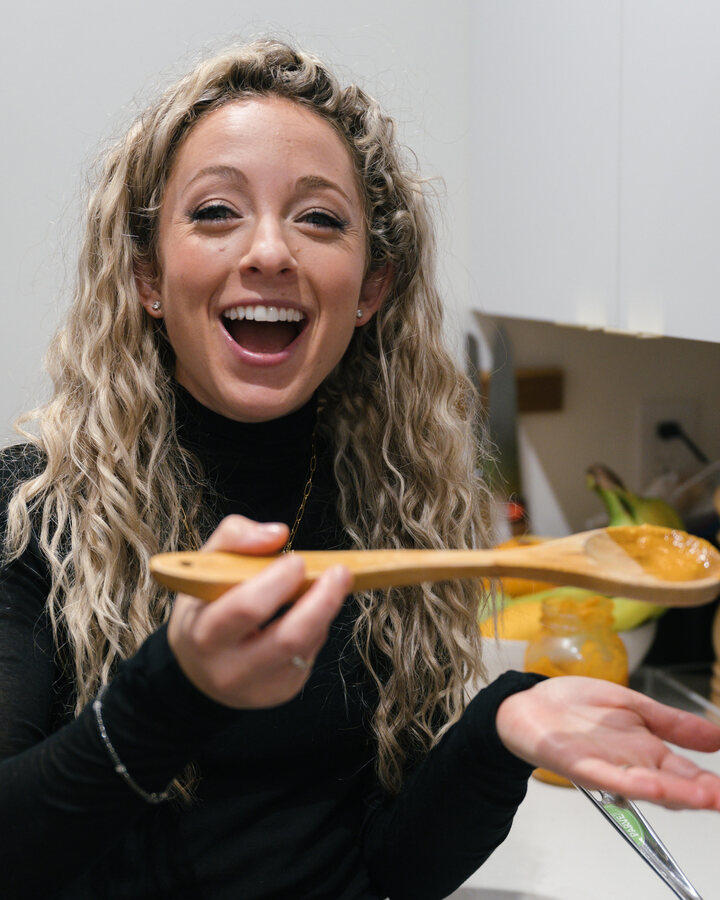
Most people who close a successful restaurant would rather not talk about it. Mika Leon brings it up before you can.
“I honestly love talking about it,” she says, “because I think people don’t talk enough about when something successful stops being fulfilling.”
From the street, the Coral Gables location looked like a finish line. It was the brick-and-mortar home of Caja Caliente, the brand she built from nothing, the one that pioneered the Cuban taco. From the inside, it looked different. She had been thinking about closing it for years. “The day-to-day operations and constant stress were taking a real toll on my mental health,” she says, “and I knew I wasn’t happy anymore.”
There is a kind of courage nobody hands out awards for–the inner knowing and courage to set something down while everyone is still clapping, no matter how profitable, how popular, or fulfilling it looks on the outside. “I had to put my ego aside and make the decision that was best for me, even if from the outside it might have looked like I was walking away from something I had built,” she says. “I wanted more time with my husband and my family, and the restaurant wasn’t allowing that.”
She didn’t know exactly what would come through the space she was clearing, but she knew she had to trust her instincts. “I had to trust that closing one door would make room for opportunities that felt more aligned with who I was becoming. And it did.” What opened up in its place was a book, the creative spark she thought she’d lost, and the family she’d always wanted. “That was really necessary for me,” she says, “both personally and artistically.”
I think people don’t talk enough about when something successful stops being fulfilling.
The doors she knocked on
Leon is a third-generation chef. Her grandfather ran restaurants in Spain, and food was the family’s native tongue long before it was her profession. But inheriting a language isn’t the same as finding your own voice in it. That happened, she says, in her early twenties, when she moved to New York City at 22 “with no real idea of what I wanted to do, which I think is pretty normal at that age.” Surrounded by the city’s restaurants, markets, and cultures, she fell in love with food “in a completely new way.” A few years later she came home to Miami and started a food blog, Mikabites. “That was really the beginning of me turning something that had always been part of my family into something that felt like my own.”
Then came the garage. Caja Caliente started in her mother’s, with baked goods, a menu she printed at home, and zero experience. She went door to door, restaurant to restaurant, and heard “a lot of no’s.” What those scrappy days gave her is something a successful season never could. “It taught me that if I really wanted something, I had to go out and make it happen for myself,” she says. “I had to believe in what I was making, keep showing up and have enough confidence not to let rejection stop me.”
That belief became the Cuban taco, a dish that tends to make purists blink before it makes them hungry. Leon doesn’t see it as rebellion. She sees it as Miami. She starts with the flavors that are authentic and familiar to her, and then gives them her own twist, borrowing from the cultures she grew up surrounded by. The taco, she says, brings Cuban and Mexican food together “in a way that honors both cultures rather than trying to replace one with the other.” Tradition, in her kitchen, isn’t a museum piece behind glass. It’s a conversation, a discourse, and she’s allowed to talk back.
Writing down what was never written
Her debut cookbook, Cuban Soul: 100 Vibrant Recipes from Mi Cocina, is that conversation set down on paper. And for Leon, getting it on paper was so much more than a career milestone. It was a lifeline and a golden thread for future generations.
“As a Cuban American and a new mom, preserving these recipes for the next generation became incredibly important to me,” she says. For much of the diaspora, the island isn’t a place you can simply return to and taste again. “The reality there is complicated and heartbreaking,” she says, “and it made me think a lot about how easily parts of our culture can be lost if we don’t preserve them.”
So much of what she learned lived nowhere but in the hands of the people who made it. A recipe like that is a recipe on borrowed time. It survives exactly as long as the cook does, and not a day longer. Leon learned that the way most of us do. “When you lose someone, that’s when you realize it,” she says. “It happened to me when I lost my grandfather. Thankfully, my mom had saved a lot of his recipes, but there were still so many things I wished I had written down while I had the chance.”
That wish is the foundation and heart of the whole book. “When I cook, I’m cooking because of my family and the traditions they passed down to me, but I’m also cooking for the next generation,” she says. “I don’t want my daughter to one day wish she had these recipes and these stories.”
But writing something down is not the same as freezing it. The book is just the beginning. “My cooking continues to evolve with my experiences and the influences around me,” she says. “That’s part of the story too.”
I don’t think preserving tradition means keeping it frozen in time.
The Ziploc bag
Ask Leon what she most wants to hand her daughter, and she doesn’t name a dish. She names a feeling. “Gratitude, more than anything.” She wants her daughter to love the big, loud family around her, and also to understand how it got here: the grandparents and great-grandparents, the sacrifices, the fact that “the life we have now was built by people who had to start over and make something out of very little.”
Then she names an object you would never expect to find in a chef’s legacy. A Ziploc bag.
“Sometimes it’s in the smallest things, like watching my mom reuse a Ziploc bag instead of throwing it away after one use,” she says. “Those habits may seem insignificant, but they taught me so much about appreciation and not taking things for granted.”
It is the most unglamorous memory or keepsake imaginable, yet the most honest one. An entire immigrant story, folded into a sandwich bag and rinsed out at the sink. If you’re a child of immigrants, this will bring up a sea of core memories for you. Resourcefulness, Leon says, is “such a big part of the immigrant story: making something great out of nothing and appreciating what you have.” As a first-generation Cuban American, she knows how easily those little values slip away, one generation at a time. She is trying to make sure they don’t slip away from hers.
The other inheritance is softer, and it arrives through the senses. “I hope she feels how much I love her through my cooking,” she says. To Leon, cooking for someone is love made visible: taking time out of your day to make something for them, then sitting down to share it. “Food is almost like perfume in that way,” she says. “You smell something years later and it immediately takes you back to a person or a place. I hope one day she smells or eats certain dishes and thinks of me and her childhood, and just feels at home.”
I hope one day she smells or eats certain dishes and thinks of me and her childhood, and just feels at home.
The meals with no audience
For a woman whose work lives so publicly, on a feed, on camera, in print, Leon is fiercely protective of the meals nobody will ever see. “I think I protect those meals by not feeling like everything has to become content,” she says.
Some of her favorites are the ones she’d probably never post: a tagine her husband makes, simple meats on the grill with fresh vegetables, an olive oil cake with local fruit, something thrown together from whatever the farmers market had that day. “Those meals aren’t about engagement or whether they look good on camera,” she says. “They’re just ours.”
Any mother who has ever felt her life quietly turn into a highlight reel will recognize what she’s guarding here. It isn’t privacy for its own sake. It’s the right to have a part of your life that doesn’t have to perform. “I think it’s important for me to have parts of my life that don’t need an audience and don’t need to become work,” she says. And, tellingly, those are the meals she remembers most, “because they’re tied to a moment with my family, not a post.”
Some of my favorite things we eat at home are things I would probably never post.
So when she pictures her daughter grown, with children of her own, it isn’t a signature recipe she hopes survives the trip. It’s a chair pulled up to the table.
“For me, it’s less about one specific recipe and more about the ritual of sitting down and having a meal together at the same time,” she says. “No matter how busy everyone is or what’s going on, I think making that time to sit together as a family matters.”
It’s worth remembering where this story started: a woman closing the door on something successful because it was costing her the time with her family she wanted most. Read that way, Caja Caliente closing was never really an ending, but a whole new beginning. It was a woman clearing space for a table.
If you are the mother reading this at the end of a day that ran long, with dinner that came out of a box or a bag or the back of the fridge, take this from Mika: the dish was never the point. Sitting down with your family is. The rest can wait, while you take some time to savor a meal and create some core memories of your own.
Make it at home
The dish Leon says she probably cooks most often comes straight from her family’s table. Her abuelo made the best one, and her mom made it Havana style, with crispy potatoes stirred in. Here’s her version from Cuban Soul. Make a double batch; it’s even better the next day.
Mika’s Picadillo (Simmered Ground Beef)
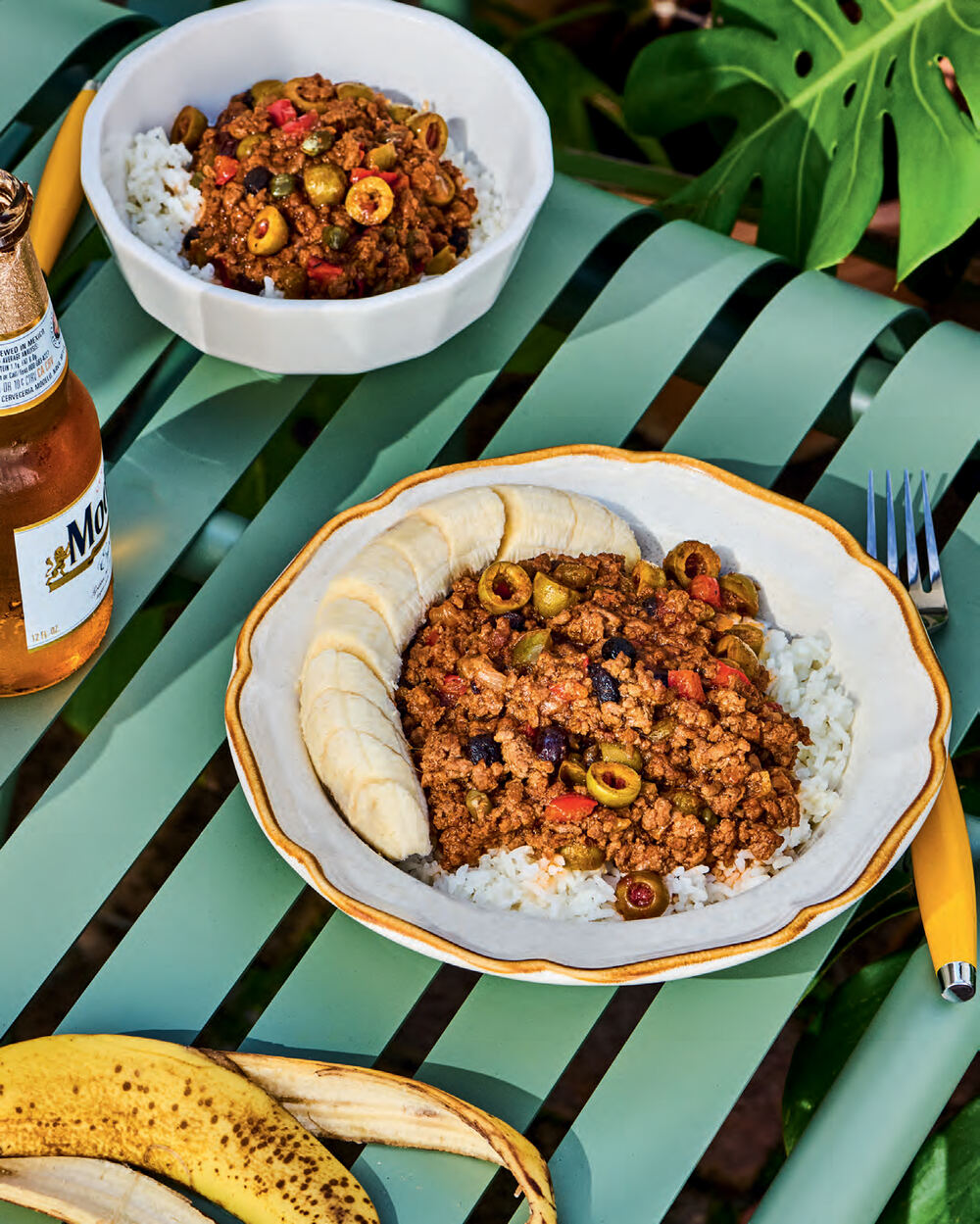
Picadillo is the dish I probably cook most often—it’s quick, comforting, and endlessly versatile. My abuelo made the best one, rich with tomato, olives, and capers. The big debate is whether to add raisins: You either love ’em or hate ’em. I love the sweet-savory balance, but you can leave them out if they offend you. My mom always made hers Havana style, with little cubes of fried potato stirred in, and I highly recommend that—it makes the whole dish even more satisfying. However you make it, don’t forget the ripe banana on the side; every Cuban kid remembers eating picadillo that way. Make a double batch, because it’s even better the next day and perfect as a filling for Empanadas de Carne, Pastelón, or Tostones Rellenos, or just spooned over rice.
Ingredients
- ¼ cup neutral oil
- 1 small yellow onion, diced
- 1 red bell pepper, diced
- 1 green bell pepper, diced
- 5 garlic cloves, minced
- 1 pound ground beef, preferably 80/20
- 1 tablespoon Sazón Completa or store-bought sazón
- 1 cup dry white cooking wine
- ½ cup Spanish stuffed manzanilla olives, halved, plus 2 tablespoons olive brine
- 1½ tablespoons capers
- ¼ cup raisins
- 1 (8-ounce) can tomato sauce
- Fine kosher salt and freshly ground black pepper
For serving
- Arroz Blanco Cubano or Arroz Amarillo
- Ripe banana or Plátanos Maduros Fritos
Instructions
- In a large skillet, heat the oil over medium heat until it shimmers. Add the onion, bell peppers, and garlic. Cook, stirring occasionally, until the onion is softened, 5 to 7 minutes.
- Stir in the ground beef and sazón. Cook, breaking up the meat with a potato masher or a wooden spoon, until the beef is browned, 5 to 7 minutes. Add the wine and scrape up any browned bits on the bottom of the pot.
- Stir in the chopped olives, olive brine, capers, raisins, and tomato sauce. Season with a generous pinch of salt and pepper. Reduce the heat to low and let the picadillo simmer gently, stirring occasionally, until the sauce has thickened slightly, about 15 minutes.
- Serve the picadillo over rice, with ripe banana or sweet plantains on the side for a classic sweet-savory Cuban touch.
- Alternatively, let the picadillo cool, then store in an airtight container in the fridge for up to 5 days to enjoy later or use as a filling.
Mika Leon’s debut cookbook, Cuban Soul: 100 Vibrant Recipes from Mi Cocina, is available now. Follow her at @mikabites.
Frequently asked questions
Who is Mika Leon?
A third-generation Miami chef, a Cuban American, and a new mom. She started the food blog Mikabites after a few years in New York City, then built Caja Caliente out of her mother’s garage into the brand that pioneered the Cuban taco. Her debut cookbook is Cuban Soul: 100 Vibrant Recipes from Mi Cocina.
Why did Mika Leon close Caja Caliente?
She had been thinking about closing the Coral Gables location for years. “The day-to-day operations and constant stress were taking a real toll on my mental health,” she says. She wanted more time with her husband and her family, and the restaurant wasn’t allowing that. What opened up in its place was a book, her creative spark, and the family she’d always wanted.
Why did she write Cuban Soul?
To preserve recipes that lived only in the hands of the people who made them. After losing her grandfather, she realized how many things she wished she had written down. “I don’t want my daughter to one day wish she had these recipes and these stories,” she says.
Should picadillo have raisins?
It’s the big debate. Leon loves the sweet-savory balance they bring, but says you can leave them out. Her mom made it Havana style, with little cubes of fried potato stirred in, and she highly recommends serving it with ripe banana on the side.
Related reading
- Giada De Laurentiis on Love, Food, and the Secret Ingredient That Holds Her Family Together
- Chef Imani Jackson Cooks From Two Cultures and One Big Heart
- The BakerMama’s Celebration Boards: Maegan Brown on Food, Family, and Gathering
- Cook Once, Feed Everyone: 8 Family Meals for Baby and the Whole Family