The first thing Cali Guttman wants to know isn’t what your baby is eating. It’s what you’re having for dinner.
It sounds like a deflection, coming from a pediatric dietitian. It’s actually the whole philosophy in a single question. “My goal has always been to help babies become part of the family meal from day one,” she says. “Rather than creating separate meals or chasing perfection, I help families build realistic, enjoyable feeding routines that fit naturally into everyday life.” No baby food on one plate and grown-up food on another. One table, one meal, everyone at it. The question isn’t will my baby eat this? It’s can this become part of a meal we all enjoy together?
That instinct to widen the frame from the plate to the whole life around it didn’t come from a textbook. It came, like most of the truest parts of her work, from something she lived.
A diagnosis, and a direction
Cali always loved science, so she knew young that she wanted a career in healthcare. What she didn’t know was the shape it would take until it arrived at her own kitchen table. When she and her brother were both diagnosed with celiac disease, she watched her family learn an entirely new way to eat — and got her first look at what a dietitian could actually do. “It opened my eyes to how profound an impact a dietitian can have,” she says, “not just on someone’s health, but on their everyday life.” Nearly two decades of living gluten-free later, that early glimpse has hardened into a mission: helping families meet a diagnosis with confidence instead of dread.
She trained in dietetics at McGill and began in an adult hospital, building a clinical foundation she still leans on. But her heart kept pointing somewhere else. She set her sights on the Montreal Children’s Hospital, where she learned alongside a team of pediatric dietitians and a wider circle of clinicians all pulling in the same direction — for the child, and for the family behind the child. Feeding challenges, growth concerns, allergies, celiac. “I loved having the opportunity to educate, empower, and support families during moments that could feel overwhelming,” she says. She was, she realized, exactly where she was meant to be.
The science, and then the feeling
When she left Montreal for Toronto, she assumed she was leaving one chapter to repeat it somewhere new. “I truly thought I would spend my career in a children’s hospital,” she says. “I loved that environment and never imagined taking a different path.”
Instead, Toronto opened a door she hadn’t known she was looking for. Private practice let her trade the single visit for the long arc — walking families through milestone after milestone rather than meeting them once and letting go. She folded herself into the city’s celiac community, sitting with newly diagnosed families in the practical and emotional aftermath of a life gone gluten-free, conversations made sharper by the fact that she’d been living that life for years herself.
But the real shift wasn’t professional. It was becoming a mother.
Before becoming a mom, I understood the science of feeding. After becoming a mom, I understood the emotion behind it.
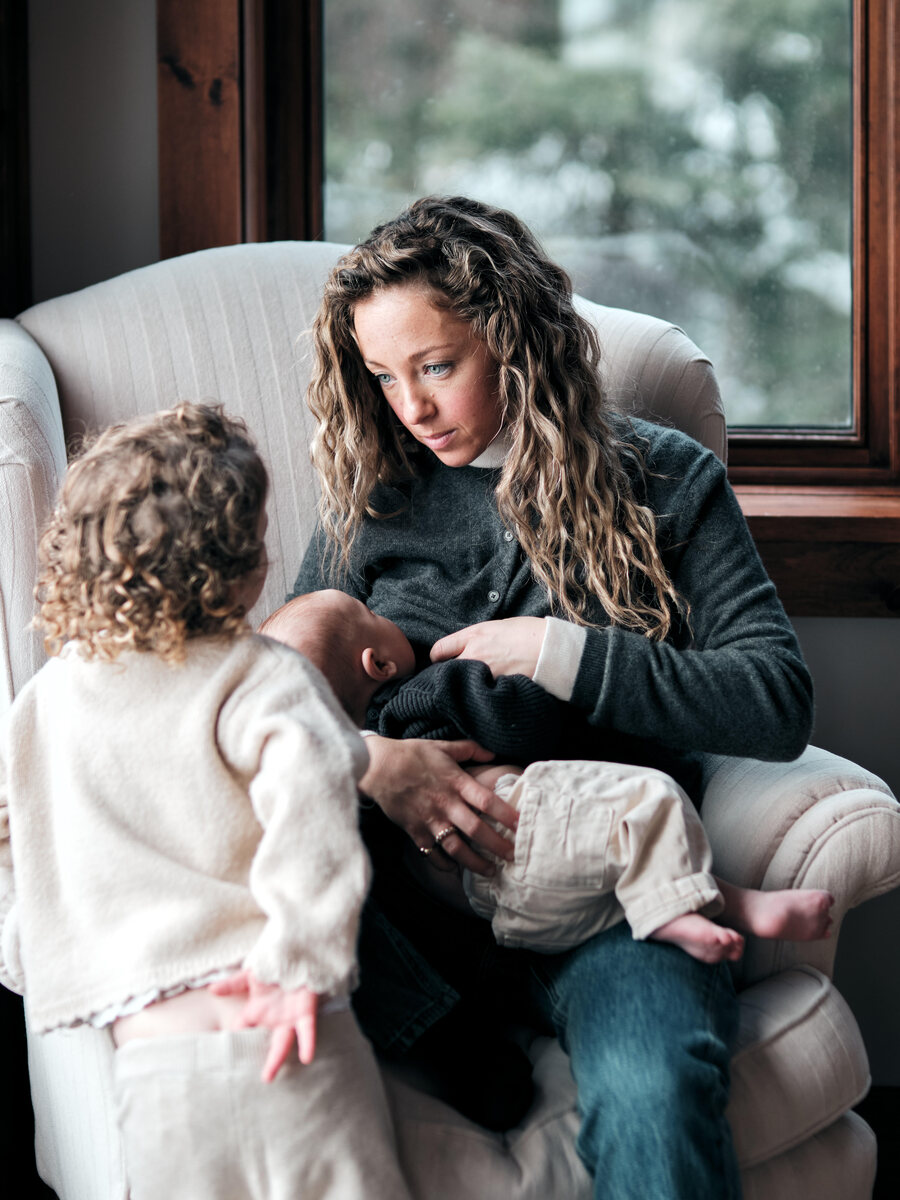
“Suddenly, I wasn’t just counseling parents through sleepless nights, breastfeeding challenges, introducing solids, or the worry of whether their child was eating enough,” she says. “I was living it too. It gave me a level of empathy that I don’t think can be taught in a textbook.” Pregnancy, breastfeeding, first foods, three children — and, she says openly, a second-trimester pregnancy loss. That whole arc rearranged how she saw her own body. “It has given me a much deeper appreciation for everything my body has done, rather than focusing on how it looks. More than anything, motherhood has left me in awe of what women’s bodies are capable of.” She talks about the loss on purpose, because she remembers how isolating it felt, and refuses to let another woman sit in that silence alone.
Everything she teaches now runs through both channels at once. “Everything I share is grounded in science,” she says, “but it is also grounded in real life.”
Permission to stop aiming for perfect
Spend ten minutes with nutrition advice online and you’ll come away convinced that eating well is a full-time job — every meal optimized, every gram of protein logged, every trend chased. Cali’s entire practice is a quiet argument against that. “The problem is when it becomes rigid, fear-based, or impossible to maintain in real life,” she says. Social media has made the noise louder and more extreme than ever, much of it from people with almost no formal training, and she keeps pulling women back to something they can actually keep doing. “Nutrition should help you feel energized, strong, and well,” she says. “It shouldn’t leave you constantly second-guessing every bite.”
She’s genuinely glad the wider conversation has moved — from getting smaller to getting stronger, from shrinking to protein, muscle, and longevity. She just watches the internet take a good message and inflate it into one more impossible standard. Her advice is deliberately un-viral: get a source of protein on your plate most of the time, find a form of strength training you actually enjoy, and be careful whose voice you’re absorbing. The habit you can sustain will always beat the perfect routine you can’t. Her own goalposts have moved, too. “I’m not working out to shrink my body,” she says. “I’m working out because I want to be strong enough to carry my daughter and my two sons for as long as they’ll let me.” The aim, as she puts it, is to build a body that supports the life you want to live — not a life that revolves around chasing the perfect body.
And the mothers who let go of “perfect eating”? Something opens up. “When we let go of guilt and all-or-nothing thinking around food, we create space for connection, flexibility, and joy at the table.”
What the table teaches
Here is the part Cali thinks about most: children aren’t only absorbing what we feed them. They’re absorbing how we feel about it.
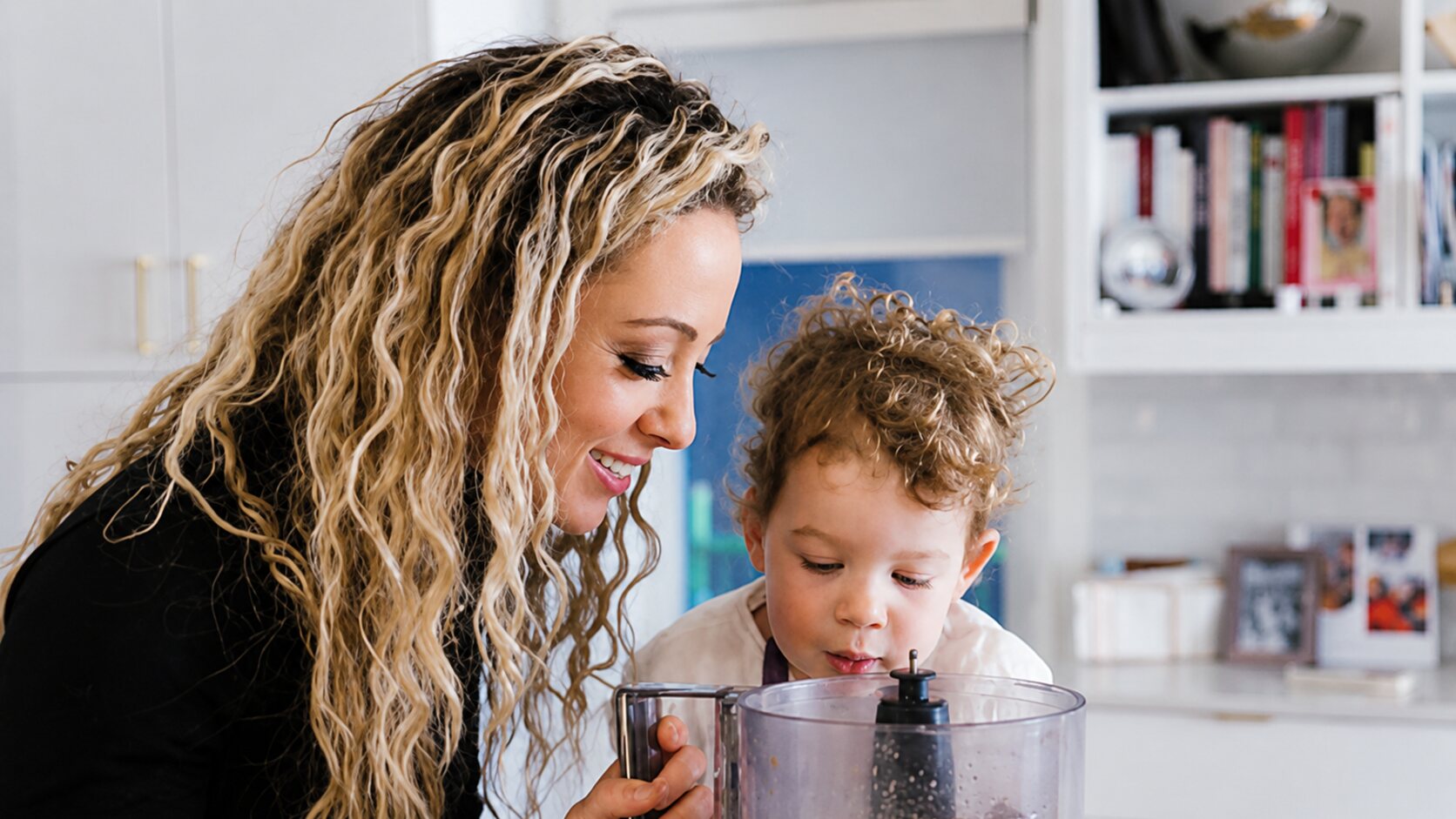
So many of us grew up hearing foods called “good” or “bad,” watching the adults around us criticize their own bodies, learning guilt at the dinner table without anyone meaning to teach it. “Those messages stay with us,” she says, “often without us even realizing it. As mothers, we have the opportunity to write a different story for our children.” In her house that story is built out of small, repeated choices. No food is labeled good or bad. She doesn’t speak badly about her body in front of her kids. Food is what gives us energy to play and fuels our brains; movement is what makes us feel strong and happy, never a punishment or a way to earn dinner. Her children wash the vegetables, stir the batter, help feed their baby brother — part of the meal, not just served it.
I want my children to remember that I shared the ice cream with them or enjoyed the birthday cake beside them. I don’t want them to remember me standing back because I was afraid to eat.
When she’s after real-life inspiration, she reaches for creators whose recipes actually work for a whole family — Ambitious Kitchen, Rachel Mansfield, and Montreal’s own Marta Wiseman — and for movement that fits a busy season rather than dominating it, like The Sculpt Society. None of it is about optimization. It’s about what a child will actually carry into adulthood. “I don’t think children remember whether dinner was perfectly balanced or whether they ate every bite of broccoli,” she says. “They remember how mealtimes felt.”
That extends, generously, to how she treats herself. With three young kids, immediate family all still in Montreal, and no grandparents down the street, she’s rebuilt self-care into something small enough to survive real life. “It’s sitting down to drink my coffee instead of reheating it three times,” she says. “It’s getting dressed, putting on a little makeup, or taking a shower, even if the bathroom door is wide open and my kids are running in and out.” Her message to the mother convinced there’s simply no time is blunt and freeing: stop waiting for the perfect window, because it isn’t coming. Five minutes still counts. A walk counts. Warm coffee counts. “Motherhood doesn’t require us to disappear.”
“Welcome to the club”
The gluten-free world Cali entered as a newly diagnosed kid barely resembles the one she lives in now. “When I was first diagnosed, gluten-free bread was… honestly, barely bread,” she says. It became a family joke: someone would bake something gluten-free, everyone would politely try it, nobody expected it to be good. Today there are dedicated bakeries, restaurants that genuinely understand cross-contamination, and gatherings like Gluten Free Garage that have grown a real community around it. So when she meets someone freshly diagnosed and overwhelmed, she tells them something that sounds impossible in the moment: “Welcome to the club — I promise it’s not so bad!”
Her deeper aim is to help families support a child with celiac disease without centring fear. Yes, respect the diet, read the labels, prevent cross-contamination, ask the right questions when you eat out. But she never wants anxiety to be the thing that defines a child’s relationship with food. In her own home there’s still just one family meal — almost always naturally gluten-free, or made so with a simple swap like tamari for soy sauce. Her kids eat gluten elsewhere, because they don’t have celiac disease, and when she skips the bread on the table they know exactly why: not because bread is bad, but because their mom has celiac. It becomes a lesson in something bigger — that people have different needs, and that small, thoughtful actions help everyone feel included.
She also wants families to know the disease is a shape-shifter. It’s sometimes called “the chameleon,” she says, because it can show up as years of unexplained symptoms or almost no symptoms at all — which is exactly why she urges people to trust their instincts, look at family history, and push for answers when something feels off. She wrote about her own winding road to diagnosis for the same reason she says most things out loud: so the next person recognizes themselves sooner.
A dietitian in your pocket
Of all the milestones Cali guides families through, starting solids is her favorite to talk about and, she thinks, the most misunderstood. Parents are made to feel they get one shot to get it right, then handed a firehose of conflicting advice about purées versus baby-led weaning, allergens, choking, schedules, the “correct” first foods. Most are overwhelmed before the first spoon.
Her reset is calm and evidence-based. Most babies are ready somewhere between four and six months, once the developmental signs are there. From there: iron-rich foods, early and ongoing allergen introduction, food-safe textures, and a low-pressure environment where a bad meal is just a meal to try again later. “Learning to eat is a process, not a race,” she says. The biggest misconception she corrects is that there’s a single right way. “Babies don’t read social media,” she tells parents. “They have their own preferences, personalities, and developmental timelines.” She saw it inside her own family: she let both her children feed themselves, but her daughter loved purées off a preloaded spoon while her son wanted bigger finger foods. Which is why she talks about baby-led feeding rather than baby-led weaning — less about picking a camp, more about letting the baby lead while parents keep the experience safe. (She made her own case for starting with purées, even as someone who loves baby-led weaning.)
That thinking is what built her eight-week Starting Solids program. She kept meeting the same exhausted family, stitching guidance together from friends, Google, AI, and dozens of Instagram accounts. “Information alone doesn’t build confidence,” she says. She wanted to be “the equivalent of a pediatric dietitian in their pocket” — someone to answer the question, celebrate the win, troubleshoot the hard week in real time. By the end of eight weeks, a baby has met the common allergens, eats a range of foods and textures, and has pulled up to the family table. And the parents, she says, have stopped second-guessing every decision. “They trust themselves, they trust their baby, and they can simply enjoy eating together.”
The same principle carries into toddlerhood, when the refusals and the thrown food and the sudden three-day diet of one beige food arrive. Cali’s advice is to trust your gut. There’s no magic trick to picky eating — “I wish there were” — only patience, consistency, and small shifts repeated over time. But she doesn’t believe parents should simply grit their teeth and wait it out, either. “If your gut is telling you that mealtimes feel harder than they should,” she says, “it’s worth reaching out before it becomes a much bigger challenge.” Reaching early, in her experience, usually brings reassurance rather than alarm.
You don’t have to do this alone
Ask Cali what she wants every mother to walk away knowing, and she doesn’t reach for a nutrient or a rule. She reaches for a release valve.
“We live in a world where we’re constantly being told there’s a perfect way to parent, a perfect way to feed our children, a perfect way to eat, exercise, or even recover after having a baby,” she says. “It’s exhausting, and I think it’s a major reason so many mothers feel like they’re falling short when, in reality, they’re doing an incredible job.” Confidence, she’s certain, doesn’t come from having every answer. It comes from having someone you trust and giving yourself permission to keep learning.
Don’t aim for perfect. Aim for connection, consistency, and confidence.
It’s the through-line under all of it — the celiac kid who became the calm in someone else’s diagnosis, the clinician who learned the feeling behind the science, the mother who’d rather her children remember the laughter than the broccoli. “When parents feel confident, children do too,” she says. “And when we replace fear with confidence, mealtimes become about what they were always meant to be: nourishment, connection, celebration, and time together.”
Which brings it back, in the end, to the dinner table — and to the only question she ever really needed you to answer. Not what should the baby eat. Just: what are we having tonight, and who’s pulling up a chair.
Related reading
- I’m Starting Solids With My 6-Month-Old and I’m Scared. Here’s Everything You Actually Need to Know.
- Cook Once, Feed Everyone: 8 Family Meals for Baby and the Whole Family
- How to Feed a Picky Toddler (Without Making Every Meal a Battle)
- Easy Lunch Box Ideas Kids Will Actually Eat
- The BakerMama’s Celebration Boards: Maegan Brown on Food, Family, and Gathering