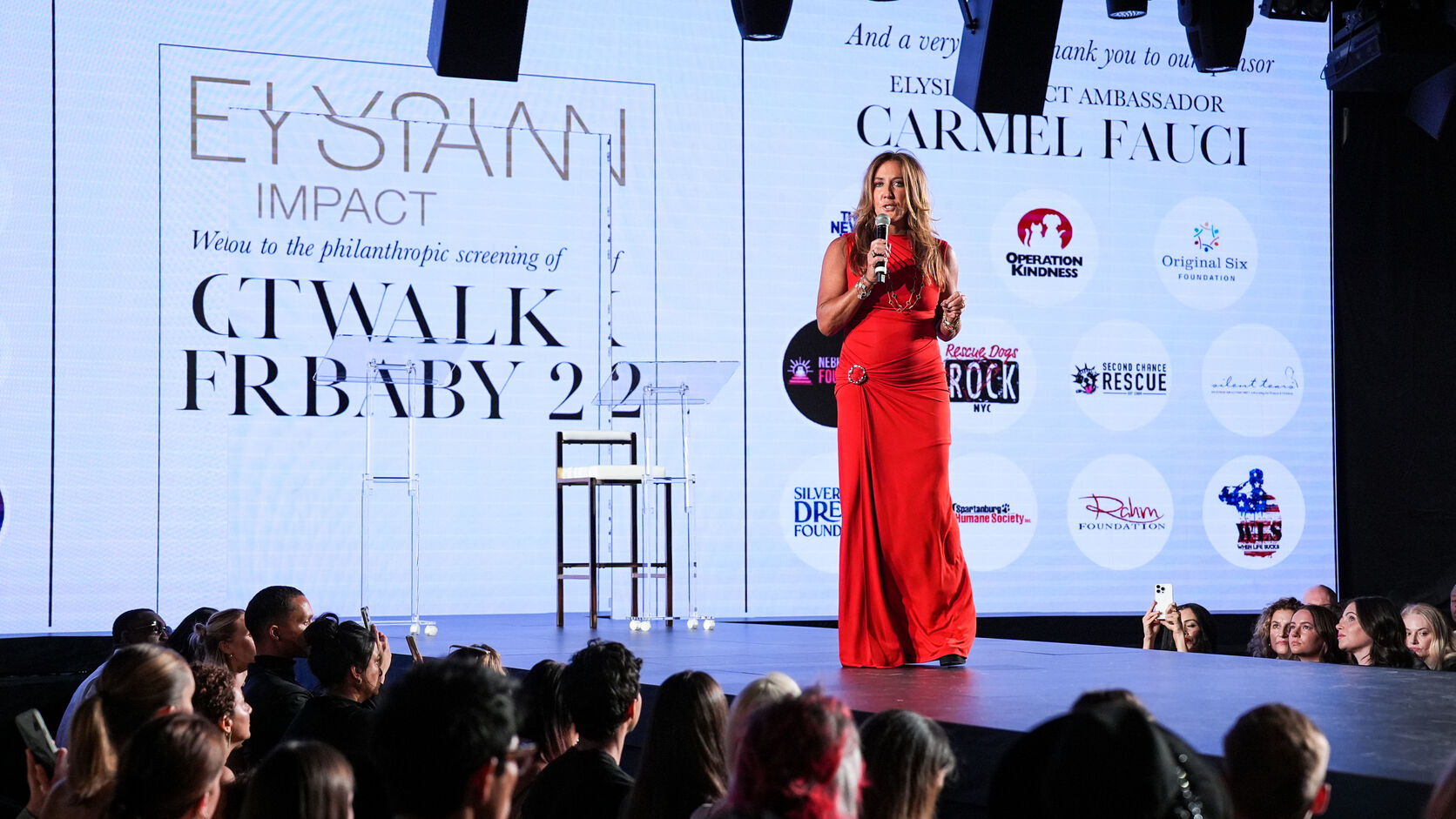
Why does illness happen? What are we missing when we focus only on symptoms? What role do our environments and everyday choices play in our health? And perhaps most importantly, how do we know when an answer is actually supported by science?
These are the kinds of questions that Dr. Christina Rahm has spent her career asking. That curiosity has taken her from research and healthcare into entrepreneurship, product development, and the leadership of more than 20 companies. But long before the companies and titles, Rahm says there was simply curiosity.
“Even as a little girl, I wanted to understand why things happened instead of just accepting them,” she says.
It is the kind of disposition that makes sense in a scientist. But over time, the questions became personal. Rahm went from working in research and healthcare to navigating serious illness herself, including Lyme disease and multiple battles with cancer. Then she became a mother of four.
Each experience, she says, changed the way she understood her work. Science was no longer only about solving problems. It was also about navigating uncertainty, helping people and thinking about the future her children would inherit.
Becoming the patient changed the scientist
Rahm was initially drawn to science because it gave structure to something she had always loved doing: learning, questioning and solving problems.
“Science gave me a way to ask questions and then find answers,” she says. “I wanted my work to help people, and research became the path that allowed me to combine curiosity with purpose.”
Then those questions became deeply personal. Going through Lyme disease and multiple battles with cancer meant Rahm experienced firsthand what it felt like to search for answers while living with uncertainty.
“It changed everything,” she says. “I know what it feels like to search for answers and to confront uncertainty.”
The experiences made her more compassionate, she says, but they also pushed her to keep asking questions about why illness happens in the first place.
“Those experiences made me more compassionate, but they also urged me to keep asking better questions and looking deeper into the causes of illness instead of stopping at the symptoms.”
That instinct to keep questioning is also something Rahm tries to pass on to her children. Her approach isn’t to accept a claim simply because it is popular or confidently presented. Instead, she encourages them to look at the research, consider the source, and remain open to learning as evidence evolves.
For parents trying to sort through an overwhelming amount of health information, that may be one of the more useful principles to borrow.
Motherhood made the future personal
Becoming a mother didn’t replace the ambitious, curious person Rahm had always been. Instead, she says, motherhood gave her a different reason to keep going.
“I’ve always been determined and driven to help people. That part of me hasn’t changed,” she says. “Motherhood gave me a deeper purpose and a different perspective.”
It also expanded the timeline of her work.
Rahm says she began thinking beyond what her work could mean today and toward the world her children would eventually inherit.
“Every research project, every formulation, and every company became personal because I wasn’t just thinking about today,” she says. “I was thinking about the future my children and the next generation will inherit.”
That perspective will probably sound familiar even to mothers whose careers have nothing to do with science. Parenthood has a way of making the future feel considerably less abstract.
Rahm says her children also changed the way she measures success.
“Success means very little if you don’t have family to share it with,” she says.
That doesn’t mean ambition disappeared after motherhood. But the purpose she attaches to that ambition changed.
She teaches her kids to question wellness advice — including the most popular kind
Parents today aren’t exactly short on wellness advice. A mother can open her phone looking for a toddler breakfast recipe and, 15 minutes later, encounter a dozen different opinions about what she should or shouldn’t be doing for her family.
The sheer volume of information can make it difficult to know what deserves attention. Rahm’s approach with her own children is considerably less complicated: ask questions.
“Don’t believe something just because it’s popular or trending,” she says. “Look at the research, consider the source, and remember that real science is always evolving.”
Rahm encourages her children to stay curious rather than becoming overly attached to any single claim.
“We should be curious, keep learning, and be open to adjusting as new evidence becomes available,” she says.
For mothers bombarded with contradictory health advice, her framework is straightforward: question what you’re hearing, consider where the information came from, and remain willing to learn something new.
For overwhelmed moms, the basics still count
When asked about the small, realistic changes she would recommend to a busy mother thinking about detoxification and environmental health, Rahm’s answer isn’t an overwhelming list.
She starts with water, food, sleep and time outside.
“Start small,” she says. “Drink more water, focus on whole foods, get enough sleep, spend time outside, and reduce unnecessary chemicals in your home where you can.”
The most important part may be what comes next: you don’t have to do it all.
“You don’t have to change everything overnight,” she says. “Small, consistent choices add up over time.”
For mothers who already have plenty to manage, that framing matters. Rahm isn’t suggesting another all-or-nothing standard. Her advice is to begin with realistic changes and make them consistently rather than trying to transform everything at once.
She doesn’t believe in perfect balance anymore
That rejection of perfection extends to work.
Leading more than 20 companies while raising four children does not lend itself to a particularly predictable calendar. Rahm’s weeks can include product development meetings, travel, speaking engagements, podcasts and working with teams around the world.
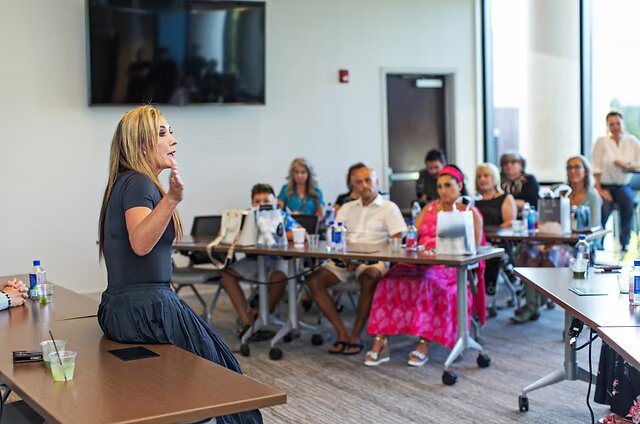
The obvious question is how one person does all of it.
The less glamorous answer: she doesn’t.
“None of it would be possible without an incredible team,” Rahm says. “I’ve learned I can’t do everything myself.”
Part of sustaining her career has meant letting other people help — and abandoning the expectation that everything needs to be done perfectly.
“I’ve had to let go of the idea that everything has to be perfect,” she says.
She has also stopped treating balance like a fixed state she might eventually achieve if she organizes her life correctly enough.
“There were definitely seasons where balancing everything looked impossible,” she says. “I don’t think there’s ever perfect balance.”
Instead, different parts of her life have needed more of her at different times.
“There were times my family needed more of me and times my work demanded more,” she says.
That distinction is small but significant. Rather than expecting every part of life to receive an equal amount of her at all times, Rahm has learned to accept that the equation changes.
The goal, for her, was to make sure that even during the busiest periods, her children knew where they stood.
“I just kept reminding myself the reason I started and made sure my children always knew how deeply they were loved.”
Motherhood made her stronger — and less interested in the titles
Ask Rahm what motherhood has taught her about herself and she talks about strength, but not only in the grind-through-it sense the word sometimes takes on when describing working mothers.
She talks about patience. Humility. Unconditional love.
“My children have been some of my greatest teachers,” she says. “They’ve reminded me how faith, family, and love are the foundation for everything else.”
Her sense of professional identity has shifted over the years, too.
“I usually tell people I’m a scientist,” she says. “Everything else I’ve built has grown from that foundation.”
Earlier in her career, Rahm says she might have answered differently.
“Years ago I probably would have talked about my degrees or titles,” she says. “Today, I care much more about the impact I’m making than the title I hold.”
And despite the companies, product development, travel and speaking that can fill her weeks, Rahm’s answer to another question is even simpler.
When does she feel most like herself?
“I feel most like myself when I’m simply spending time with the people I love — my children, my husband, my family, and my friends,” she says. “Those moments recharge me more than anything else.”
For a woman who has spent much of her life looking for answers, motherhood seems to have clarified something fundamental.
The work matters deeply to her. But so do the people she comes home to.
Learn more about Dr. Christina Rahm’s work at drchristinarahm.com and about the Rahm Foundation.
Related reading
- Lo Bosworth Was Always Going to Tell You
- Matrescence: The Word That Finally Names What You’re Going Through
- You Were a Whole Person Before You Had Kids. Here’s How to Remember Who That Was.
- The Mental Load Is Real. Naming It Is Step One.
- The Health Appointments Mothers Stop Booking (And Why It’s Catching Up With Us)