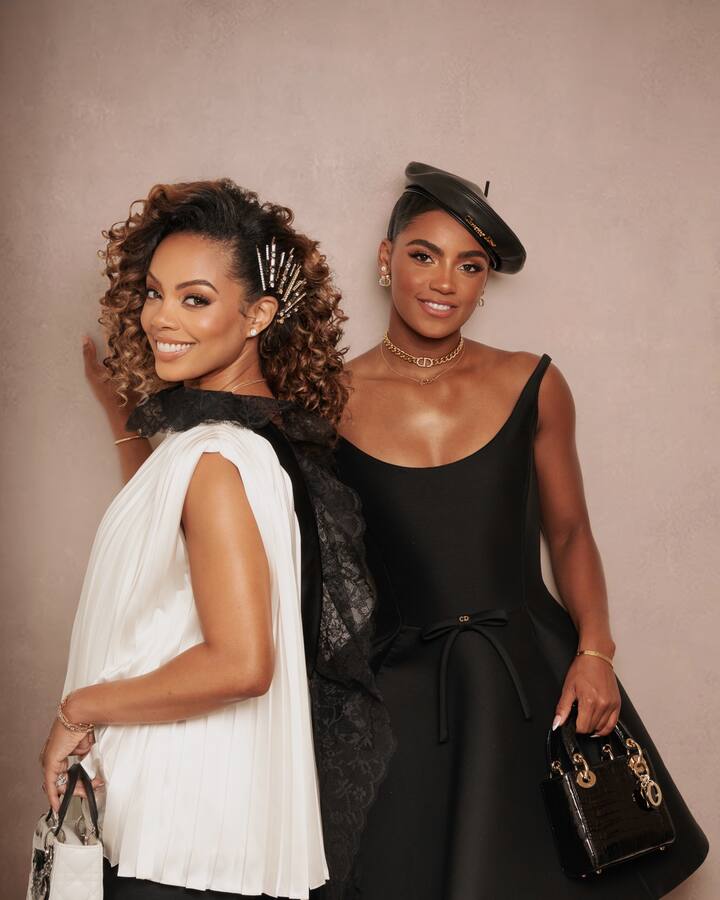
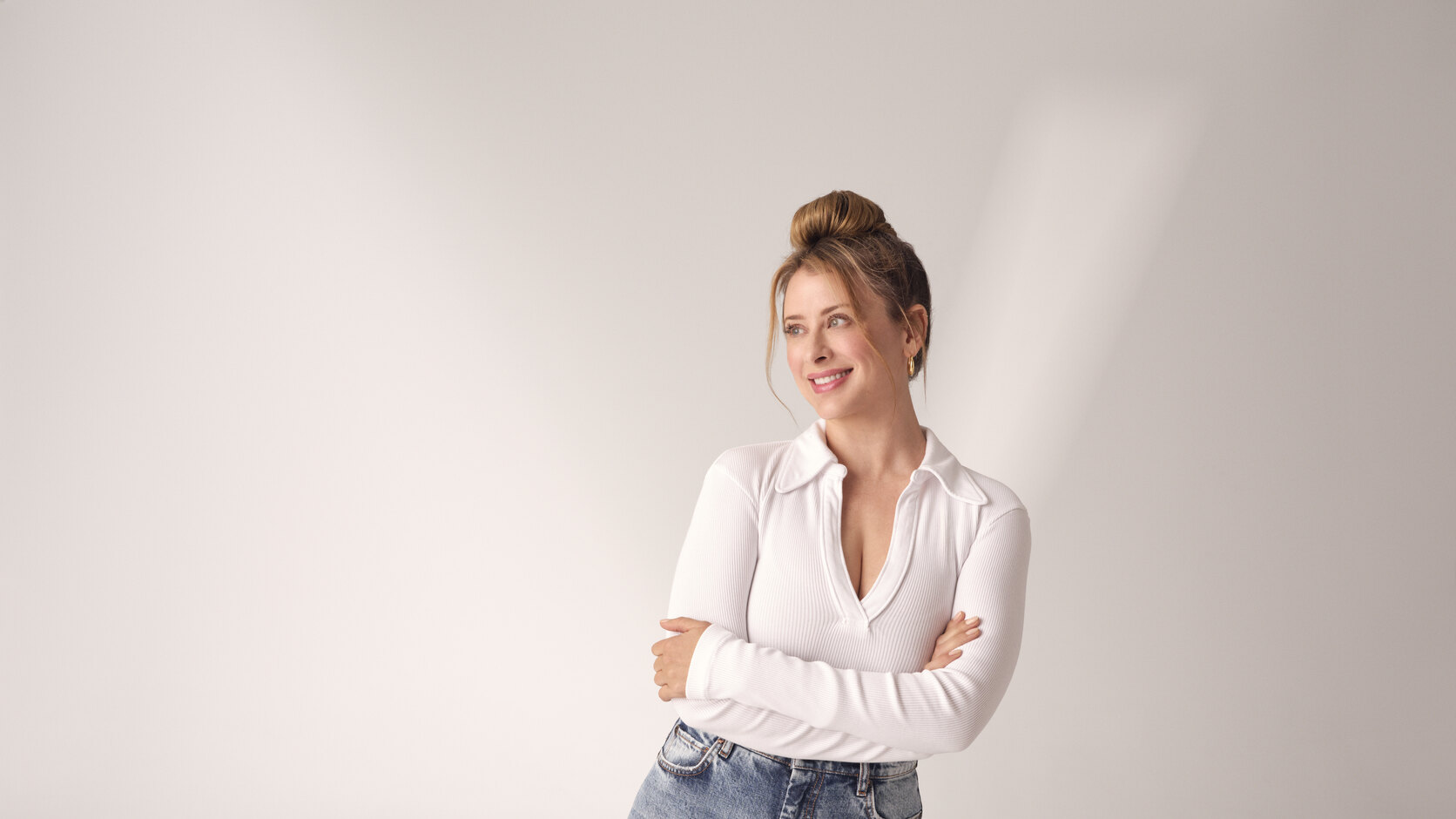
Beneath every version of her is the same woman doing the same thing she has always done: leading with the truth about who she is, and who she is becoming.
Lauren Bosworth practices straightforward, unflinching honesty. She shares the raw, unfinished, and unglamorous parts of her life plainly, without performing or seeking validation.
If you were a teenager in 2004, you watched her practice that honesty in real time on Laguna Beach and The Hills, growing up alongside her as she and her friends navigated coming of age on screen.
Starring at seventeen against a backdrop of California coastline, she narrated her youth to a nation that couldn’t look away. You were probably somewhere on the cusp of your own leaving that year; a last summer at home, a dorm room half-packed, the particular ache of a life about to change shape. She was doing on television the thing you were doing in private: becoming a person while everyone watched.
Her name is Lauren ‘Lo’ Bosworth. The better part of two decades has passed, and remarkably, she is still doing the exact same thing: telling you the truth about what is happening to her.
Seven months in
Right now, what’s happening to her is deeply ordinary and so beautiful.
“I’m seven months postpartum, and for the first six of those I was a full homebody,” she says. “No real outfits, no new clothes, I’m only just now starting to buy any.” There’s no gloss on it, no reach for the aspirational version. She describes the season the way any mother would recognize it — exhausted, doing something brand new, not back at work yet, definitely not going out on dates yet. “You’re just trying to figure out your new role, your new schedule, and your new identity all at the same time.”
Ask her for the most unglamorous version of herself and she hands it over without flinching: comfy clothes all day, trying to get into bed by 9:30pm.
It is a small thing to admit and a strangely radical one, coming from a woman whose entire adolescence was styled for an audience. The girl on the beach was a product. The woman in the comfy clothes is just a mother, and she’d like you to know that the early months look pretty much the same for everyone. That there is no version of new motherhood, however famous, that lets you skip the part where you don’t recognize your own life.
The girl on the beach
Ask her what she feels when she pictures that seventeen-year-old now, and the answer is not what you’d expect from someone who came of age on reality television.
“Hope, honestly,” she says.
Not regret. Not a wince. Hope. “When you’re that young and out in the world, you’re so hopeful, and I still feel hopeful for her, because I can see the interesting, complicated, difficult, beautiful life she was heading into.” She’s protective of the girl, too. Of course she is. But she stops short of wanting to rescue her. “The hard parts are what make you who you are, so I wouldn’t take those away from her.”
Sit with the maturity of that. Most of us, handed a time machine and a look at our teenage selves, would spend the whole trip issuing warnings. Lo wouldn’t. She has made a kind of peace that most people never reach: the understanding that the difficult chapters were not detours from her life but an important part of her journey. You cannot spare the girl the hard parts without also robbing her of the woman she became. Lo declines the trade.
The hard parts are what make you who you are.
The difference is consent
There is one hard part, though, that she is determined her own daughter will never have to negotiate: the camera.
Lo grew up in public, and she is now raising a child in public: pregnant online, a mother and a founder online, living a life that a great many strangers feel entitled to watch. She has thought about this more carefully than almost anyone alive is positioned to, because she has stood on both sides of the lens. And the line she draws is exact.
“The difference is consent,” she says. “I was a teenager who signed up for it. My daughter didn’t sign up for anything.”
So she’s deliberate now in a way she couldn’t have been at seventeen. She shares her own experience of motherhood — the parts that happen to her — and keeps the parts that belong to her daughter as her daughter’s. It’s a distinction that sounds simple and is, in practice, almost countercultural in an economy that runs on other people’s private moments. “Having been the kid on camera makes me very aware that she’ll be an adult someday with opinions about all of it.”
Understand what she’s actually protecting. Not the baby’s image, exactly, but the baby’s future authorship — the right of a person not yet old enough to speak to one day decide what her own story is, and who gets to tell it. Lo is building it, on purpose, for her daughter, out of the precise knowledge of what it cost not to have it.
A complicated title
Her podcast is called Tell Me I’m a Good Mom, which is either the most vulnerable title in the genre or a very good joke, depending on the day. Lo will tell you it’s both, on purpose.
“There’s a duality in it that I wanted on purpose,” she says. “Part of you really does want someone to tell you you’re doing a good job.” And part of it is a play on words, because as anyone deep in it knows, “so much of this is genuinely funny, and if you can’t find the humor in it you’re not going to make it to the other side.”
She gave it a complicated title, she says, “because motherhood is complicated.” Then she names the whole thing in a single line: it’s “tender and vulnerable and absurd, all at once.”
That is the entire experience, said in five words, by a woman who has stopped pretending any one of them cancels out the others. The tenderness doesn’t make it less absurd. The absurdity doesn’t make it less tender. She holds all of it together, and she’s inviting you to laugh and to ache all at once, because that, she has decided, is the only way through.

What no one prepares you for
Here is where the woman who built a wellness company gets humbled by her own subject.
Ask Lo what surprised her most about becoming a mother, and she doesn’t reach for the sleep or the schedule. “How much of it happens to your body and your brain, not just your schedule,” she says. “I thought I was prepared for the logistics, and the logistics turned out to be the easy part.”
What no one prepared her for was the length of the recovery and the particular cruelty of its timing. “Nobody really prepares you for how long the recovery is, or for the fact that you’re rebuilding your own health at the same moment you’re responsible for someone else’s.” Her physical recovery ran longer than she expected. And then she says the thing that quietly reorders her whole career: it “taught me more about advocating for myself than a decade in wellness did.”
After ten years of building a women’s health company to empower others, she found herself navigating a new layer of self-advocacy in her own body — discovering firsthand that the patient still had more to teach the expert. It is the same gap that shows up every time a mother quietly stops booking her own appointments: the care runs out long before the recovery does.
The thing she couldn’t find
To understand why that lands so hard, you have to go back to why the company exists at all.
There was no single dramatic origin. Lo is careful about that. “It wasn’t one dramatic moment, it was the accumulation.” Years of appointments where she left with no answers. The slow, grinding sense of being managed rather than heard. If you have ever sat on the paper-covered table and felt yourself become a problem to be processed rather than a person to be helped, you already know the feeling she’s naming.
But the thing that finally moved her wasn’t her own frustration. It was a pattern. “What finally got me was realizing how many women I knew had the exact same story and all thought they were the only one.” It is the same quiet arithmetic underneath the loneliness so many new mothers describe — a room full of people having the identical experience, each certain she is the only one in it.
Then comes the line that could be the company’s founding document: “That’s a market and a moral failure at the same time.”
That’s a market and a moral failure at the same time.
Hold both halves of that, because she does. The market failure is the business case: a whole category of customers underserved, a gap wide enough to build inside. The moral failure is the human cost: women in pain, dismissed, each one privately convinced she was the only one. Lo refused to treat those as separate problems. She built the products she’d wanted to buy at Love Wellness, packaged with “the information I’d wanted someone to just tell me plainly.” Ten years on, that plainness is still the entire proposition. It’s the same instinct as the girl on the beach, pointed at a new subject: tell the truth about what’s happening in a woman’s body, and don’t let her feel like the only one it’s happening to.
What she’d tell her
Picture this… the year is 2016. The company is launching. And Lo is mid-launch and terrified. When asked if she could say one thing to that version of herself, she doesn’t go with the clichéd it all works out type of answer.
She gives us something more useful that hopefully heals something within every mother and woman reading this right now.
“That the terror isn’t a sign you’re doing it wrong,” she says. “And that almost none of the things she’s up at 3am about are the things that will actually matter.”
The terror isn’t a sign you’re doing it wrong.
Then the piece of wisdom that only ten years in the arena can buy: “The company that survives ten years isn’t the one with the perfect launch, it’s the one still willing to change its mind.” Read that twice if you build anything — a business, a brand, a family. The ones who last are not the flawless. They’re the ones who stayed willing to be wrong, willing to evolve and adapt.
And then, more quietly, the thing she most wishes she’d known: “I’d also tell her to take her own health as seriously as she takes the business, because she’s about to learn that lesson the hard way.” She’s talking to 2016 Lo. But she is also, unmistakably, talking to the woman who would one day spend a long postpartum recovery learning exactly that. The advice arrived late for her. She’s handing it to you early.
You stop performing
Somewhere in the middle of all of it — the company, the recovery, the baby — Lo married Dom Natale, in 2025, and the partnership did something a decade of building alone had not.
“I spent a long time believing that being capable meant not needing anything,” she says. It’s a belief a lot of high-functioning women will recognize on sight, because they’re running on it right now. Partnership dismantled it. “When you have someone who’s genuinely in it with you, you stop performing competence at home, and eventually you stop performing it at work too.”
You stop performing competence at home, and eventually you stop performing it at work too.
The softness made her a truer leader. “I think I’m a better leader for it. I’m more willing to say I don’t know, or I need help, which is the only way anything actually gets fixed.”
This is the quiet heresy underneath so many capable women’s lives: that the competence we perform is often the very thing keeping the real problem unsolved, because you cannot fix what you won’t admit is broken. Lo stopped performing. She started asking. And she found, as the women who let themselves be held usually do, that the asking was the leadership all along. Anyone who has watched a partnership rearrange itself around a new baby knows how much of that renegotiation happens without a word being said.
Unflinching truth
Now she’s on the far side of the lesson, raising a daughter, and thinking hard about how to hand this down without also handing down the shame it took her thirty years to shed.
Her method is almost startlingly plain. “Mostly by using real words and not flinching.”
She has clearly studied where shame actually lives. Not in the facts, but in the delivery. “Shame gets transmitted through hesitation, through the pause before you name something, and kids read that instantly.”
Shame gets transmitted through hesitation.
So she refuses the pause. She wants her daughter to grow up knowing the real names for the real parts of her body, knowing that “symptoms are information rather than embarrassments,” knowing she’s allowed to ask a doctor to explain themselves — the exact permission Lo had to grant herself, decades later, alone. She measures the whole ambition against a single benchmark: “If she can advocate for herself at 20 the way it took me until my 30s to learn, that’s the whole thing.”
That’s a mother trying to give her child a ten-year head start on her own hardest lesson. It is also, not incidentally, the mission of the company restated at the smallest, most intimate possible scale — one woman, one girl, one refusal to flinch at the kitchen table. It is, in the end, what every phrase you hand a daughter is really doing.
The real timeline
You might expect a woman seven months into motherhood and ten years into a health company to have arrived somewhere settled. She hasn’t, and she wants you to know it, because the not-knowing is the radical truth, and truth is the entire point.
“I’m seven months into this and I don’t have it figured out, and I’ve decided that’s the point,” she says.
I don’t have it figured out, and I’ve decided that’s the point.
She built a company, she reminds you, “on the idea that women deserve honest information instead of a filtered version.” She’s not about to abandon that now that the subject is her own life. “So if you follow along, you’re going to get the real timeline. The slow recovery, the identity stuff, the parts that are funny only in retrospect. And it’s certainly more useful than what I would have gotten at 17.” She’ll take that over a highlight reel any day.
Which returns us, of course, to the beach.
Ask her to draw one line connecting the seventeen-year-old on the sand to the woman and mother she is today, and she doesn’t reach for reinvention. She reaches for the thing that never moved.
“She was always going to tell you the truth about what was happening to her,” Lo says. “The subject matter changed. The instinct didn’t.”
The subject matter changed. The instinct didn’t.
That’s the whole story, and she told it in three sentences. The girl narrated her adolescence because she couldn’t not. The founder narrated a health crisis a whole industry was too polite to name. The mother is narrating a recovery, an identity, a season she hasn’t figured out yet in real time, without flinching. Two decades of subject matter. One unbroken instinct.
If you watched her at seventeen and you’re reading this somewhere in the thick of your own unglamorous, unfinished, occasionally hilarious motherhood, you already know why it lands. She isn’t telling you it gets tidy. She’s telling you the truth — that life and motherhood are complicated, that the hard parts are the ones that make you, and that the most useful thing a woman can hand another woman is not the highlight reel but the real timeline, the in-between moments that test you, develop you, and on occasion, give you the best laughs and timeless lessons.
Psst… she was always going to tell you. She still is.
Lo Bosworth is the founder of Love Wellness and the host of the motherhood podcast Tell Me I’m a Good Mom. Follow along for the real timeline — @lobosworth.