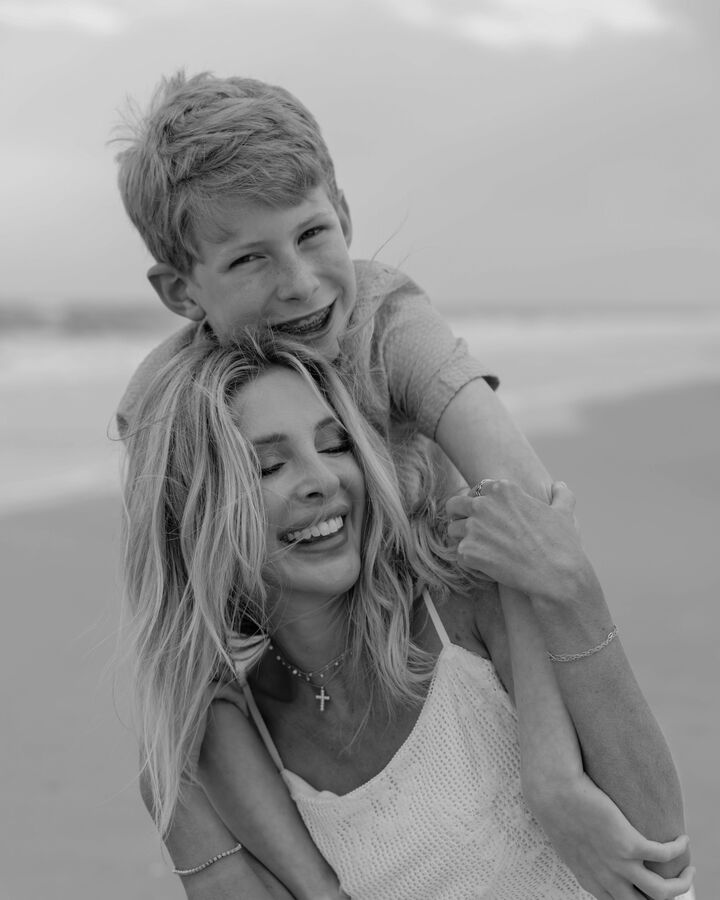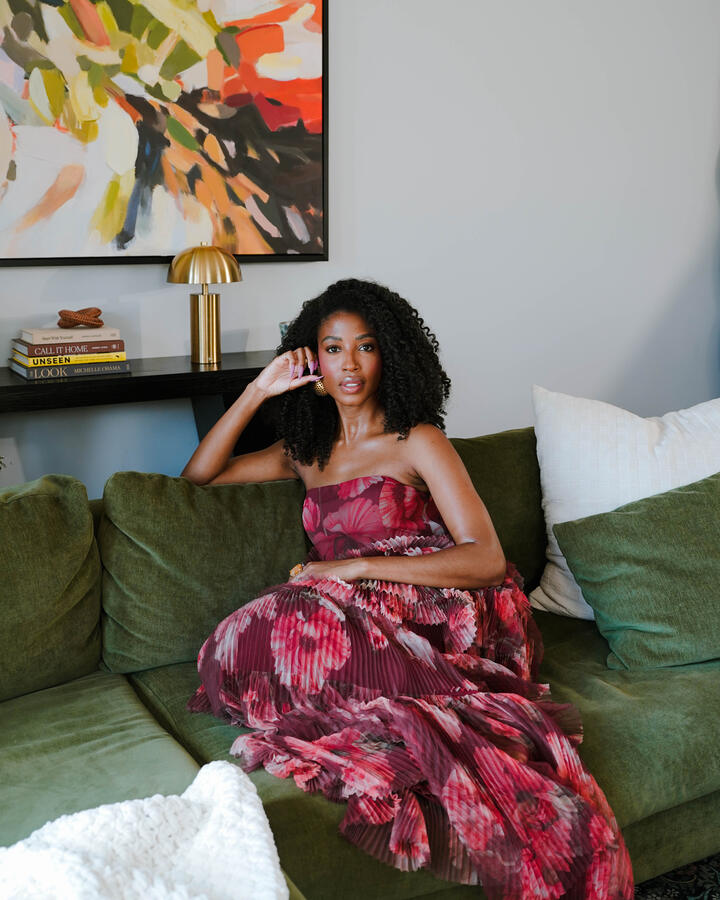

Jessica Parr holds funerals for a living. The women who come to hers arrive with body bags full of things they’d love to bury: the version of themselves that keeps the peace and makes herself convenient for everyone in the room. The comfort, the patterns and behaviors that do not serve them or lead them even one step closer to the big, audacious life they are building. Jessica calls this “burying your inner nice girl,” and she has built an entire mission, brand, and company around helping women lay this version of themselves to rest. It’s a burial, a confrontation, an initiation, and a whole remembrance of the power women have within.
Nice Girl Funeral is her live event and mentorship brand for women in business who have spent years putting other people’s comfort ahead of their own. The mission underneath it is simple to say and hard to live. No matter their career path, their ethnic background, their sociocultural upbringing, or relationship status, one thing is clear: A woman can love the people in her life fully and still refuse to leave herself behind.
Jess came to that work the long way. She grew up a girl who believed love had to be earned, and she watched up close what a life of constant self-sacrifice does to the people living it and the people who love them. Then came a surprise pregnancy. The day her son was born, the knowing she had been postponing got too loud to ignore, and she went all in on her business.
Her son is three now. And she is still practicing at home the thing she teaches on stage. For Dear Momé, we wanted to push the creative edge and touch upon something that almost every woman goes through — burying the inner people pleaser, the nice girl, and leaning into our leadership, our voice, our expression to advocate for the life we know we deserve. Add to that layers of a high performing career, or being a high functioning entrepreneur, and motherhood, and we’ve upped the ante. Because the real test of whether or not your inner nice girl is laid to rest happens when you know that there is a small, sensitive boy watching and tracking his mother’s every move.
The Girl on the Front Lawn
Jessica once said she has become someone that little version of her needed. Ask her to picture that girl, where she is and what she’s doing, and she finds her right away.
“She has huge feelings. HUGE feelings,” Jessica says. “She thinks so deeply. She feels a little bit like an alien, but in this good, secret, top-secret way. She sees magic and beauty in everything around her. Nature, sounds, animals, her own voice. She’s dancing and singing and moving in her body. She’s incredibly playful. She feels connected to animals, to souls, to her own soul. There’s this really deep, warm, heavy sense of love in her.”
Then she puts the girl somewhere we can see her. “When I picture the actual little girl I was, she’s writing in her journal. She’s in her room making art. She’s lip-syncing in the mirror, acting in the shower, modelling in the hallway and practising her runway walk. She’s outside jumping chairs and brooms on the front lawn pretending to be a horse.”
The next part comes plainer.
“She’s also deeply lonely. She feels unseen and unheard, and she’s constantly wondering what she has to do to earn love. What she has to achieve. What she has to accomplish. She pushes herself incredibly hard in everything she does, but it isn’t really to prove to herself that she can do it. Deep down, I think she already knows she can.”
“She’s trying to prove it to everybody else.”
There’s this really deep, warm, heavy sense of love in her.
Further Into Himself
That girl grew up and built a business for women like her, with love and performance stitched together so tight they don’t realize where one ends and the other begins. Now she is raising a son, and the question underneath all of it is how a woman who learned to earn love makes sure he never feels he has to earn her.
“I think there’s a continuous untethering you have to do as a mum when you’ve learned to connect your worth to what you accomplish,” she says. “Separating your deservingness to be loved from your performance is something I’ll probably navigate for the rest of my life. But I’m navigating it because I’m aware of it.”
“My son is three, and he’s consistently reminded how deeply he is loved for exactly who he is. Every special interest, every silly quirk, every strange little thing that makes him HIM is something I celebrate and encourage.”
She knows the window he’s in. “There’s this stage with kids where they have absolutely no problem taking up space. They’re completely expressed and feral in themselves. My son is incredibly sensitive and hyper-attuned. He’s honestly a little version of me in so many ways. I can tell in the little moments when he starts to hold something back. And in those moments, I want to love him further into himself. I want to speak life into his spirit every single day.”
The line she draws between effort and love is a clean one. “He can understand work ethic. He can understand effort. He can learn to do hard things. But none of that will ever be attached to how deeply and unconditionally he is loved.”
Then she says something you won’t find on a nursery wall print or in your favorite parenting book. “I actually don’t believe women need to love everyone and everything unconditionally,” she says. “Our children are different.”
For Jessica, the lesson lives less in what she says to him than in what he watches. “The more compassion I have for myself, the more I learn to love myself outside of what I’ve accomplished, the easier it becomes to model that for him. I’m a coach at heart, so I understand how much people learn from what they witness. It’s less about what I can tell him and more about what he gets to see in the way I live, the way I treat myself and the way I love him.”
The more compassion I have for myself, the more I learn to love myself outside of what I’ve accomplished.
The Knowing
The day her son was born is also the day she went all in on her business, and it would be easy to call that a strategy, or a leap she simply fell into. The way Jessica tells it, the story starts with a plan he was never part of.
“My son was a surprise, and he is also the best thing that’s ever happened to me,” she says. “I knew, even before he was born, that becoming a mum wasn’t going to erase my ambition. I would still have my drive. I would still have the things I wanted to build and accomplish for me, for my family, for my legacy, for my life and for other women. And at the exact same time, I knew nothing would ever supersede what I felt for my child.”
Jessica teaches women to make the decision when they know. Her own was already sitting there before he arrived. “Going all in on my business was something I had already intuitively known I needed to do,” she says. “Cognitively, maybe on an ego or fear level, I just hadn’t pulled the trigger. One of the biggest gifts motherhood gave me almost immediately was that my intuition got louder. The knowing was already there before my son was born. It was just easier to ignore, postpone or avoid.”
The second he was born, I couldn’t ignore it anymore.

Small, Ordinary Choices
The name of her brand, event, and company comes from somewhere personal, to the point where it has garnered attention, virality, and a deep primal connection with every woman who hears about it. No matter their culture, their upbringing, their career title, or the roles they play. “I’ve seen and been on the receiving end of codependency and people-pleasing. That’s part of why my brand is called Nice Girl Funeral,” she says. “I know the pain it causes when somebody you love exists in a constant state of self-sacrifice. You start collecting points with people by overgiving, overdelivering and overcompensating. You sacrifice your own happiness, needs, desires and thoughts because somewhere along the way you learned that choosing yourself was selfish, and being selfish could cost you love, attention, respect or belonging.”
“I would never want to hand that down to my child.”
So what she models instead is choosing herself in small ways, and on an ordinary day with a three-year-old, that looks nothing like the spa day. “And choosing myself in small ways isn’t the socially acceptable version of ‘make sure Mum books a spa day,’” she says. “It’s much more ordinary than that.”
“It’s working and allowing my son to go to daycare and have the time of his life, even when part of me finds the separation hard. It’s allowing people to help me. I don’t have a huge support system, but my in-laws have made themselves incredibly available. Letting them support us and become such a big part of his life has enriched his life too.”
“It’s not micromanaging my husband. Letting him learn how to parent just as I am. Letting him make his own decisions, take over and lead. It’s travelling for work when it matters to me, even when leaving is hard. It’s prioritizing my health.”
None of it would make a pretty self-care post, yet most of it is what fuels her the most, instead of trying to keep up with trends or worry about what others would think. And yes, it costs her something. There is always a tradeoff, but at least she’s the one choosing what matters most to her and her family.
“I’m extremely present as a mum and I really value the quality of the time I spend with my son. I think that’s part of why our relationship is so beautiful,” she says. “But women can become absolutely riddled with shame and guilt around motherhood, and then somehow shame themselves for feeling guilty too. I’ve learned that choosing myself where I can is actually in service to everyone around me.”
Choosing myself where I can is actually in service to everyone around me.
What He Reads in Her
Choosing herself where her son can see it comes with a catch: he sees everything else too. Children read us the way horses do, picking up what’s happening in our nervous system before we say a word. Which raises a harder question, about what her son has read in her that she hadn’t admitted yet. “This is such an incredible question,” she says, and then she answers it straight.
“I think my son has shown me the places where I still default to holding everything together. He’s extremely sensitive. He’s so gentle-hearted. He notices everything. And in a lot of ways, I think he reflects the full range that exists in me. I let him see me cry. I let him see me process emotion. I’m not uncomfortable with emotions, and neither is he.”
The other half of that range is the woman her clients know. “But there’s another part of me that is still very much ‘if the world is ending, Jess is making the decisions.’ I’m the person who can become incredibly solid when everything around me feels uncertain. That has served me in my life, but motherhood has also made me look at where strength becomes holding too tightly.”
“And I think he reflects something else back to me too. He’s incredibly musical, artistic and expressive. He’s bubbly and comical. He dances, he sings, he performs. He lets himself be all of it. Watching him makes it very easy for me to see the places where I still limit that range in myself. I’m incredibly playful with him, but am I always that free with myself? Probably not.”
Hold that next to the little girl lip-syncing in the mirror and practicing her runway walk in the hallway. The singing, dancing, performing child is back in the house. This time, nobody is asking him to earn anything.
In her work, Jessica has called herself “a gangster savage boss” with “the most sensitive, tender heart.” At bedtime, her son mostly gets the second one.
“My son gets the sensitive, tender-hearted version of me probably 90% of the time. I’m incredibly bubbly with him. Affectionate. Emotionally intimate. Playful. Soft. The other 10% isn’t really ‘gangster savage boss’ either. It’s boundaries. It’s being clear. It’s direction. But even then, I never want him to feel like having emotion, being wrong, being expressive or even being himself is unsafe with me.”
The people who follow her work might not recognize her at home. She says so herself. “I actually think people who primarily know me through my work might be surprised by how soft I am as a mum. I’m incredibly kindred with him. I’m very affectionate. I play with him constantly. I’m emotionally available to him. And I’m very much the mum I always wanted. I’m really proud of that.”
I’m very much the mum I always wanted.
Older, and Heavier
Some of what she carries into motherhood is older, and heavier. Jessica has spoken before about a hospital bed, and the moment she understood the choice in front of her was between her own funeral and a Nice Girl Funeral. With her son in the room, that choice looks different now.
“I’ve always felt like there was some deeper driving force inside me during the hardest moments of my life,” she says. “And strangely, I think my son was part of that before he ever existed. When I watch my son now, he feels like the physical manifestation of every difficult thing I’ve ever experienced being worth it. Of course he does. He’s my entire world.”
“Motherhood is also such a mindf**k because I remember very clearly what it felt like to be close to death, or at least flirting with that idea, and then you suddenly have this human being you love more than you could even comprehend loving yourself.”
“Your heart is walking around outside of your body, completely outside of your control. You get to watch this tiny person become independent. You watch his personality form. You realize how much of it belongs completely to him. Every moment feels like a gift. And at the same time, there’s this new visceral understanding of how fragile life is.”
“I think both things exist together for me now.”
She Just Gets More Covert
You might expect the founder of Nice Girl Funeral to say the nice girl is gone for good, that she doesn’t sneak back in, least of all as a mother. Jessica says the opposite.
“No. The nice girl never fully goes away,” she says. “She just gets more covert.”
“I teach this in business, but it applies everywhere in life, and motherhood absolutely finds new places for it to hide. It can be as small as my son being a little off and me questioning my intuition for ten minutes, only to find out later that he’s sick. Or he says something that makes me pause, and suddenly I’m mentally dissecting whether it means I’m doing something wrong. I don’t run that loop with myself constantly anymore, but it still appears.”
The loudest stretch came right after he was born. “Postpartum was probably when it was the loudest. There were moments when I wanted my husband to come home and SEE how hard it had been. See how much I had done. See how much I was struggling. And I realized I was doing something I had done in different forms my entire life. I was trying to earn love through suffering.”
“There’s an old belief in me that says if I’m crawling on my hands and knees for something, then somehow it counts more. Cognitively, I don’t believe that anymore. But old patterns don’t always show up as conscious thoughts. They show up as making something harder than it needs to be. Questioning a decision I already knew was right. Holding too much until I suddenly have no capacity left.”
“Motherhood gives you endless opportunities for that. You can guilt yourself for feeling guilty, shame yourself for feeling shame, judge yourself for being judgmental of yourself.”
Then she rewrites the meaning of her own company’s name. “The Nice Girl Funeral isn’t something I did once. It’s something I keep doing every time I catch myself abandoning what I know in order to feel safer, more accepted or more ‘right.’”
The Nice Girl Funeral isn’t something I did once.
Seen Without the Struggle
That old belief, that love has to be earned through suffering, had followed her into her marriage too. Jessica’s marriage grew up alongside the season she began choosing herself, and learning to be loved as the woman she is now, not the one who performed, has been its own long work.
“My husband and I have been together for eight years, and honestly, we’re both completely different people,” she says. “Learning how to choose myself was and is one of the most important things I’ve ever done. It’s the lifeblood of the work I do with women because it changed my entire life.”
“Was that always easy inside of a marriage? Absolutely not.”
“I’m abnormally ambitious. I’m independent, driven and stubborn. If I have a vision in my heart, it is very difficult to talk me out of it. Learning how to remain fully myself while also letting someone fully love me has been an enormous part of our marriage.”
What she describes now is the opposite of those postpartum weeks: being seen without the struggle. “And now, being seen for who I actually am and loved as that person, not for my accomplishments, not for how useful I can be, not for a version of myself I created to appease other people, is incredibly liberating. I also think you can only go as deep with another person as you’ve been willing to go with yourself.”
Pain, Without the Suffering
Jessica once believed suffering made her valuable. Keeping that belief from being handed down, to her son and to the women she leads, starts with a distinction she draws carefully.
“I think there’s a difference between pain and suffering,” she says. “Pain, heartbreak, failure, mistakes, hard work... Those are part of being alive. I don’t want my son to fear any of them. Suffering, to me, is what happens when you hold onto those experiences and start using them as evidence about who you are, what you’re worth or what the world owes you.”
“I was modelled that struggling was necessary. What I want my son, and the women I work with, to understand is that difficulty has nothing to do with your value as a human being. You’re inherently valuable.”
She won’t disown what the hard years gave her, though. “At the same time, I’m incredibly grateful for the full range of things I’ve experienced because I think they’re part of why my life has so much substance now. The love I experience means more because I know heartbreak. Freedom means more because I know what it feels like to be trapped inside my own life. The joy means more because I have experienced the opposite.”
“I don’t want my son to fear pain. I want him to know it can move through him without becoming who he is. And every time I notice the old pattern in myself, I have to bring it into the open again.”
I want him to know it can move through him without becoming who he is.
No Finish Line
One day her son may read this, maybe at thirty. What Jessica would want him to understand about who his mother was right now has no finish line in it.
“I think more than anything, I’d want him to know how much I was still figuring it out,” she says. “I’m still learning to love myself more. I’m still learning to be myself more. I’m still learning who I want to be. And I actually think that’s the fun of it. I think that might be the point.”
“You get a choice every day. You get to choose yourself. You get to choose how you relate to the world. You get to choose again who you’re becoming based on the decisions you make. Life keeps beginning again.”
“I’d want him to know that I had so much love in my heart at this point in my life. I feel incredibly anchored by my family and by him. I know what matters to me in a way that I don’t think I ever did before.”
“And I’d want him to understand how enormous a part of my world he was without ever feeling like he was responsible for my world. He doesn’t owe me anything. He didn’t come here to complete me or become something for me. But somehow, just by being himself, he’s given a part of me back to myself that I didn’t even realize was missing.”
The little girl on the front lawn spent years proving herself to everybody else. Her son gave something back to her just by being himself.
Please Be a Problem
Somewhere, a mother is reading this at 11 p.m., still being the nice girl for her kids’ school, her in-laws, her clients. Jessica has something to say to her, and she doesn’t soften it.
“It is not worth it,” she says. “Keeping the peace isn’t worth it. Biting your tongue isn’t worth it. Questioning yourself over and over isn’t worth it. Ignoring yourself definitely isn’t worth it.”
“Please be a problem. Because you’re already paying for everybody else’s comfort.”
“Being the nice girl doesn’t mean you’re absorbing all of the discomfort so nobody else has to feel it. It doesn’t mean you’re protecting everyone. In a lot of ways, you’re actually hurting the people you love too. Self-sacrifice is not what you think it is.”
“There is a much bigger experience of life available to you and to the people you love than constantly placating, accommodating, and making yourself convenient for everyone around you. You are not responsible for managing everybody else’s reactions, projections and emotions. And if you’ve spent your whole life doing that, of course it feels scary to stop.”
“But I would want her to ask herself one thing,” Jessica says. “What is it costing me to have people accept a version of me that isn’t actually me?”
Please be a problem. Because you’re already paying for everybody else’s comfort.
She had one more thing to add, and it’s the line the whole story turns on.
“Maybe the thing I’d add is that becoming a mother didn’t make me want less for myself. It actually made me much less willing to abandon myself.”
“I don’t want my son to grow up believing that loving someone means a woman disappears inside of that love. That being a good mother means having no desires, ambition, work, friendships, needs or identity that belong to you too. I want him to know what it feels like to be deeply, ridiculously loved by his mum while also watching her be fully alive. I think that matters.”
“Because one day, if he loves a woman, I don’t want him to expect her to disappear either.”
“And if there’s one thing motherhood has made even clearer to me, it’s that I can love my child more than anything in this world without leaving myself behind to do it.”
You Are
At home, there is a three-year-old who dances, sings and lets himself be all of it. He doesn’t know yet that his mother spent her childhood trying to prove herself to everybody else. He knows a mother who plays with him constantly, lets him see her cry, and loves him for exactly who he is, without losing sight of her own dreams or the parts of herself that make her who she is.
That is the funeral Jessica keeps holding, one ordinary choice at a time. Daycare drop-off, even when part of her finds the separation hard. A work trip that matters to her. A husband trusted to make his own decisions and lead. None of it is wrapped in neat bows or looks picture perfect, but it’s all hers to choose.
The little girl on the front lawn, jumping chairs and brooms and pretending to be a horse, spent years working to earn love. Now she is raising a boy who won’t have to. He gets to watch his mother chase her dreams, work hard to make them happen, and still show up fully for the people she loves most, herself included.
If you are the mother reading this at 11 p.m., still keeping the peace, start where Jessica does, small and ordinary. Let someone help. Let someone else lead for an afternoon. Take the trip that matters to you. Someone small is watching how you treat yourself, too. The nice girl may never fully go away, but she doesn’t have to be the one in charge anymore. You are.
About Jessica Parr
Jessica Parr (@jessicamparr) is the founder of Nice Girl Funeral (@nicegirlfuneral), a movement for women in business and leadership. To build it, she had to bury a version of herself ten feet deep: the one who softened her candor, over-delivered, and kept everyone around her comfortable at the expense of her own capacity, her own standards, and eventually, her own income.
Before leaping into online coaching, she ran a successful equestrian business. Today she mentors women scaling with strategy, identity, and standards that match the CEO they’re becoming. She hosts the I’ll Admit podcast, uncensored conversations about nice-girl jail, savage success, motherhood, and chasing wealth with zero apology. And she continues to produce Nice Girl Funeral as a live experience redefining what an event can do for a woman’s identity, leadership, and wealth.
Related reading
- Losing Yourself in Motherhood? The Identity Shift Nobody Prepares You For
- You Were a Whole Person Before You Had Kids. Here’s How to Remember Who That Was.
- When “Mom” Becomes Your Only Name: On Reclaiming Your Full Self
- After the Cornell Allegations: How Do We Raise Boys Who Respect Women?
- Aisha Beau Frisbey on Choosing Fearless Motherhood