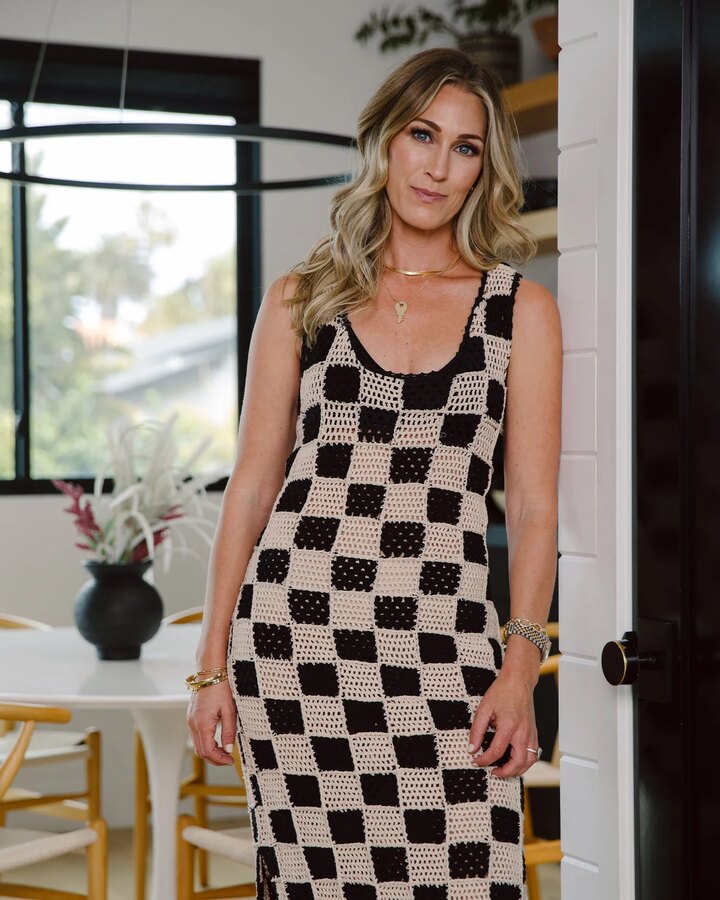
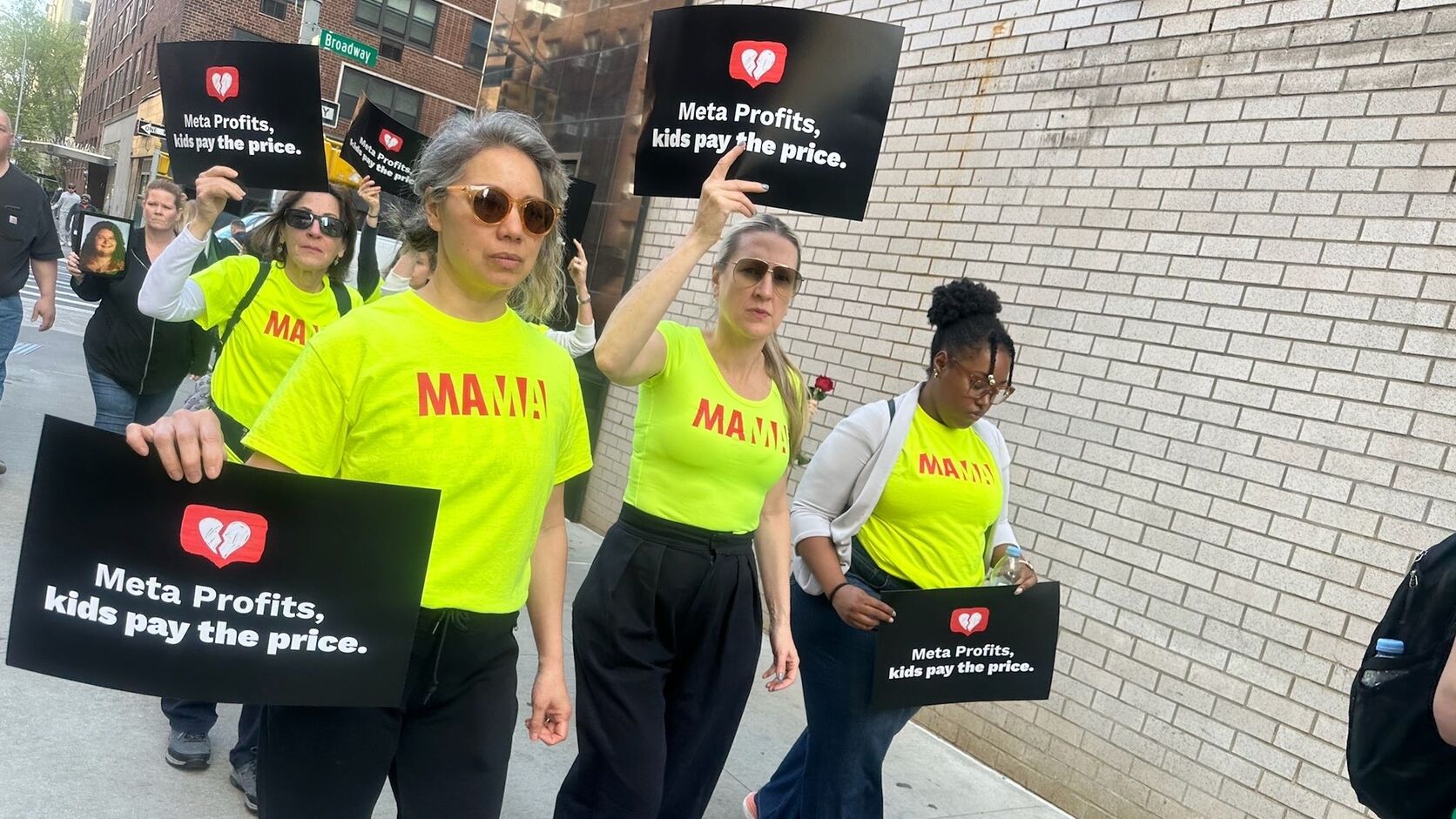
“I want every mom in America to know that she, and we, all of us together, have the power to make change. Now, more and more people are joining us to say enough is enough. The power of MAMA is connecting parents who want change, so together, we’re a force.”
— Julie Scelfo, Founder, Mothers Against Media Addiction (MAMA)
There is a specific kind of moment when information stops being information and becomes something you cannot unknow.
For Julie Scelfo, that moment arrived in a spreadsheet. She was deep in her reporting on the youth mental health crisis, scanning data the way journalists do, when a single statistic stopped her cold: suicide had become the second leading cause of death for children aged 10 to 14. Not teenagers. Children. As young as nine.
She is a journalist. She has spent her career at the New York Times covering some of the most difficult corners of human experience. She knows how to hold difficult facts at arm’s length long enough to write clearly about them. But this one broke through. Because she is also a mother.
“As a mother, this broke my heart,” she told me. “And I found it impossibly sad that children as young as 9 or 10 wanted to end their own lives.”
I sat down with Julie Scelfo, founder of MAMA, Mothers Against Media Addiction, to talk about what happens when the journalist and the mother can no longer be kept separate. What she built from that rupture is one of the fastest-growing parent-led movements in the country, with chapters now in more than half of U.S. states, legislative wins in California and New York, and bell-to-bell phone bans rippling across a dozen more.
But before all of that, there was a statistic. And a mother who decided she could not just write about it anymore.
“Writing About the Problem No Longer Felt Like Enough”
I asked Julie to take me back to the exact moment MAMA began. Not the organizational launch, not the first chapter meeting. The moment. She knew it immediately.
MAMA was born out of personal alarm. Can you take us back to the exact moment when writing about youth mental health no longer felt like enough?
“The turning point came when I was reporting on the youth mental health crisis and found myself looking at data showing suicide had become the second leading cause of death for children aged 10 to 14. For decades, it was third after diseases like cancer, and then it increased. As a mother, this broke my heart, and I found it impossibly sad that children as young as 9 or 10 wanted to end their own lives. There are always a multitude of factors when it comes to suicidality, but as a journalist, you learn to look for the root cause. And I realized no one was addressing the elephant in the room: how a total absence of regulation had allowed tech companies to create fundamentally unhealthy, unsafe, addictive products for our kids.
While some groups were talking about the need for policy change, no one was really doing anything to ensure it would happen. Realizing more 10-year-olds were dying at their own hands than from cancer was the moment when writing about the problem no longer felt like enough. I couldn’t just keep documenting the damage. I had to help build the solution. And that is how MAMA came to be.”
Motherhood in the Age of the Algorithm
Before she was a founder, before she was a journalist covering this crisis from the outside, Julie Scelfo was a mother sitting at the same kitchen table as the rest of us, trying to figure out what to do about the Xbox, the Apple Watch, the screen that appeared in every hand in her house.
She told me she does not present herself as someone who has figured it all out. What she has is the context to understand what is actually happening, and the clarity to name it.
You’re a mom of three. How do screens, phones, and social media actually show up in your own home?
“Like all parents, I’ve faced every challenge over technology and my children, like whether to get an Xbox or an Apple Watch, and how to monitor it. Like everyone else, I’ve spent countless hours trying to set up parent controls and monitoring apps that didn’t work. Since I had studied media effects, I already knew the risks of short-form content, and I waited until 8th grade to give my kids phones before that was a thing. I also made it a point to regularly check their devices, and that’s how I saw they were repeatedly encountering content that was extreme, violent, and definitely not age-appropriate.
Today, we still struggle like everyone, and I myself am on the screen way too much, and worry a lot about how that sets a bad example. That said, we’re one of those families that has always refused screens in our central family living space. We have a TV room, and we go there to watch movies or sports. With four men in my home, there is a lot of sports viewing.”
I laughed at that last line, and she laughed too. There is something important in that moment, in the way she holds the weight of this work alongside the ordinary chaos of family life. This is not a crusade being led from a distance. It is being run from the same messy, imperfect home the rest of us live in.
What does day-to-day actually look like for your family?
“We have a strict no-phone policy at meals. We keep devices out of bedrooms at night. And we make a point of spending time every weekend doing something outdoors and offline as a family. The biggest struggle right now is with the school-issued laptop. It makes no sense, but my youngest son’s high school assigns the vast majority of his homework online, which means he is forced to spend hours on a screen, resulting in eye and back strain. Also, there is zero evidence that using technology improves learning, and lots of evidence of the opposite, so I’m worried he is actually being robbed of deep learning experiences his older brothers enjoyed.
It balances out because he has also started shaping surfboards, which has resulted in a plywood-and-tarp structure in our yard that is creating a visual eyesore and a lot of IRL activity.”
The Stories She Cannot Put Down
Every journalist who covers trauma carries a private archive.
Not of headlines or statistics, but of faces.
When I asked Julie which stories had stayed with her after years of reporting on youth mental health, she paused. The kind of pause that tells you the answer is not sitting in a notebook somewhere. It is sitting in her chest.
“It’s impossible to sit with a parent whose child has died and not have their faces and their children seared into your heart,” she told me.
Then came the names.
Englyn Roberts. Carson Bride. Sewell Setzer. Riley Basford. Mason Edens. Alex Neville. Alex Peiser. David Molak.
“So many children loved just like my own,” she said, “who were stolen because of social media company greed.”
She doesn’t speak about these children as sources or subjects. She speaks about them as people she carries with her.
Yet among the countless stories she has reported, there are two she still cannot shake.
The first came from an aunt in California whose niece had survived a suicide attempt and was lying unconscious in a hospital bed. The girl was still in a coma. Her eyes had not yet opened.
But then something happened.
“Even before her eyes could open,” Julie recalled, “her hand lifted up exactly as if she was holding her phone, and she started air texting.”
The image has never left her.
“The physical addiction, the muscle memory, was so deep it had permeated her unconscious,” she said.
The second story began with a phone call to Texas.
Julie had been trying to reach the family of a preteen girl who had died by suicide. Eventually, she connected with the girl’s grandmother. During the conversation, the grandmother explained that the child had been bullied by classmates. When Julie asked whether any of the bullying had taken place online, the woman seemed unsure.
“She sounded confused and said she didn’t think so,” Julie remembered.
By then, Julie had spent years investigating the ways social media had changed childhood. She understood a pattern many families still struggle to see: bullying no longer ends when a child leaves school. It follows them home, into their bedrooms, onto their phones, and into every hour of the day.
“It kind of blew my mind and broke my heart,” she said, “that the girl’s family may never even know what really happened to her.”
She shared these stories without dramatics, without outrage, and without trying to persuade.
They are not anecdotes she deploys to strengthen an argument.
They are children she refuses to forget.
And perhaps that is what has made Julie’s reporting resonate with so many families. Beneath the investigations, the statistics, and the headlines is something much simpler: a determination to remember the names, tell the stories, and ensure that the children behind them are never reduced to numbers.
The Push and Pull Every Parent Knows
There is a particular anguish that belongs to this era of parenting: the thing harming your child is also the thing connecting them. Julie has heard it from thousands of parents across the country, and she named it plainly when I asked her about it.
So much of motherhood right now happens against the backdrop of algorithms designed to keep our kids hooked. What do you think is the hardest part of parenting in this era?
“Something I hear a lot from parents is this push-and-pull, where the very thing harming our kids is also connecting them. These companies have engineered these products to be addictive and to take up as much of our kids’ lives as possible, so parents, understandably, feel conflicted about delaying the apps and devices and setting firm limits.
What they need to know, however, is that even though it’s hard, delaying is always worth it. And it is always, always easier dealing with a frustrated child than dealing with a teen who has an eating disorder, attention span loss, drug addiction, or any of the other terrible harms that can result from social media, which still have almost no federal safeguards.”
Know the Warning Signs
I asked Julie what she would want mothers to watch for. Not the dramatic red flags, but the quiet early shifts that are easy to explain away.
So many parents sense something is off, but can’t always name it. What are the warning signs a mother should be watching for?
“Parents should be watching for changes in behavior that feel out of character. If your child is becoming withdrawn, anxious, or irritable, especially when their phone or tablet is taken away, that is a sign. If they are losing interest in hobbies and activities they used to love, struggling with sleep, or having a harder time connecting with the people right in front of them, pay attention to that. If they seem more concerned with what is happening online than what is happening in their own home or with friends, that matters.
Trust your instincts as a mother. You know your child. If something feels off, it probably is. And you should feel empowered to step in, take a look at what they are seeing on their devices, and protect your child.”
It is the same instinct behind the intimacy gap researchers are now finding between girls and AI companions — the shift usually happens quietly, and long before anyone at home notices.
The Legislative Wins That Changed Real Lives
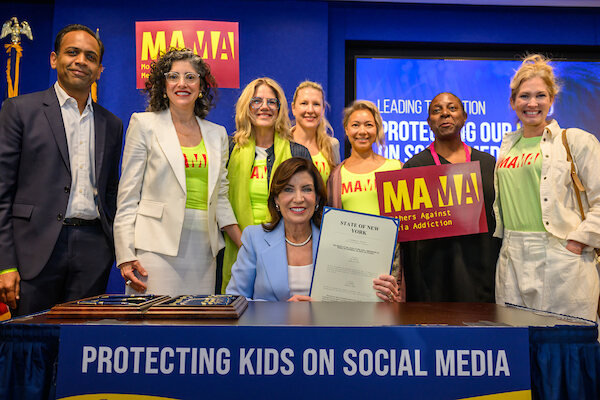
MAMA has now helped secure first-of-its-kind social media legislation in California and New York, bell-to-bell phone bans in over a dozen states, and policy changes that are being felt in real classrooms with real children. I asked Julie which of those wins lives closest to her heart.
Which legislative win means the most to you personally, and why?
“Helping secure social media and AI legislation, and bell-to-bell phone bans all over the country, means the world to me. But watching New York implement a school phone ban where I live, where my family lives, means that my community is directly affected by this change. There’s something unique about successfully fighting to pass a law that means your own children will get to go to school and just be kids, and that social media companies will stop targeting them with addictive design and overnight notifications. It makes it feel so personal. I don’t just want to change policy. I want to change my kids’ lives.”
What You Can Do This Week
For the mom reading this who feels overwhelmed and outnumbered by screens at home, what is one small, doable step she can take this week?
“Start by printing out our MAMA House Rules and sign up for our newsletter. The House Rules make setting limits easier. You can just blame the new rules on us! And our newsletter comes out every other week, which means it won’t overload your inbox, but it will provide the information you need to know what’s happening in your state, and make it easy for you to take meaningful action in your home and community. It also helps you see that you are not alone.
If you are ready to take another step, share what you learn with one other parent in your area. All of our voices are needed in this fight, and it starts with one conversation at a time. You don’t have to have all the answers. You just have to be willing to start. Follow along at @_wearemama for weekly action steps, stories from the community, and the latest legislative news.”
From One Mother’s Alarm to 27 States
MAMA recently reached chapters in more than half the country. What does it feel like to watch what started as one mother’s alarm grow into a nationwide grassroots movement?
“It feels incredible. And it’s not just one mother’s alarm. Our growth comes from so many parents being dedicated to stopping what Big Tech and social media are doing to our children, for profit. These everyday parents are the ones fueling this momentum. They are joining this movement because they want real-life experiences and real human connections to define childhood, not being glued to a screen.
As we grow, we will continue to demand action from elected officials, school administrators, and every leader who has the power to keep our kids safe and hold Big Tech accountable for the exploitation and manipulation of children.”
What MAMA Is Fighting for Next
What is MAMA fighting for next? Where do you want this movement to be in five years?
“MAMA is fighting to create a world where real-life experiences and human connection remain at the heart of a healthy childhood. We are pushing back against media addiction and demanding that technology products, like AI, are subject to the same proper safeguards we expect for every other consumer product our kids interact with.
In five years, I want sound federal legislation in place that ensures AI companies design their products with human safety, well-being, and privacy in mind. And if they fail to do that, like if they release a chatbot that will provide suicide or mass shooting tips, they will be swiftly and powerfully held accountable. As the Florida Attorney General said recently, ‘If ChatGPT were a person, it would be facing charges for murder.’ I want every child to have the right to a childhood that is not hijacked by screens or exploitative algorithms, and the only way that can happen is by safeguarding tech products the same way we do our food supply and transportation systems.”
The Weight She Carries
Near the end of our conversation, I asked Julie about the weight that does not go away at the end of the day. The kind that belongs only to someone who has chosen to keep this work close. She answered without hesitation.
So much of being a mom is carrying invisible weight. What is the kind you find hardest to put down?
“The hardest weight to put down is knowing how children’s lives are on the line and that the race to enact more safeguards is a race to ensure we don’t lose more children. Big Tech has endless financial resources at its disposal, which makes this fight even more challenging. And, like every working parent, I carry the constant pull between this work and my life outside it. But I always remind myself that so many parents are speaking up and joining this movement, and I’m so grateful and excited to be working alongside them on behalf of all our families.”
When you’re running on empty, what is the one thing that actually fills you back up?
“Spending time with MAMA Chapter Leaders and the other mothers and fathers in this movement. I am so inspired by all the women and men who, despite their busy lives, put their hands up and said, ‘I will join you in this fight.’ When you look at the work being done by our Chapter Leaders, and by the parents who have lost children to tech harms, it’s just breathtaking how much they have accomplished so quickly. And it shows that change is not just possible. It is happening.”
Every new law passed, every school that goes phone-free, every parent who decides to use their voice is proof of that. The families who have been harmed by social media and addictive technology are the reason this work continues, and they are also the reason to stay hopeful. When parents refuse to back down against Big Tech, things change. And they are changing.
The Floor Is Hers
Before we wrapped, I gave Julie the floor.
Anything we missed?
“MAMA needs more parents to join the good fight. You can join a MAMA chapter with other parents and allies in your community and beyond by finding a local MAMA chapter or starting one of your own.”
The Bottom Line
Julie Scelfo sat down with data one day and could not look away. She could have written another article. She had written many. Instead she built a movement, chapter by chapter, state by state, law by law, and she is not finished.
This is not a story about a crusader who has it all figured out. It is a story about a mother who decided that knowing what she knew meant she had to do something with it. And then she showed up, repeatedly, in the messy and imperfect way that real change actually gets made.
The children whose names she carries every day are the reason. The parents joining her are the proof that she is not alone.
And neither are you.
Follow Julie: @juliescelfo | Follow the movement: @_wearemama | Join the movement at wearemama.org
Related reading
- Who Is Your Daughter Really Talking To?
- Mindfulness for Kids at Every Age (No Incense Required)
- What Do I Say? Scripts for the Hardest Talks With Kids
If you or a child you love is struggling, help is available. In the US and Canada, call or text 988 (Suicide & Crisis Lifeline). If someone is in immediate danger, call your local emergency number.