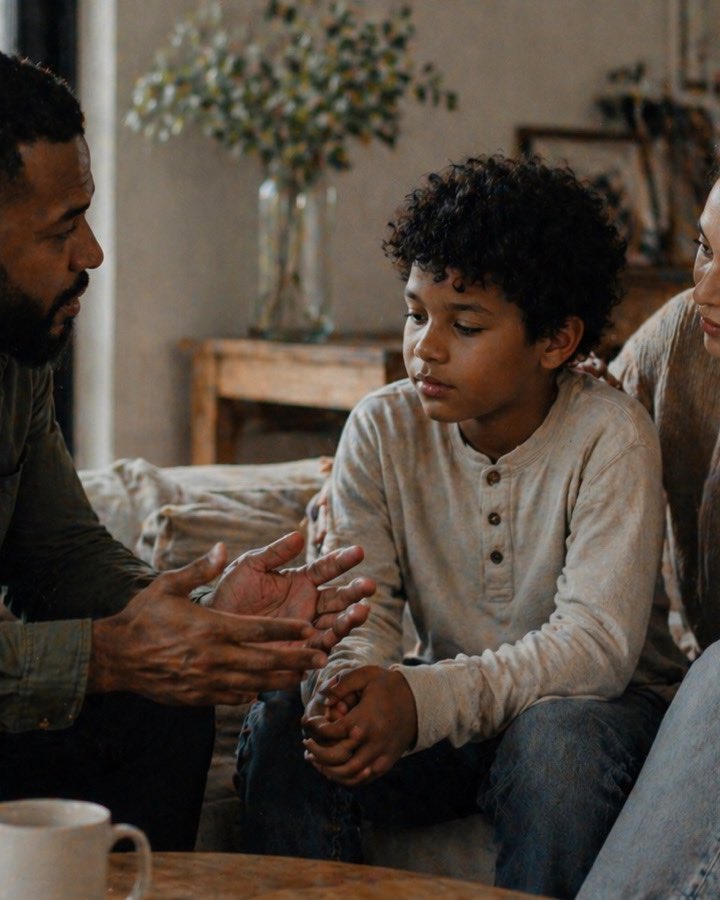

Who She Talks To
Every mother remembers the first time her daughter took a secret somewhere else. The closed bedroom door. The phone tilted away. The hidden diary. The friend who suddenly knew something you did not. It is one of the quiet aches of raising a girl — watching the circle of her trust widen past you, exactly as it is supposed to, and learning to make peace with it.
There is a new confidant in the house now. And it does not knock.
A 2026 study from Girl Scouts of the USA, conducted by Wakefield Research across a thousand American girls and a thousand parents, found that sixty-five percent of girls who use voice-assisted devices — the Alexas and Siris humming in our kitchens — consider them friends. Sixty-two percent say the same of chatbots. By the ages of eleven to thirteen, more than half have already turned to AI for comfort when they felt sad, anxious, or alone. And here is the figure that should make every one of us go still: roughly half of girls are using these tools every single day, while only a third of parents believe their daughter uses them at all.
This is an intimacy gap — the distance between the daughter you think you are raising and the one quietly narrating her inner life to a machine that cannot love her back the way her parents do. It is the same gap the parents organizing against Big Tech keep running into: by the time it is visible from the kitchen, it has usually been there a while.
I have spent my life in the business of voice — helping people say the truest version of what they carry. So this is the part that stops me cold. We are raising a generation of girls who are learning to speak their hearts fluently to something that has no heart or soul. Sure, it can be a useful tool, but it will never replace human connection, conversation, wisdom, and of course, the genuine love and concern parents have for the wellbeing of their children. However, here is what gets my alarm bells going: a daughter deciding, quietly, that a screen is a safer place to be honest than her own mother.
So we asked Girl Scouts of the USA the questions mothers are actually whispering to themselves.
I. What to Watch For
Before you can fix anything, you have to name the thing you are actually watching for. It was never the homework help. A daughter asking AI to explain long division is not an emergency. The emergency is subtler, and it lives in the heart, not the gradebook.
What should we be paying attention to in our daughters' relationship with AI and chatbots — and when does it become concerning?
Parents should look out for the growing emotional role AI plays in their daughters' lives, especially as 65% of girls who use AI devices see it as a "friend." The relationship becomes concerning when girls turn to AI for emotional support (51% of girls ages 11–13 who use AI-assisted devices have asked AI for help when feeling sad, anxious, or lonely). The data is painting a picture that kids are seeing AI as a human-like source, and often turn to it for advice that could ordinarily be answered by a parent, mentor, or friend.
Which means the first question is never "is she using it?" The first question is "what is she using it for?" A girl outsourcing her math is in a different conversation entirely than a girl outsourcing her loneliness.
What's the bare minimum a mother needs to understand about these tools before she can have a meaningful conversation with her daughter about them?
Moms should understand the "why" behind their daughter's use of AI. A conversation around the use of AI for homework (which 47% of girls said they do) is going to look different than a conversation about a daughter turning to AI for emotional support.
II. Without Turning It Into Surveillance
Here is the trap most of us fall into when fear takes the wheel. We reach for the monitoring app, the browser history, the locked-down device — and we mistake control for connection. You will not close that intimacy gap with surveillance. You close it the slow way: with questions she does not feel braced against. She needs to know you're in her corner, without alienating her completely.
What's the most practical way for a mom to get an honest read on her daughter's actual AI habits — without it feeling like surveillance?
First, parents shouldn't assume their child is using AI. If they are, ongoing conversations are beneficial. Ask her how she is using AI, what she likes about it, and when she turns to it for help, and then continue to check in. This open dialogue helps bridge the gap between parents' perception and their daughters' actual use.
And with the youngest ones — the five-, six-, seven-year-olds who will accept a talking speaker as a member of the household as easily as they accept the family dog — the language has to be even plainer. You are not lecturing. You are drawing a line they can feel: this thing answers you, but it does not know you.
How should a mom talk to a younger daughter, ages five to nine, about the difference between a tool that talks back and an actual friend — in a way that lands?
Moms should explicitly position AI as a tool, not a trusted friend. For younger girls, it is vital to reinforce that although AI can feel personal, it is no replacement for human relationships.
Although AI can feel personal, it is no replacement for human relationships.
III. When She's Been Confiding in a Machine
This is the one that aches. Forty-three percent of girls say they would turn to AI instead of a parent if they felt that parent was too busy to answer them. Reflect and sit with that for a moment before you react. If you ever discover your daughter has been pouring something heavy into a chatbot, your first instinct will be to feel replaced and your next instinct will be to slam the door on the tool. Do neither. The discovery is not a betrayal. It is information about a door she could not find open anywhere else.
If a mom finds out her daughter has been venting to a chatbot about something hard, what's the response that keeps the door open instead of shutting it?
A mom should try to understand why her daughter turned to AI for emotional support. Was she afraid of human judgment? Did she think you or a friend wouldn't understand what she was going through? 43% of girls say they turn to AI when they feel parents are too busy to discuss these things. Discerning a daughter's reason for using AI is an important first step to having productive conversations about the technology. Girl Scouts programming focuses on creating safe environments where girls can share their feelings with peers and mentors.
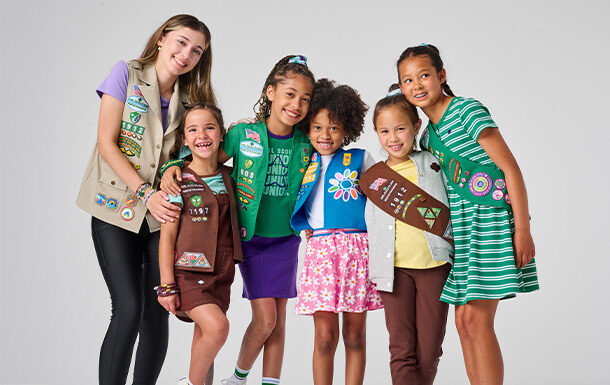
The chatbot won on one metric, and one metric only: it was available. It never sighed. It never said "not right now." That is a low bar, and it is one we can clear, not by being perfect, but by being reachable. If you want a place to start, start with the scripts for the conversations that scare you most — the ones you have been putting off because you did not know the words.
IV. Learning Alongside Her
The Girl Scouts guidance asks parents to "learn alongside" their daughters, and most of us immediately imagine a scheduled Sunday-night session at the kitchen table, a tutorial, or a chore. Let that picture go. The real version is far lighter, and far more powerful.
What does "learning alongside" actually look like at home — is it sitting down with ChatGPT once a week, or something less formal?
Learning alongside a child is a less formal process that breaks down barriers. Think of it more as just modeling curiosity and having open, natural chats with your daughter about the things you're both discovering as you go.
Which raises the part we rarely want to examine: ourselves. Many of us now reach for AI a dozen times a day for the simplest things such as the dinner plan, the awkward email, shopping research, travel plans and trips, the thing we are too tired to think through. She is watching all of it. The way you use the tool in front of her is the first lesson she ever gets in how to relate to it.
A lot of moms use AI themselves for everything from meal planning to emails. Does the way a mom uses AI in front of her daughter shape how her daughter relates to it, and what's the modeling that matters most?
Yes! Since 76% of parents use AI, adults need to be upfront by modeling limited and responsible AI use. The modeling that matters most is having open and honest conversations about AI's benefits and cautions, especially regarding digital literacy and discerning what is real or not.
And if you want one small, repeatable thing to begin this week, something that builds the muscle without ever sounding like a lecture, it is almost embarrassingly simple.
What's a simple, repeatable habit a mom can build with her daughter starting this week without it feeling like a lecture?
The practice of checking information is a great habit to build, and one that's easy to model.
Ask it together. Then ask the better question out loud: "Huh, do we think that's actually true? How would we find out?" You are not teaching her to distrust the machine. You are teaching her that her own mind is the final authority in the room. That single habit, repeated over a childhood, is worth more than any filter you could install.

What to Stop Carrying, and What to Pick Up Instead
Stop fearing the tool itself. AI is in her school-issued laptop, her search bar, the speaker on the counter — it is the air this generation breathes, and panic has never once made a child safer. A girl who can think critically about a machine is far better defended than a girl who was simply kept away from one.
But take this far more seriously than the headlines will tell you to: she is looking for connection, and she will find it wherever the light is on. The Girl Scouts research is, underneath all its statistics, a single sentence repeated a thousand ways — girls are reaching out, and too often the nearest thing reaching back is a program. Technology can be useful. It cannot show up. It cannot remember her face when she walks in the door. It cannot be a troop, a friend, a mentor, a mother.
That is the whole assignment, and it is strangely freeing. You do not have to become a technologist. You do not have to out-clever the algorithm. You only have to be the human worth turning to — reachable, unshockable, slow to judge and quick to listen. Be the warm room she does not have to brace herself to enter. It is the same work as the language you choose with her every day, only quieter: the proof, offered over and over, that you are safe to come back to.
Because one day your daughter will have something hard to say. She always does. The only question that has ever mattered is who she says it to. Make sure the answer is you.
Frequently asked questions
What did the 2026 Girl Scouts study find about girls and AI?
Girl Scouts of the USA, working with Wakefield Research, surveyed a thousand American girls and a thousand parents. Sixty-five percent of girls who use voice-assisted devices consider them friends, and sixty-two percent say the same of chatbots. Roughly half of girls use these tools every single day — while only about a third of parents believe their daughter uses them at all.
At what age do girls start turning to AI for emotional support?
It shows up clearly by the tween years. Fifty-one percent of girls aged eleven to thirteen who use AI-assisted devices have already asked AI for help when they felt sad, anxious, or lonely. Forty-three percent say they turn to AI when they feel their parents are too busy to discuss something with them.
How can I tell what my daughter is actually using AI for without spying on her?
Ask, and keep asking. Girl Scouts' guidance is to start from curiosity rather than assumption: ask her how she uses AI, what she likes about it, and when she turns to it for help — then check in again later. Ongoing, low-pressure conversation closes the gap between what parents believe and what daughters actually do. Monitoring software does not.
What should I say if I find out my daughter has been venting to a chatbot?
Not "you're not allowed on that anymore." Start by understanding why she went there. Was she afraid of being judged? Did she think you wouldn't understand? Was she reading the room and deciding you were too busy? The discovery isn't a betrayal — it's information about a door she couldn't find open anywhere else. The chatbot won on one metric: it was available.
How do I explain the difference between AI and a real friend to a five-year-old?
Keep it plain and position AI explicitly as a tool, not a trusted friend. Young girls will accept a talking speaker as a household member as easily as they accept the family dog, so the line has to be one they can feel: this thing answers you, but it does not know you. Although AI can feel personal, it is no replacement for human relationships.
Does the way I use AI in front of my daughter matter?
Yes. Seventy-six percent of parents use AI themselves, and children are watching how we do it. The modeling that matters most is limited, responsible use paired with open conversation about both the benefits and the cautions — especially around digital literacy and telling what's real from what isn't. One easy habit: look something up together, then ask out loud, "do we think that's actually true? How would we find out?"